Get exclusive breakthroughs on sensors in IoT, energy, healthcare, and more, delivered straight to your inbox.
"IEEE Sensors Alert" is a pilot project of the IEEE Sensors Council. Started as one of its new initiatives, this weekly digest publishes teasers and condensed versions of our journal papers in layperson's language.
Articles Posted in the Month (August 2024)
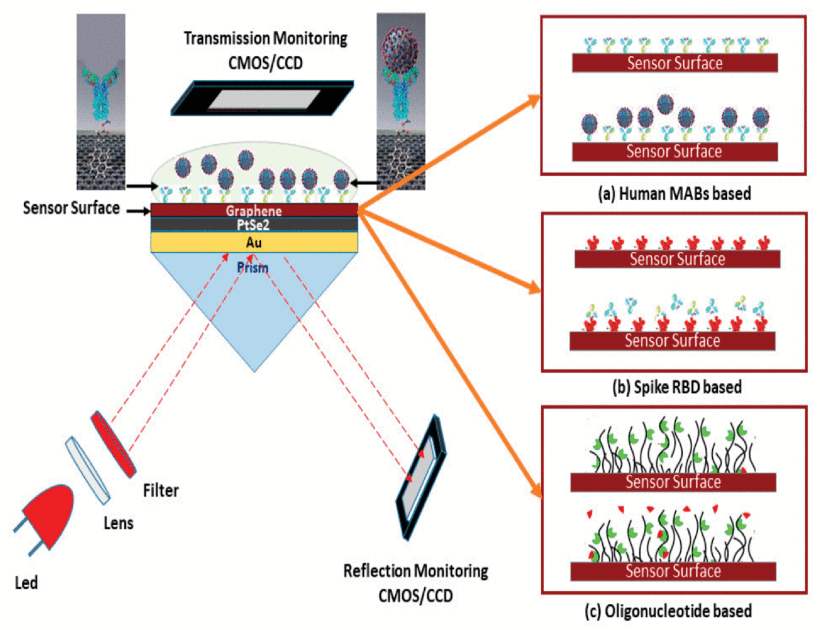
SPR Based Biosensing Chip for COVID-19 Diagnosis-A Review
Published in: IEEE Sensors Journal (Volume: 22, Issue: 14, July 2022)
Summary Contributed by: Anupama
Severe acute respiratory syndrome coronavirus 2 (SARS-CoV-2) requires rapid and accurate detection to control its spread. When COVID-19, a disease caused by the SARS-CoV-2 virus, became a Global pandemic, a novel method for fast identification of the new coronavirus was developed using Surface Plasmon Resonance (SPR) techniques. This paper reviews the potential of SPR-based biosensing chips and sensors for portable devices to rapidly and accurately detect the SARS-CoV-2 virus.
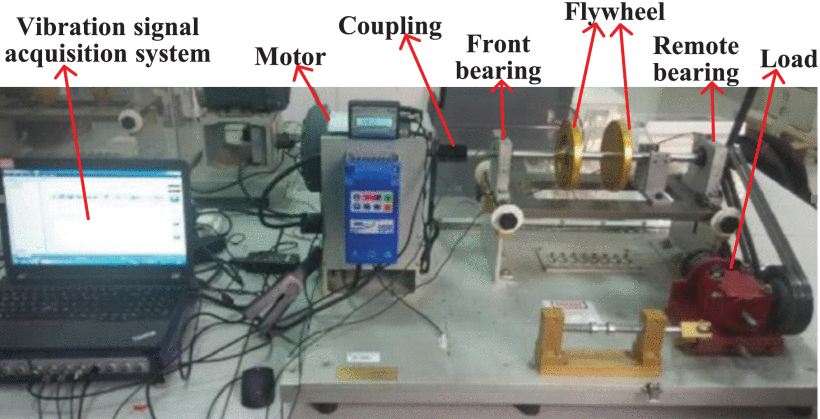
Balanced Adaptation Regularization Based Transfer Learning for Unsupervised Cross-Domain Fault Diagnosis
Author: Qin Hu, Xiaosheng Si, Aisong Qin, Yunrong Lv, Mei Liu
Published in: IEEE Sensors Journal (Volume: 22, Issue: 12, June 2022)
Summary Contributed by: Qin Hu (Author)
Fault diagnosis technology for rolling bearings is crucial for preventing mechanical accidents. In the field of fault diagnosis, inconsistent data distribution due to variable working conditions hampers diagnostic accuracy. This study proposes a novel method, Balanced Adaptation Regularization-based Transfer Learning (BARTL), leveraging enhanced multi-scale sample entropies. BARTL improves feature discriminability and similarity across conditions, achieving accurate diagnosis and surpassing existing transfer learning methods, as validated by two public datasets.
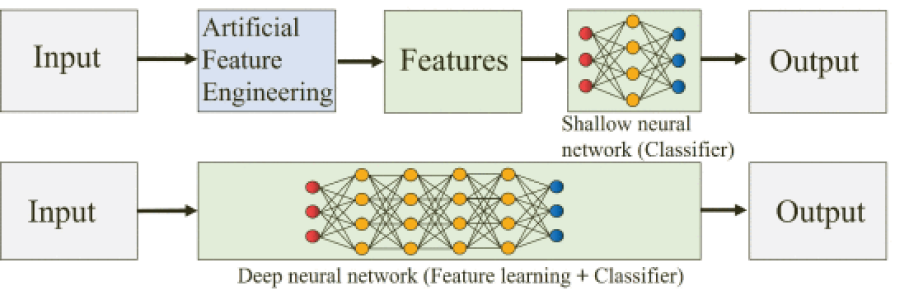
Deep Transfer Learning With Self-Attention for Industry Sensor Fusion Tasks
Author: Ze Zhang, Michael Farnsworth, Boyang Song, Divya Tiwari, Ashutosh Tiwari
Published in: IEEE Sensors Journal (Volume: 22, Issue: 15, August 2022)
Summary Contributed by: Anupama
The paper introduces a promising approach using deep transfer learning techniques to address the challenges in processing multisource, heterogeneous data in Industry 4.0. By repurposing a Transformer model pre-trained from data-rich natural language domain, the proposed method allows industrial applications to leverage deep learning capabilities with minimal training data requirements. It represents a significant step toward making Industry 4.0 more efficient, faster, and cost effective.
Published in: IEEE Sensors Journal (Volume: 22, Issue: 11, June 2022)
Summary Contributed by: Weiguan Zhang (Author)
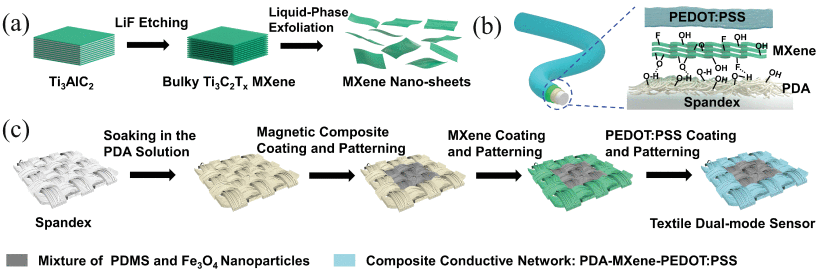
In smart control of robots, proximity and pressure information complement each other in detecting objects from approach to contact. Using a simple and cost-effective fabrication method, the researchers developed a textile-based sensor combining magneto-straining (proximity) and piezoresistive modes (pressure). This sensor exhibits high sensitivity for proximity and pressure perception. The unique design offers a seamless transition between modes, making it suitable for applications in human-machine interaction and intelligent prosthetics.
Usage of IR Sensors in the HVAC Systems, Vehicle and Manufacturing Industries: A Review
Author: Muhammad Adeel Altaf, Jongsik Ahn, Danish Khan, Min Young Kim
Published in: IEEE Sensors Journal (Volume: 22, Issue: 10, May 2022)
Summary Contributed by: Kamalesh Tripathy
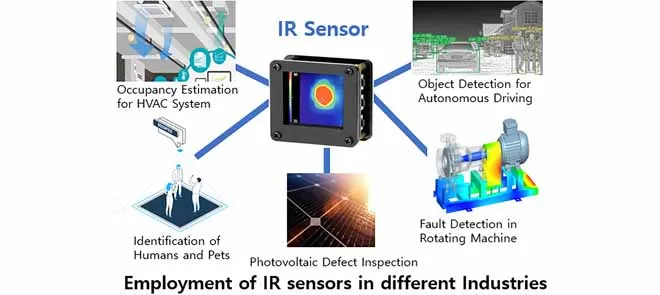
Thermal sensors are used in various industries to measure temperature and convert it into a readable output. Its selection depends on cost, resolution, and accuracy, which are crucial factors to consider when designing the sensor system. This paper explores the significance of infrared sensors as thermal sensors in detecting temperature, movement, and occupancy. It reviews the use of thermal sensors in HVAC (Heating, ventilation, and air conditioning) systems, vehicles, and manufacturing industries.
Self-Supervised Monocular Depth Estimation Using Hybrid Transformer Encoder
Author: Seung-Jun Hwang, Sung-Jun Park, Joong-Hwan Baek, Byungkyu Kim
Published in: IEEE Sensors Journal (Volume: 22, Issue: 19, October 2022)
Summary Contributed by: Seung-Jun Hwang (Author)
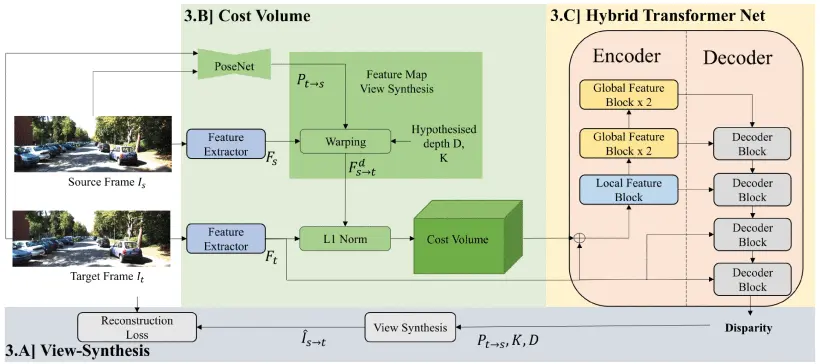
Depth estimation using camera sensors is vital in autonomous driving, robotics, 3D scene reconstruction, and augmented reality. This paper presents a novel method for monocular-camera depth estimation using a hybrid transformer encoder-decoder. The self-supervised view synthesis method used eliminates the need for depth supervision. It uses a cost-volume structure, combining neural network and transformer architectures for accurate depth prediction. The system enhances global feature representation with an attention decoder, improving depth estimation accuracy.
Published in: IEEE Sensors Journal (Volume: 22, Issue: 20, October 2022)
Summary Contributed by: Saurabh Dubey
The CMOS Algae Growth Period Monitor, consisting of an algae sensor and a CMOS converter, is a cutting-edge solution for monitoring algae growth in algaculture applications. It utilizes a proton exchange membrane to translate algae growth data into a duty cycle, facilitating rapid assessment. With increased sensitivity, it functions in suboptimal conditions and has a maximum linear error of only 0.49%. Integration with IoT technology holds potential applications in the advanced monitoring of aquatic life.
Joint Hybrid 3D Beamforming Relying on Sensor-Based Training for Reconfigurable Intelligent Surface Aided TeraHertz-Based Multiuser Massive MIMO Systems
Author: Xufang Wang, Zihuai Lin, Feng Lin, Lajos Hanzo
Published in: IEEE Sensors Journal (Volume: 22, Issue: 14, July 2022)
Summary Contributed by: Zihuai Lin (Author)
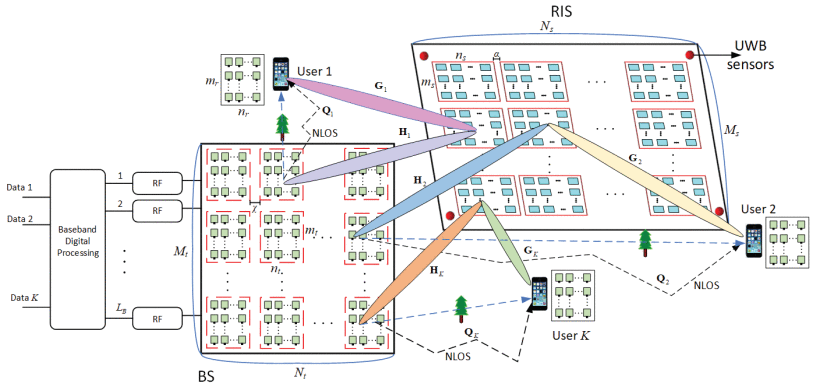
The Terahertz (THz) era promises lightning-fast internet but faces challenges like signal degradation over distances. The paper introduces a joint 3D-beamformer for THz Multi-user Massive multiple-input multiple-output (MIMO) systems, leveraging Reconfigurable Intelligent Surfaces to improve signal strength and coverage. The system uses smart sensing to beam signals directly to devices, promising unparalleled speeds and connection stability, even in crowded spaces. Scalable and adaptable, the proposed architecture is the future of connectivity.
OFET and OECT, Two Types of Organic Thin-Film Transistor Used in Glucose and DNA Biosensors: A Review
Author: Xin Ma, Hongquan Chen, Peiwen Zhang, Martin C. Hartel, Xiaona Cao, Sibel Emir Diltemiz, Qinglei Zhang, Javed Iqbal, Natan Roberto de Barros, Liyan Liu, Hao Liu
Published in: IEEE Sensors Journal (Volume: 22, Issue: 12, June 2022)
Summary Contributed by: Anupama
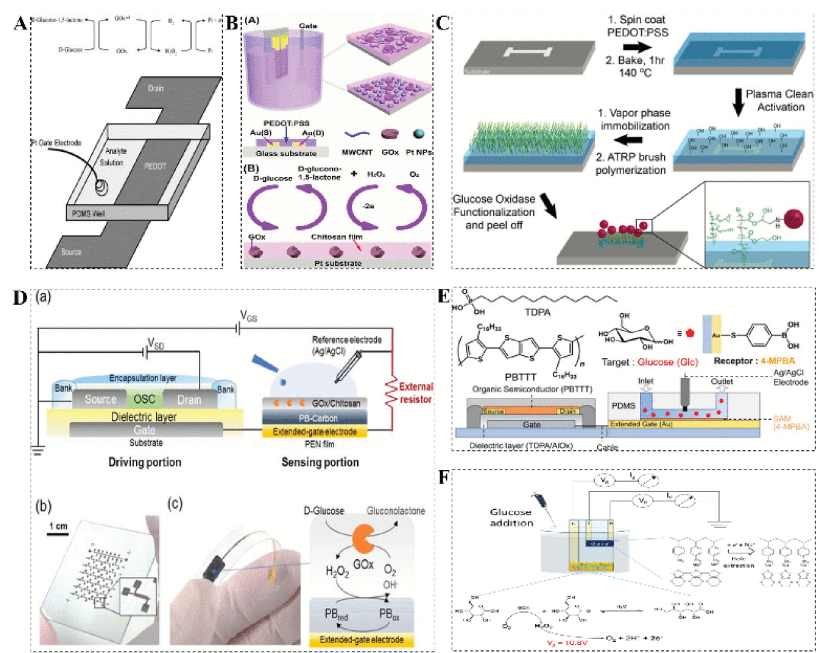
Diabetes leads to serious health challenges and is a leading cause of numerous chronic diseases. This study explores electronics-based biosensors, particularly Organic Field Effect Transistors (OFET) and Organic Electrochemical Transistors (OECT), as adept glucose and DNA biosensors in diabetes management. The biosensors, fabricated from biodegradable natural materials, offer a flexible, cost-effective, and easily accessible solution, showcasing exceptional sensitivity and selectivity in their performance.
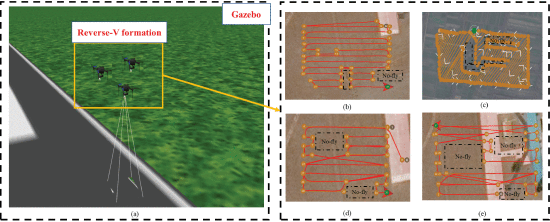
Concentrated Coverage Path Planning Algorithm of UAV Formation for Aerial Photography
Author: Yi Cao, Xianghong Cheng, Jinzhen Mu
Published in: IEEE Sensors Journal (Volume: 22, Issue: 11, June 2022)
Summary Contributed by: Yi Cao (Author)
Ensuring successful aerial photography requires effective coverage path planning for UAVs. However, complexities in outdoor spaces pose challenges, necessitating innovative solutions. This paper introduces a novel concentrated coverage path planning algorithm, revolutionizing traditional probabilistic roadmap methods. Integrating round-trip mode and path constraints optimizes coverage while minimizing computational complexity and repetitions. The approach enhances efficiency and feasibility in real-world environments, promising to redefine aerial photography landscapes.
Metal-Organic Frameworks (MOFs) are crystalline nano-porous materials composed of inorganic metal nodes incorporated with organic ligands. Their remarkable structural and physicochemical tunability makes them superior to conventional chemo-sensory materials. The researcher presented a review of MOF-Optical fiber (OF) sensors based on a change in refractive index induced by adsorbed guest molecules. It demonstrated the promising potential of MOFs as dielectric coatings on OF for highly sensitive and selective chemical sensing.
Work-related stress should be detected and managed to avoid adverse impacts on individuals and society. This study proposes a deep learning approach to detect work-related stress automatically by analyzing multimodal signals. Deep neural networks, facial expressions, and physiological signals were fused at different levels to achieve promising accuracy. The novel approach of studying the level of work-related stress with just a 10-second-long electrocardiogram, respiration, and facial images shows potential for effective stress detection.
A non-profit organization, IEEE is the world's largest technical professional organization dedicated to advancing technology for the benefit of humanity.
Copyright 2023 IEEE – All rights reserved. Use of this website signifies your agreement to the IEEE Terms and Conditions
This site is also available on your smartphone.