Get exclusive breakthroughs on sensors in IoT, energy, healthcare, and more, delivered straight to your inbox.
"IEEE Sensors Alert" is a pilot project of the IEEE Sensors Council. Started as one of its new initiatives, this weekly digest publishes teasers and condensed versions of our journal papers in layperson's language.
Author: Javier Gonzalez, Moreno Juan R., Peale Robert
Published in: IEEE Sensors Journal (Volume: 26, Issue: 1, January 2026)
Summary Contributed by: F. J. González (Author)
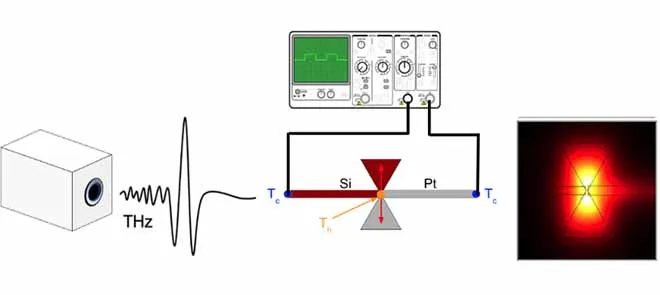
Terahertz (THz) waves are a bridge between microwaves and infrared light. This study presents a new terahertz detector fabricated from a miniature bowtie antenna connected to a silicon-platinum thermoelectric junction. This detector operates at room temperature without requiring an external power supply and achieves state-of-the-art sensitivity across the 3.8–8 THz band. The innovation paves the way for affordable, compact THz sensing applications in security screening, biomedical imaging, and wireless communications.
Published in: IEEE Sensors Journal (Volume: 26, Issue: 1, January 2026)
Summary Contributed by: Rachel F. Bellisle (Author)
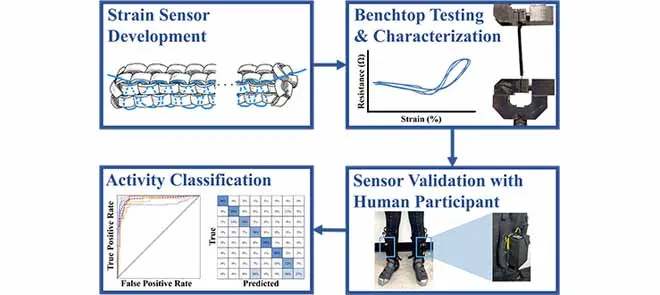
Wearable strain sensors embedded into clothing can effectively track human movement. This paper proposes a novel knot-based strain sensor integrated into the ankle of an astronaut's full-body spacesuit aboard the International Space Station. By employing machine learning techniques alongside the ankle sensor system, the researchers successfully classified non-local body movements while minimizing hysteresis. This innovation shows potential for various applications, including space missions, sports tracking, and home-based rehabilitation.
Author: Kupnik Mario, Bretthauer Christian, Dorsam Jan Helge, Haugwitz Christoph, Herbst Felix, Kim Yoojeong, Lee Hyunjoo J., Merbeler Fabian, Rutsch Matthias, Soennecken Soren, Suppelt Sven, Wiemer Elena, Wismath Sonja Katharina
Published in: IEEE Sensors Journal (Volume: 26, Issue: 2, January 2026)
Summary Contributed by: Mario Kupnik (Author)
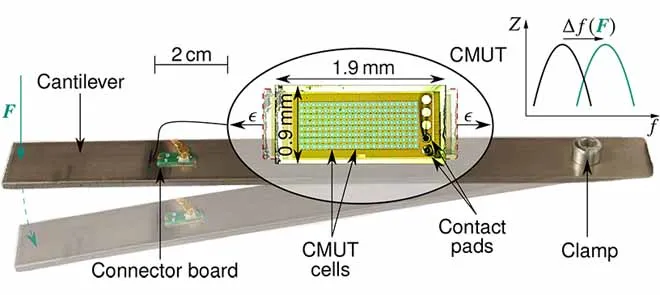
Force-sensing technology plays a vital role in measuring mechanical force using sensors and transducers. This work introduces capacitive micromachined ultrasonic transducers (CMUTs) as a groundbreaking approach to force sensing, showcasing their advantages over conventional strain gauges. The sensing principle relies on detecting resonance frequency shifts caused by force-induced structural deformation, enabling precise frequency readout. Despite slightly lower uncertainty metrics, CMUTs offer superior scalability and integration potential for highly miniaturized applications
Distributed Stress Sensing in Polarization-Maintaining Fiber Under Circumferential Stress
Author: Zhang Hongxia, Jia Dagong, Li Tianyue, Li Zhihong, Liu Tiegen, Liu Yan, Song Rencheng, Zhang Bozhi
Published in: IEEE Sensors Journal (Volume: 26, Issue: 1, January 2026)
Summary Contributed by: Zhang Hongxia (Author)
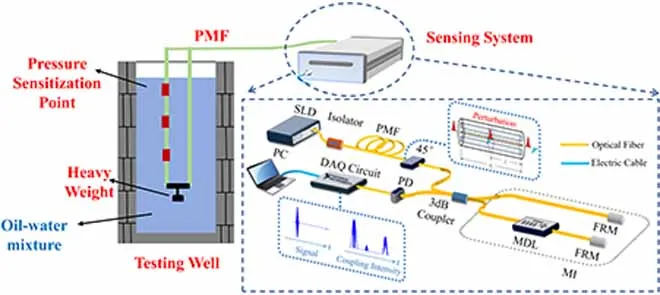
Real-world engineering applications require continuous monitoring of structural stress. This study presents a distributed sensing method using Polarization-maintaining fiber (PMF) for circumferential stress monitoring via white-light interferometry, detecting subtle pressure changes around the fiber. Validated by 0–26 MPa pressure tank tests and 55 m downhole experiments, it demonstrated a linear response and 2.5 dB/MPa sensitivity, making it a robust solution for circumferential pressure sensing in extreme environments.
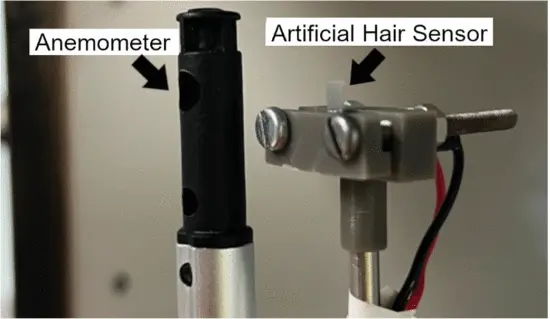
3D printing is revolutionizing the production of a wide range of sensors, allowing customization at a lower cost than conventional manufacturing techniques. This paper presents an artificial hair-like sensor (AHS) inspired by the flat hair-like mechanoreceptor of the adult Buthus occitanus scorpion. The sensor has been 3D-printed for airflow velocity measurements. Potential applications include meteorology, robotics and autonomous drones, biomedical engineering, flow cameras for multi-point measurements, and more.
Published in: IEEE Sensors Journal (Volume: 26, Issue: 1, January 2026)
Summary Contributed by: Mavrogiannis (Author)
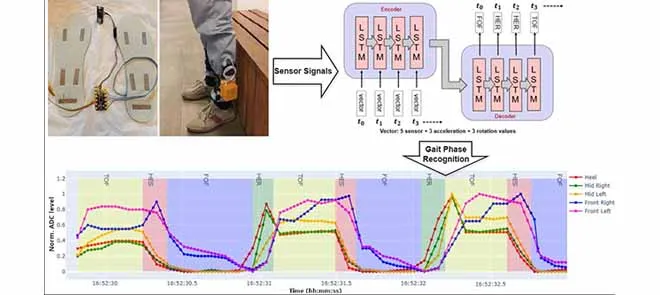
Gait analysis is crucial in diagnosing and managing mobility disorders. This study utilizes low-cost smart insoles with embroidered textile capacitive sensors and an inertial measurement unit (IMU) to recognize the four basic phases of the human gait cycle. It uses a long short-term memory (LSTM)-based neural network trained on collected data, achieving 90% accuracy and 87.1% F1 macro score across exercises with variable gait speeds, offering an affordable gait analysis solution.
Deep Learning-Integrated Agarose-Coated Micro-Loop Fiber Resonator for Relative Humidity Measurement
Author: Zain Huda, Qureshi Khurram Karim
Published in: IEEE Sensors Journal (Volume: 26, Issue: 1, January 2026)
Summary Contributed by: Huda Adnan Zain (Author)
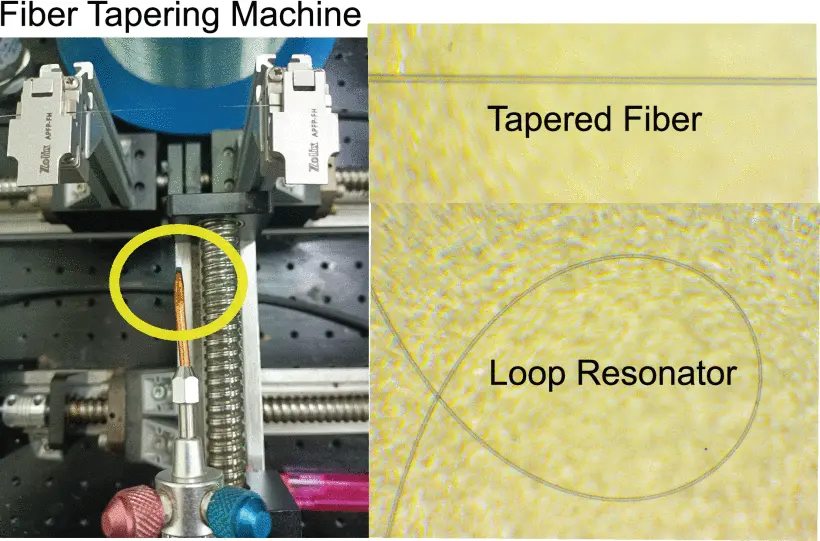
Fiber-optic humidity sensors, especially those with resonators, produce rich spectral data that leads to expensive, slow processing. This work integrates deep learning with an agarose-coated resonator sensor to address this challenge. The approach achieved a sensitivity of 0.2037 dB/%RH and a convolutional neural network (CNN) accuracy of ~98%. It highlights the potential of combining optical sensing with AI, offering a promising solution for environmental monitoring, healthcare, and real-time humidity tracking.
Unified Neural Network-Based Shape Sensing for Continuum Robots Using Fiber Bragg Gratings
Author: Dong Xin, Axinte Dragos, Elsayed Belal, Jones Simon D., Mohammad Abdelkhalick, Shi Hongshen, Wild Samuel, Zeng Tianyi
Published in: IEEE Sensors Journal (Volume: 26, Issue: 1, January 2026)
Summary Contributed by: Samuel Wild (Author)
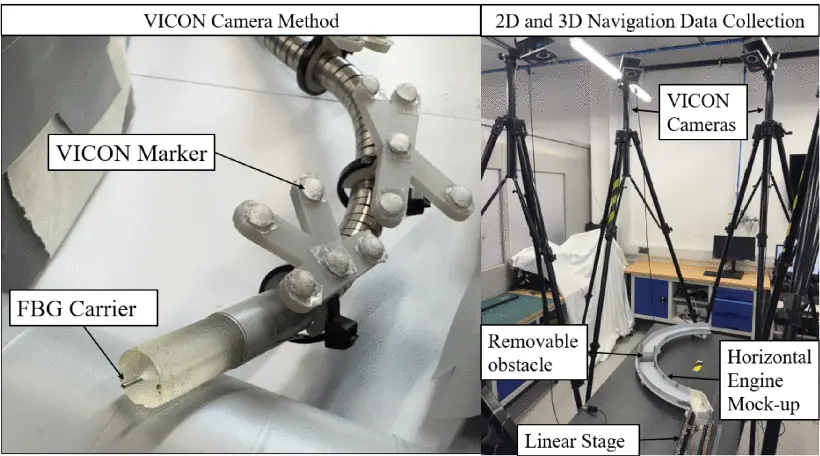
Continuum robots (CRs) or miniaturised robotic snakes need to know their own shape to navigate accurately in confined spaces. Fibre Bragg grating (FBG) sensors offer a path, but deployable straight-core versions often suffer from twist-induced inaccuracies. This paper presents a shape-sensing method using FBG technology combined with a neural network to correct these errors. Validated across two robots of different sizes, it enables real-time, camera-free shape sensing.
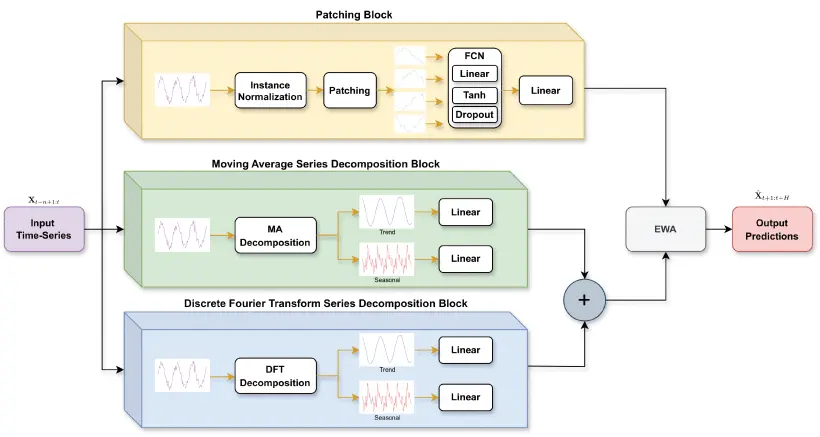
Analysing past patterns in machine data within industrial settings can enhance predictive maintenance and improve overall equipment effectiveness (OEE). This study presents a lightweight late-fusion soft sensor model that benchmarks a deep learning forecasting approach using real manufacturing data. It compares various popular techniques and combines multiple models to increase accuracy. This method provides more reliable predictions, enhances performance, minimizes downtime, and boosts efficiency in complex, real-world factory environments.
Foreground Attention Loss and Attention-Guided Convolution for Remote Sensing Object Detection
Author: Tian Hongxian, Li Yunyue, Liu Jueting, Wang Zehua, Wang Zilong, Xu Tingting, Xu Zishan, Yang Wei, chen wei
Published in: IEEE Sensors Journal (Volume: 26, Issue: 1, January 2026)
Summary Contributed by: Zilong Wang (Author)
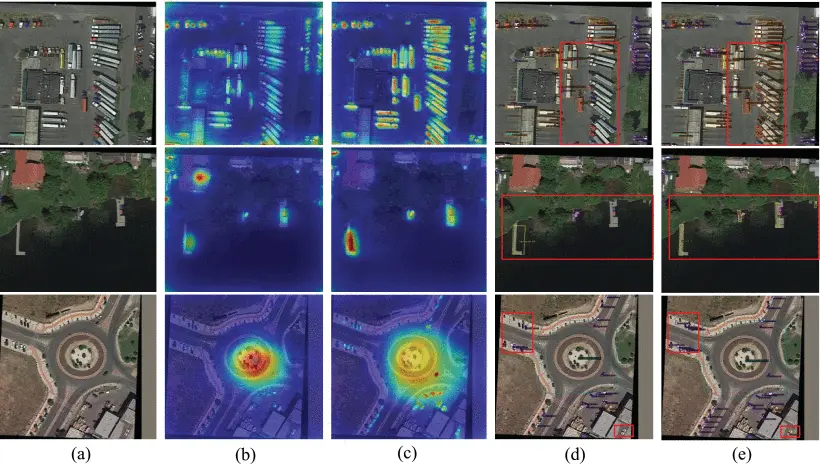
Object interpretation in satellite or aerial images is challenging due to small size, complex backgrounds, indistinguishable features, and varying orientations. Enhancing remote-sensing images can significantly improve their applications in fields like agriculture, urban planning, military surveillance, and disaster response. This paper introduces a lightweight discover→focus approach: Foreground Attention Loss learns an object-density attention map, and Attention-Guided Convolution shifts sampling toward foreground without extra offset branches, substantially improving accuracy with minimal overhead.
The increasing number of commercial drones poses severe threats to the security of critical infrastructure and people’s privacy. A drone detection system thus becomes inevitable to detect unauthorized drones in the low altitude airspace. This paper delves into the various aspects of an efficient, reliable, robust, and scalable drone detection system by investigating the four fundamental technologies and the associated challenges and limitations.
From mechanical to automatic to self-driven cars, the emerging sensors are revolutionizing the automobile industry. Sensors have emerged as essential components of the automotive electronic control system. The three major areas of automotive systems application–powertrain, chassis, and body are all controlled by arrays of sensors. Advancing automotive sensor technologies have a significant impact on the present with immense scope for the future development of automotive systems.
A non-profit organization, IEEE is the world's largest technical professional organization dedicated to advancing technology for the benefit of humanity.
Copyright 2023 IEEE – All rights reserved. Use of this website signifies your agreement to the IEEE Terms and Conditions
This site is also available on your smartphone.