Get exclusive breakthroughs on sensors in IoT, energy, healthcare, and more, delivered straight to your inbox.
"IEEE Sensors Alert" is a pilot project of the IEEE Sensors Council. Started as one of its new initiatives, this weekly digest publishes teasers and condensed versions of our journal papers in layperson's language.
Articles Posted in the Month (March 2024)
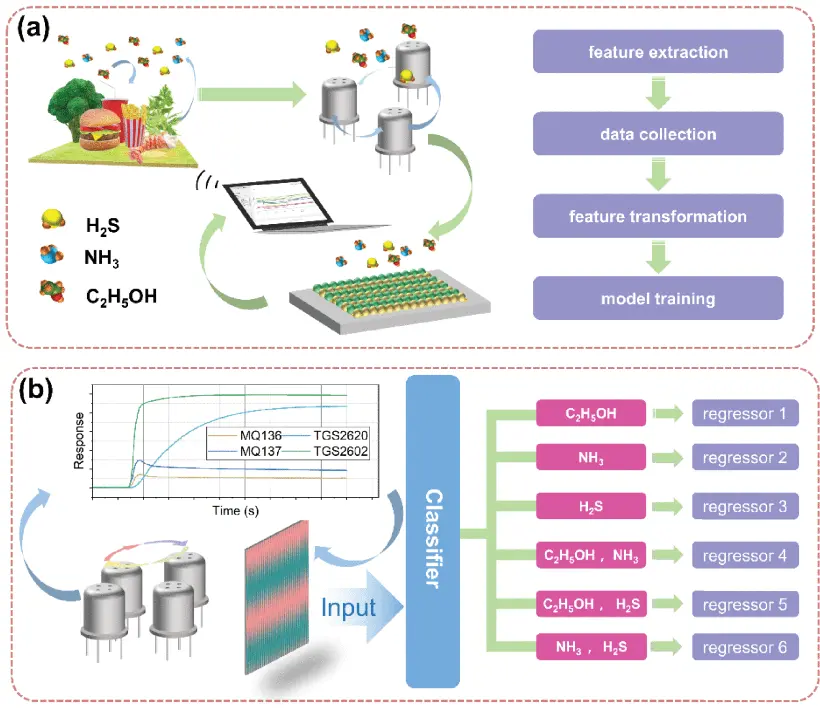
E-Nose System Based on Fourier Series for Gases Identification and Concentration Estimation From Food Spoilage
Author: Jie Luo, Zehao Zhu, Wen Lv, Jian Wu, Jianhua Yang, Min Zeng, Nantao Hu, Yanjie Su, Ruili Liu, Zhi Yang
Published in: IEEE Sensors Journal (Volume: 23, Issue: 4, February 2023)
Summary Contributed by: Leena Jha
Improper and prolonged storage of perishable food items like meat and fruits may lead to microbial contamination and spoilage. The paper presents an electronic nose (EN) system, a portable electronic gas-sensing device comprising a sensor array-based gas identification, concentration estimation system, and data acquisition circuit boards. A machine learning algorithm assists it. It accurately detects gases like ammonia (NH3), hydrogen sulphide (H2S), and ethanol (C2H5OH) emitted by spoiled food.
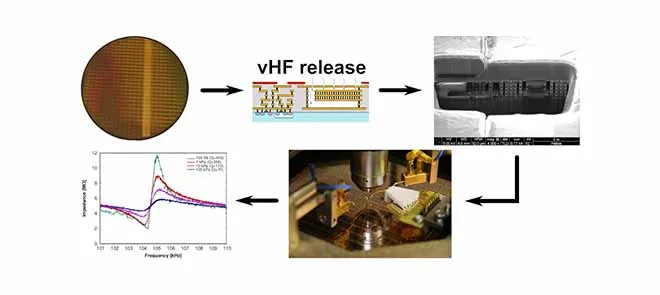
Monolithic Sensor Integration in CMOS Technologies
Author: Daniel Fernández, Piotr Michalik, Juan Valle, Saoni Banerji, Josep Maria Sánchez-Chiva, Jordi Madrenas
Published in: IEEE Sensors Journal (Volume: 23, Issue: 2, January 2023)
Summary Contributed by: Daniel Fernández (Author)
In the wearable market, where the area is a limiting factor, monolithic sensor integration with mainstream gadget electronics can provide an efficient means to archive a small device footprint while maintaining good performance. For a minimum cost, CMOS-MEMS devices built using backend-of-line (BEOL) interconnections as structural material offer an interesting, cost-effective approach with the potential to become a market game-changer.
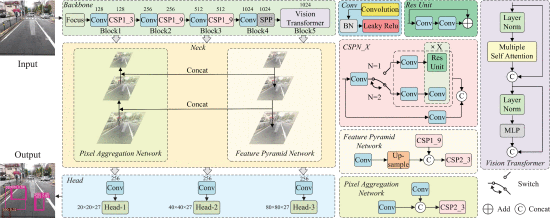
An Improved YOLOv5 Crack Detection Method Combined With Transformer
Author: Xuezhi Xiang, Zhiyuan Wang, Yulong Qiao
Published in: IEEE Sensors Journal (Volume: 22, Issue: 14, July 2022)
Summary Contributed by: Kamalesh Tripathy
A robust pavement crack detection network is imperative to mitigate traffic accidents and minimize maintenance costs. The paper proposed an efficient hybrid model by merging YOLOv5 and Transformer, utilizing one-stage architecture and long-range dependency capture for reliable crack detection. The network's performance is further improved using test time augmentation (TTA) for crack detection. An efficient solution for urban pavement damage detection, it paves the way for expanding datasets to tackle diverse pavement issues.
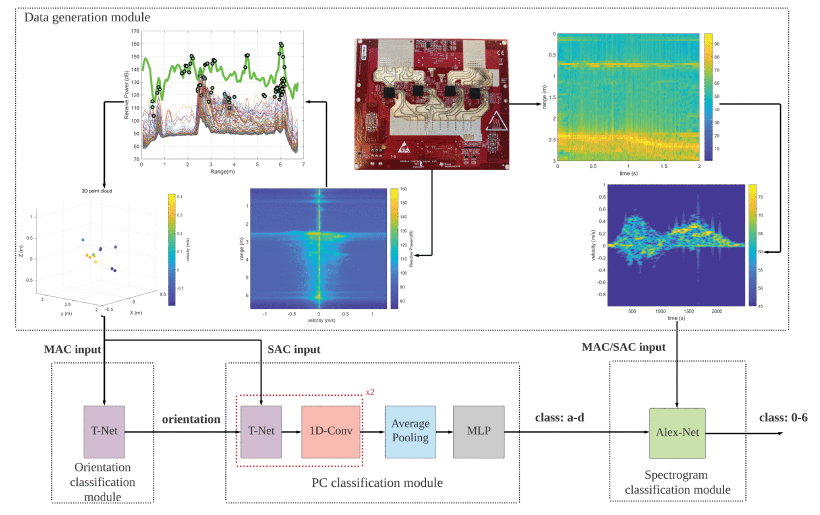
Angle-Insensitive Human Motion and Posture Recognition Based on 4D Imaging Radar and Deep Learning Classifiers
Author: Yubin Zhao, Alexander Yarovoy, Francesco Fioranelli
Published in: IEEE Sensors Journal (Volume: 22, Issue: 12, June 2022)
Summary Contributed by: Francesco Fioranelli (Author)
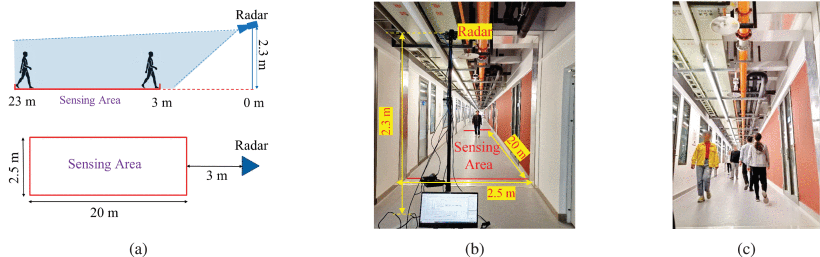
Human Activity Recognition (HAR) is crucial to support the needs of an aging population. The paper proposes a new method for HAR using 4D imaging radars. The technique combines point cloud and spectrogram data to capture the spatial and temporal features of the activities. The method is tested on an experimental dataset and performs better than existing alternatives.
Gait-Based Person Identification and Intruder Detection Using mm-Wave Sensing in Multi-Person Scenario
Author: Zhongfei Ni, Binke Huang
Published in: IEEE Sensors Journal (Volume: 22, Issue: 10, May 2022)
Summary Contributed by: Saurabh Dubey
MGait is a multi-person identification and intruder detection system that utilizes mm-wave sensing to identify users based on gait micro-Doppler (m-D) signatures. Individuals are continuously tracked in indoor scenarios using low-cost mm-wave radars in range-Doppler (R-D) space frame by frame to extract their distinct gait signatures. Trained in a deep learning-based Gaussian mixture loss model, MGait is a promising solution for biometrics and has wide applications in health and security.
Design Methodology for Industrial Internet-of-Things Wireless Systems
Author: Carlos Mendes da Costa, Peter Baltus
Published in: IEEE Sensors Journal (Volume: 21, Issue: 4, February 2021)
Summary Contributed by: Payal Savani
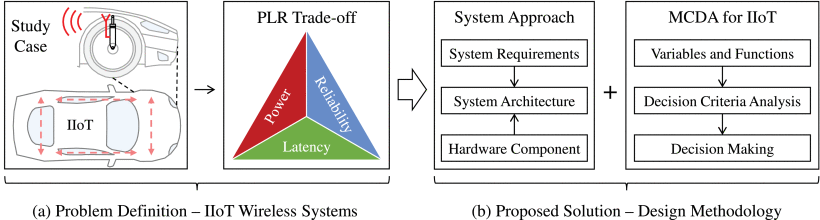
The rise in Internet of Things (IoT) usage in industrial applications requires robust wireless systems. The researchers proposed an innovative approach for designing low-latency, power-efficient, and reliable wireless systems. This paper comprehensively studies system requirements, hardware, and architecture for optimal design choices. The prototype design was validated through practical experiments. It demonstrates superior performance compared to existing wireless standards.
Online Learning for Active Odor Sensing Based on a QCM Gas Sensor Array and an Odor Blender
Author: Manuel Aleixandre, Takamichi Nakamoto
Published in: IEEE Sensors Journal (Volume: 22, Issue: 23, December 2022)
Summary Contributed by: Manuel Aleixandre (Author)
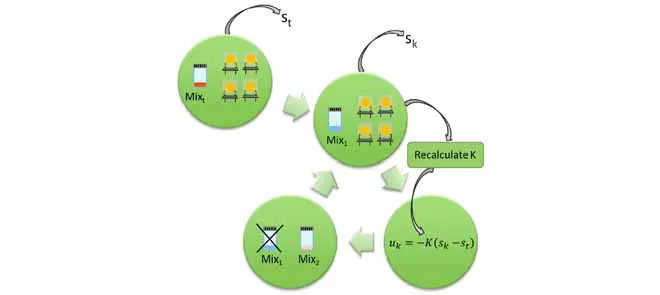
This work presents an active odor sensing system that blends odorous ingredients, iteratively adjusting their mix ratios to match the sensor response of a target scent. Online learning adapts the sensor model parameters in real-time, optimizing the control loop to compensate for drift and humidity variations. It improves the accuracy and robustness despite the inherent limitations of gas sensors.
Research of Low-Power MEMS-Based Micro Hotplates Gas Sensor: A Review
Author: Zhenyu Yuan, Fan Yang, Fanli Meng, Kaiyuan Zuo, Jin Li
Published in: IEEE Sensors Journal (Volume: 21, Issue: 17, September 2021)
Summary Contributed by: Anupama
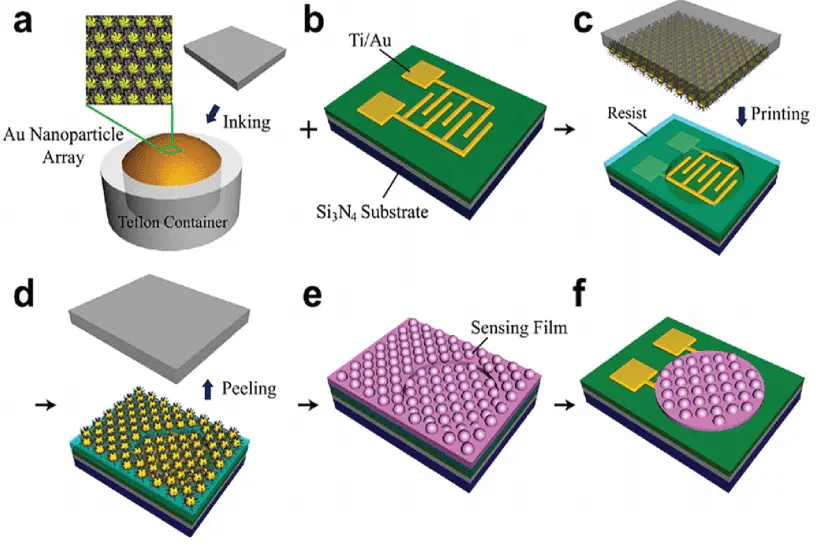
The MEMS-based micro hotplate gas sensors are small and mass-producible with excellent performance compared to traditional ceramic tube sensors. Energy efficiency is a crucial parameter of portable, reliable sensors. Heat loss significantly increases the power consumption of hotplates. To optimize energy consumption and efficiency, an analytical study of heat loss in different parts of sensor parts and their remedies through fabrication methods is presented.
Published in: IEEE Sensors Journal (Volume: 22, Issue: 15, August 2022)
Summary Contributed by: Saurabh Dubey
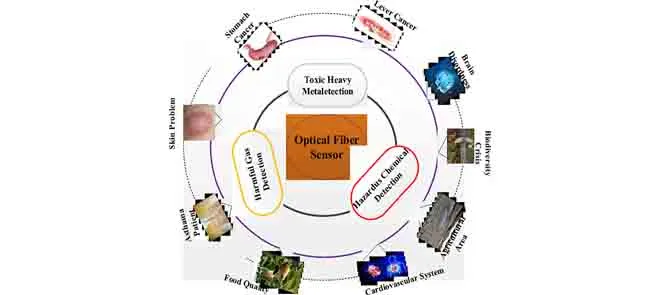
Scientific and technological advancement has increased the risk of environmental pollutants like chemicals, heavy metals, and toxic gases, thus affecting human health. The need is to detect the contaminants at the source for corrective measures. This paper discusses the sensitivity, selectivity, response time, recovery time, and repeatability of nanocomposite thin-film-based optical fiber sensors coated with metal oxide semiconductors, polymers, metals, carbon nanotubes, graphene, etc., in relation to monitoring environmental health.
Wireless Communication and Power Harvesting in Wearable Contact Lens Sensors
Author: Mengyao Yuan, Rupam Das, Eve McGlynn, Rami Ghannam, Qammer H. Abbasi, Hadi Heidari
Published in: IEEE Sensors Journal (Volume: 21, Issue: 11, June 2021)
Summary Contributed by: Anupama
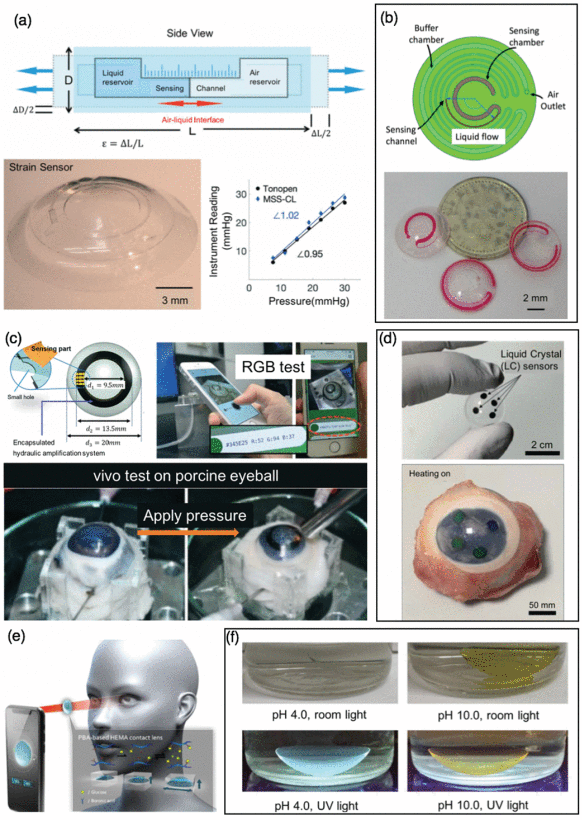
Our corneal surface and tears make an excellent alternative to blood as a source of biomarkers. Incorporating sensors into contact lenses could provide a convenient, non-invasive platform for continuously detecting and monitoring diseases like glaucoma, diabetes, and heart disease. Researchers explored current technologies for sensing materials, energy, and data transmission techniques in electronic contact lens sensors. The study systematically explores the challenges and future trends.
In the wearable market, where the area is a limiting factor, monolithic sensor integration with mainstream gadget electronics can provide an efficient means to archive a small device footprint while maintaining good performance. For a minimum cost, CMOS-MEMS devices built using backend-of-line (BEOL) interconnections as structural material offer an interesting, cost-effective approach with the potential to become a market game-changer.
The rapid advancements in flexible electronics, nanotechnology and material science have enabled engineers and scientists to realise a flexible electronic skin (e-skin) with human-like sensing capabilities. The multifunctionality of such e-skin is proposed to enable robots with human-like dexterity, cognitive skills and abilities. This is anticipated to significantly advance interesting areas such as healthcare, robotics, and human–machine interfaces.
A non-profit organization, IEEE is the world's largest technical professional organization dedicated to advancing technology for the benefit of humanity.
Copyright 2023 IEEE – All rights reserved. Use of this website signifies your agreement to the IEEE Terms and Conditions
This site is also available on your smartphone.