Get exclusive breakthroughs on sensors in IoT, energy, healthcare, and more, delivered straight to your inbox.
"IEEE Sensors Alert" is a pilot project of the IEEE Sensors Council. Started as one of its new initiatives, this weekly digest publishes teasers and condensed versions of our journal papers in layperson's language.
Articles Posted in the Month (October 2026)
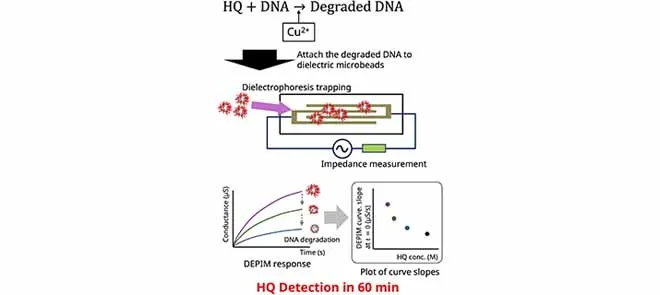
Simple Electrical Detection of Hydroquinone Based on DNA-Degradation-Induced Dielectrophoretic Change
Published in: IEEE Sensors Journal (Volume: 26, Issue: 9, May 2026)
Summary Contributed by: Michihiko Nakano (Author)
Hydroquinone (HQ) is a harmful chemical found in industrial products and tobacco smoke, and poses various health risks, potentially damages DNA, and causes cancer. This paper presents a simple, rapid method for the electrical detection of HQ by measuring the electrical changes resulting from HQ-induced DNA damage. By accelerating the reaction with copper ions, detection can be completed within one hour, providing an affordable tool for environmental and health monitoring.
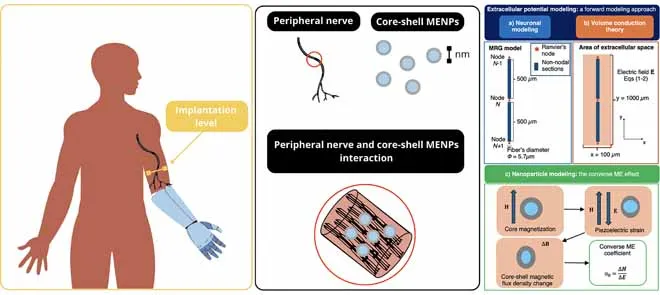
Can spontaneous electrical activity in nerve fibers be detected wirelessly using minimally invasive sensors? This study introduces magnetoelectric nanoparticles (MENPs) as futuristic wireless sensors for detecting electrical signals from nerve fibers, demonstrating varying sensitivities across different geometries and configurations. Using computational methods, the research provides a detailed quantification of the interaction between MENPs and nerve fibers, paving the way to the next generation of neural interfaces and neuroprostheses.
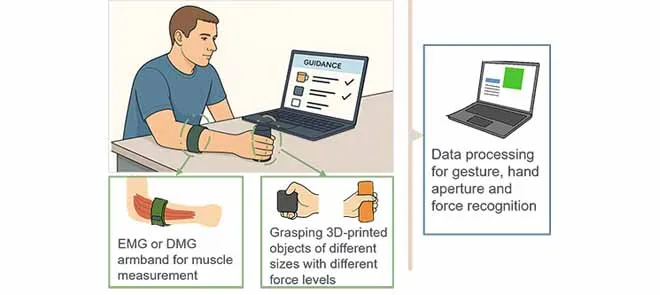
Wearable hand-control systems usually rely on electromyography (EMG) signals from muscles. This work introduces a wearable displacement myography (DMG) armband that simultaneously detects hand gestures, force levels, and hand aperture with substantial accuracy by measuring forearm muscle shape rather than muscle electrical activity. By combining advanced machine learning with compact sensing hardware, this approach enables real-time decoding of multiple hand movements, offering promising applications in assistive technologies and human-machine interfaces.
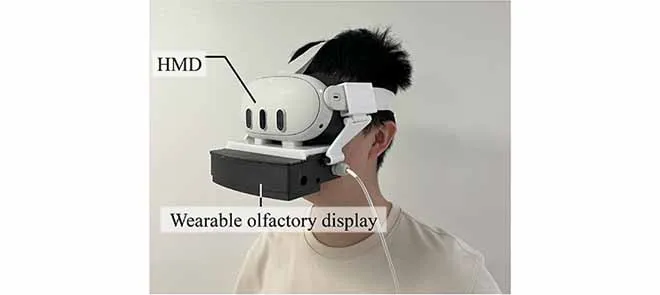
Olfactory, visual, auditory, and haptic interfaces collectively advance the human–computer interaction (HCI) experience. This paper introduces an eight-channel olfactory system mounted beneath a virtual reality (VR) headset. Wearable olfactory displays can significantly improve immersion in VR. Unlike conventional olfactory displays, this innovative system expands the range of reproducible odors while enabling low-latency delivery and precise intensity control, improving the vividness and realism of diverse interactive and multisensory VR experiences.
Published in: IEEE Sensors Journal (Volume: 26, Issue: 10, May 2026)
Summary Contributed by: Praveen Chopra (Author)
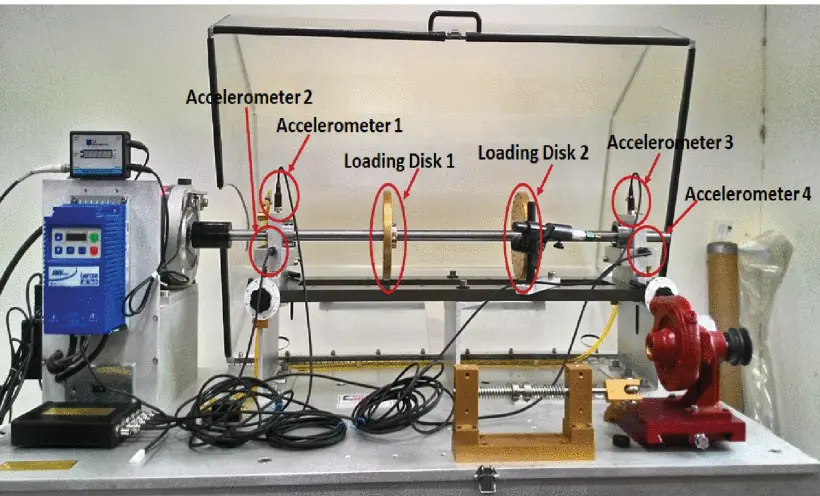
Industrial machines can develop fault conditions not encountered during model training, causing unreliable predictions from conventional diagnostic models. The proposed neuron-activation similarity-based approach compares the internal deep neural network responses with known fault patterns to distinguish known faults from previously unseen ones. This open-set framework improves the reliability of unseen faults without retraining or modifying existing diagnostic models, making industrial monitoring systems more robust, adaptable, and dependable in real-world operating environments.
Published in: IEEE Sensors Journal (Volume: 26, Issue: 8, April 2026)
Summary Contributed by: Razan Khalifeh (Author)
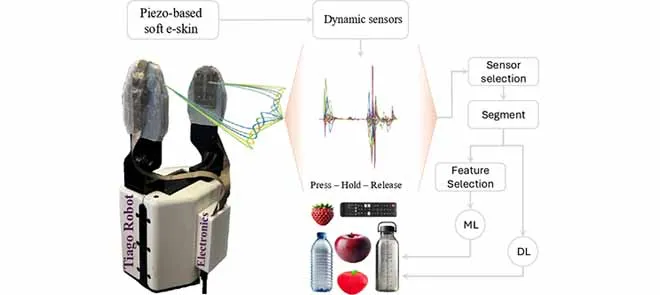
How can a robot recognize an object within hundreds of milliseconds while grasping it? This paper offers a solution through a flexible piezoelectric tactile-sensing electronic skin that enables robots to identify everyday objects from the earliest stages of contact. When combined with embedded artificial intelligence, this system provides fast, accurate, real-time recognition during manipulation. The advancements pave the way for more responsive, adaptive, and human-like robotic grasping in practical environments.
Bioinspired Tapered-Spring Turbulence Sensor for Underwater Flow Detection
Author: Yu Zhenhua, Jin Xiao, Nanayakkara Thrishantha
Published in: IEEE Sensors Journal (Volume: 26, Issue: 5, March 2026)
Summary Contributed by: Xiao Jin (Author)
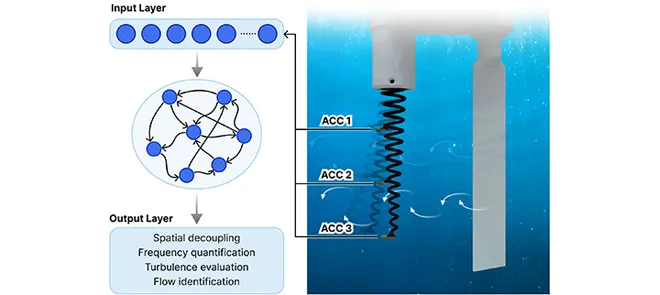
The mysterious underwater world is challenging to explore. Inspired by biological whiskers, this work presents a tapered-spring underwater sensor that converts flow-induced turbulence into spatially distributed vibration patterns. The system detects vortex shedding by combining mechanical encoding, embedded IMU sensing, frequency-domain analysis, Shannon entropy, and a lightweight logistic regression readout. It classifies hydrodynamic states in real time, offering a low-power sensing strategy for underwater robots operating in complex flow environments.
Published in: IEEE Sensors Journal (Volume: 26, Issue: 10, May 2026)
Summary Contributed by: Koffi Tresor Y. (Author)
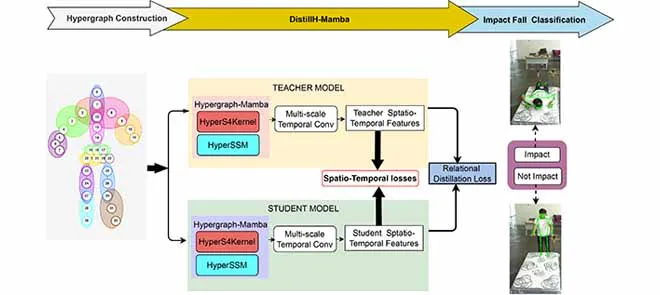
Detecting the precise moment of impact during a fall is challenging. DistillH-Mamba introduces an advanced fall detection method combining hypergraph modeling of multi-joint interactions with Mamba state-space temporal processing, compressed via relational knowledge distillation. It achieves high accuracy at lower computational cost, enabling faster, efficient impact-fall detection by capturing body movements and transferring knowledge from a larger model to a compact one, paving the way for real-time applications in wearable devices and smart healthcare.
Energy-Efficient Gas Sensing of NO and NO2 at Room Temperature Using Poly(triarylamine) Organic Semiconductor
Author: Panda Debashis, Singh Abhishek Kumar, Chaurasiya Akash
Published in: IEEE Sensors Journal (Volume: 26, Issue: 2, January 2026)
Summary Contributed by: Debashis Panda (Author)
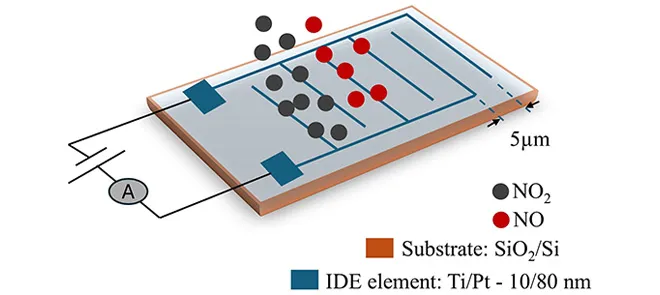
Nitrogen oxides (NO and NO2) generated by industrial activities pose a significant threat to the environment. This work demonstrates a room-temperature chemiresistive Nitrogen Oxides (NOx) gas sensor based on the p-type organic semiconductor poly(triarylamine) (PTAA). PTAA thin films deposited on interdigitated electrodes exhibit high response, excellent selectivity, and repeatability at a low operating voltage (1 V), highlighting their potential for low-power, real-time detection of toxic gases and NOx sensing applications.
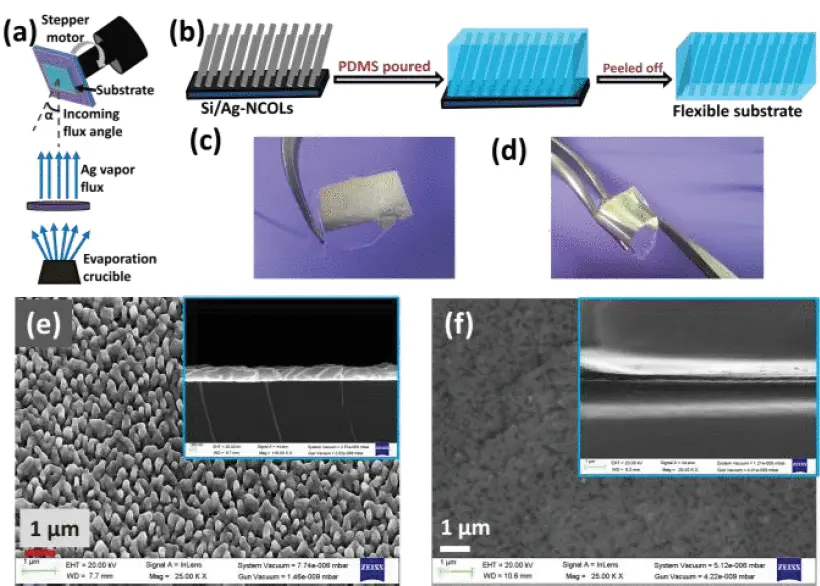
Mercury ions are one of the most hazardous heavy metal pollutants. This work presents a flexible plasmonic sensor comprising silver nano-columns (Ag-NCOLs) for detecting mercury ions (Hg2+) through rhodamine molecule’s fluorescence signal. The sensor can detect Hg2+ in liquid or dried form on the sensor chip, with detection limits of about 5 and 10 femtomolar (fM), respectively. These two sensing modes provide dual verification and support more reliable Hg2+ detection.
Radar detection of smaller targets requires lowering the radar cross-section and velocity thresholds. With it, an abundance of target signatures gets generated, making it necessary to classify only relevant targets. Micro-motions of targets are significant characteristics. Micro-Doppler signatures have emerged as an effective method of classifying such targets. The study presents a systematic review of various micro-Doppler-based radar target signature analysis and classification techniques.
The recent COVID outbreaks highlighted the need for breathing rate monitoring and increased the demand for hospitalized patients. Monitoring breathing rate is vital for diagnosing diseases and observing patients with pulmonary conditions. The pros and cons of different techniques are studied and categorized under contact and remote modes of respiratory monitoring systems. Various Radar-based methods found to be more suitable for respiration monitoring are discussed.
A non-profit organization, IEEE is the world's largest technical professional organization dedicated to advancing technology for the benefit of humanity.
Copyright 2023 IEEE – All rights reserved. Use of this website signifies your agreement to the IEEE Terms and Conditions
This site is also available on your smartphone.