Get exclusive breakthroughs on sensors in IoT, energy, healthcare, and more, delivered straight to your inbox.
"IEEE Sensors Alert" is a pilot project of the IEEE Sensors Council. Started as one of its new initiatives, this weekly digest publishes teasers and condensed versions of our journal papers in layperson's language.
Articles Posted in the Month (November 2024)
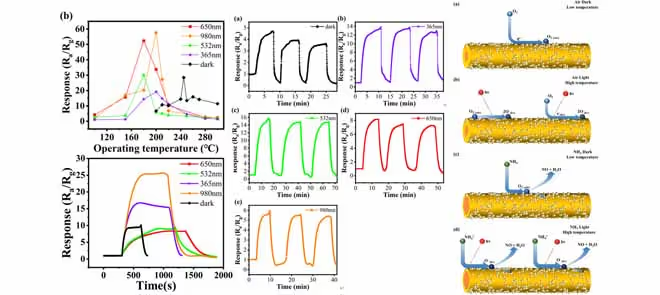
WS2 Gas Sensor Based on Photothermocatalytic Effect for Ammonia Detection With High Response
Published in: IEEE Sensors Journal (Volume: 22, Issue: 24, December 2022)
Summary Contributed by: Payal Savani
Ammonia (NH3), a vital environmental gas, is hazardous to health. Traditional methods to detect ammonia are slow and expensive. The study investigates the sensitivity, selectivity, and optimal operating conditions of Tungsten disulfide (WS2)-based gas sensors. Using materials like WS2 offers fast and effective detection methods, highlighting their strong response to ammonia, selectivity against other gasses, and improved efficiency under light illumination, offering valuable insights for developing more efficient gas detection technologies.
Published in: IEEE Sensors Journal (Volume: 24, Issue: 4, February 2024)
Summary Contributed by: Zhang Kehua (Author)
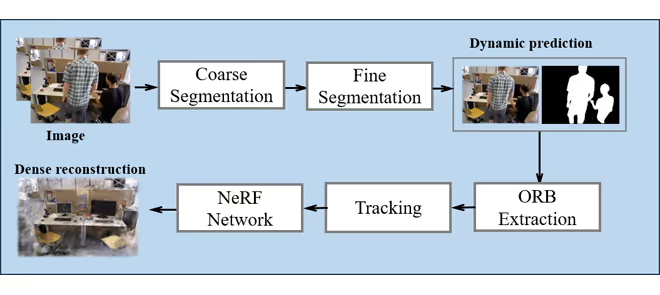
Simultaneous Localization and Mapping (SLAM) is essential for robots navigating new environments. DN-SLAM is a novel SLAM system designed to navigate dynamic environments. It integrates ORB (Oriented FAST and Rotated BRIEF) features for robust extraction and neural radiance fields (NeRF) for high-quality 3D representation to accurately estimate trajectory in dynamic environments. Its enhanced real-time tracking and dense mapping in dynamic scenes make it a promising solution for various robotics applications.
Published in: IEEE Sensors Journal (Volume: 22, Issue: 11, June 2022)
Summary Contributed by: Saurabh Dubey
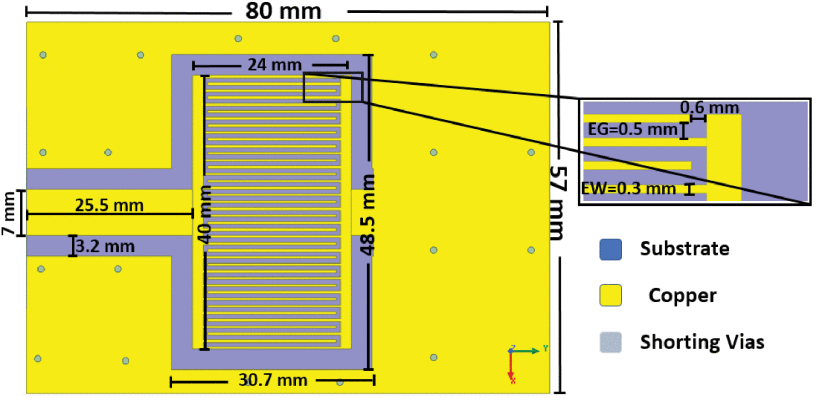
The Interdigital Capacitive sensor integrated with CPW (Coplanar Waveguide) feeding is economical and effective for measuring soil moisture, air humidity, and liquid levels. Coated with a Polyvinyl Alcohol layer, it maintains linearity for soil moisture and is reliable for liquid-level detection. Tested at 915 MHz, it exhibits high sensitivity. With low power consumption and reliability, it finds application across diverse fields like agriculture, oil, and medical equipment.
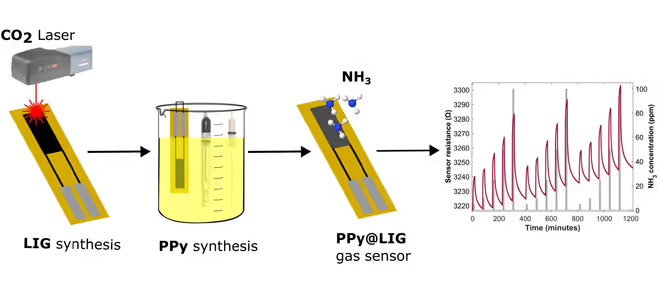
Low Cost, Flexible, Room Temperature Gas Sensor: Polypyrrole-Modified Laser-Induced Graphene for Ammonia Detection
Author: Salehnia Foad, Vilanova X., Llobet Eduard, Romero Nevado Alfonso Jose, Santos Ceballos Jose Carlos
Published in: IEEE Sensors Journal (Volume: 24, Issue: 7, April 2024)
Summary Contributed by: Salehnia Foad (Author)
The hazardous nature of ammonia (NH3) makes its monitoring crucial. The paper presents a novel, low-cost, and flexible ammonia gas sensor using polypyrrole-modified laser-induced graphene (PPy@LIG) developed for real-time monitoring and detection of ammonia in atmosphere. It demonstrates enhanced sensitivity, excellent repeatability, and a low detection limit of 1 ppm at room temperature. This breakthrough opens opportunities for advanced air quality monitoring systems and potential applications in agriculture and industrial settings.
Fabrication and Characterization of P3HT/MoS₂ Thin-Film Based Ammonia Sensor Operated at Room Temperature
Author: Ankit Verma, Praveen Kumar Sahu, Vivek Chaudhary, Arun Kumar Singh, V. N. Mishra, Rajiv Prakash
Published in: IEEE Sensors Journal (Volume: 22, Issue: 11, June 2022)
Summary Contributed by: Anupama
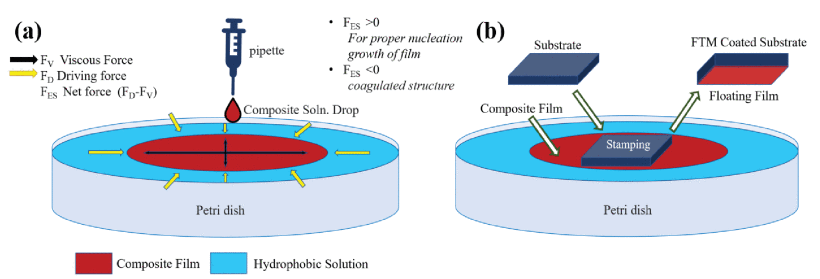
The study presents a high-performance ammonia gas sensor using poly(3-hexylthiophene)/molybdenum disulfide (P3HT/MoS2) nanocomposite in a top-contact organic field-effect transistor (OFET) assembly. The P3HT/MoS2 surface, with superior crystallinity and extended nanofiber morphology, improves charge interaction and transport with ammonia, yielding a gas sensor response of 63.45% at 100 ppm ammonia concentration. The fabricated OFET showcases high efficiency, sensitivity, and non-invasiveness, demonstrating significant potential for environmental protection as an ammonia gas sensor.
Published in: IEEE Sensors Journal (Volume: 24, Issue: 7, April 2024)
Summary Contributed by: Kaziz Sameh (Author)
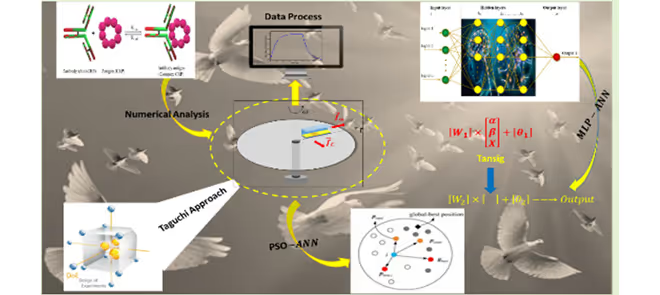
Advanced computational models like artificial neural networks (ANN) and particle swarm optimization with artificial neural networks (PSO-ANN) are revolutionizing the prediction of microfluidic biosensor performance. They predict detection times based on critical input variables and identify optimal conditions for enhanced biosensor performance by systematically varying key parameters. Machine learning (ML) algorithms analyze the data to predict outcomes and improve detection accuracy. The findings promise advancements in biosensor technology across diverse applications.
Published in: IEEE Sensors Journal (Volume: 22, Issue: 20, October 2022)
Summary Contributed by: Saurabh Dubey
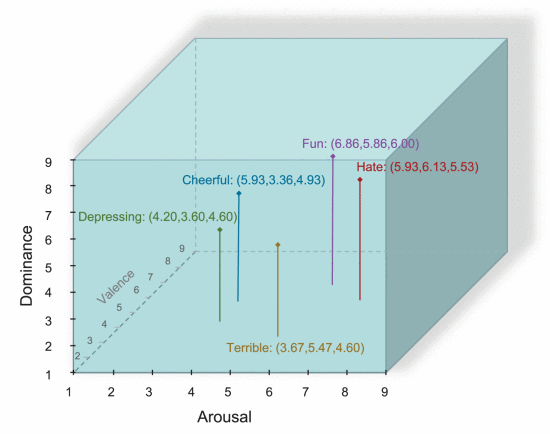
The advancements in human-computer interaction (HCI) have proved effective in training machines and fostered research in automatic emotion recognition. Convolutional neural networks (CNNs) have shown promising results in electroencephalogram (EEG)-based emotion recognition. The study investigates electroencephalogram (EEG) based signals for precise emotional recognition trained over novel and effective Convolutional Neural Networks (CNN) and Contrastive Learning methods. This technology holds promise for future applications in emotional understanding and mental health monitoring.
Development of Flexible Electronic Biosensors for Healthcare Engineering
Author: Yan Jian, Yan Jiasheng, Cheng Jie, Fu Yusheng, Guo Jinhong, Zhao Ying, Zhou Jun
Published in: IEEE Sensors Journal (Volume: 24, Issue: 8, April 2024)
Summary Contributed by: Jian Yan (Author)
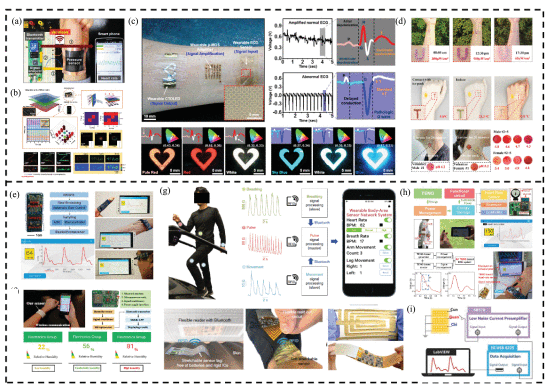
With the potential for real-time health monitoring and personalized diagnosis, wearable biosensors are the future of the healthcare system. The portability and stretchability of flexible electronics allow them to substitute bulky diagnostic devices with wearable devices, thus creating possibilities for non-invasive continuous health monitoring. These biosensors convert physiological data into interpretable information by integrating innovative sensing mechanisms and designs, enabling healthcare professionals to detect warning signs, diagnose diseases, and assess health accurately.
Published in: IEEE Sensors Journal (Volume: 22, Issue: 17, September 2022)
Summary Contributed by: Anupama
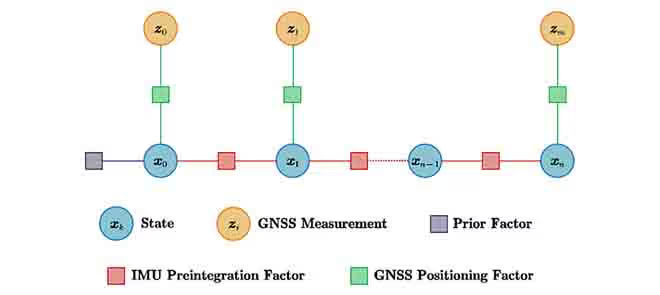
The paper explores the impact of Earth rotation compensation on the microelectromechanical systems-based inertial measurement units (MEMS-IMU) preintegration in navigation system accuracy. Experimental evaluations reveal substantial accuracy degradation without Earth rotation compensation and highlight the transformative potential of refined IMU preintegration in achieving high accuracy. The proposed advanced navigation system integrates global navigation satellite system positioning (GNSS) with IMU preintegration through Factor Graph Optimization, offering a promising avenue for enhanced accuracy and robustness in navigation systems.
Published in: IEEE Sensors Journal (Volume: 24, Issue: 9, May 2024)
Summary Contributed by: Palma Lorenzo (Author)
Accidental falls across age groups and occupations could affect the quality of life. This work presents an innovative deep-learning approach specifically designed for edge devices for fall detection. The wearable sensor combines a three-axis accelerometer, gyroscope, and pressure sensor. It operates in real-time, recognizing the actions performed and categorizing them as everyday activities or falls. The power-efficient, low-cost, simple model with 99.38% accuracy and 25ms inference time is practical for real-world applications.
Emotion recognition has garnered interest from researchers because of its importance in affective computing. Facial expressions can mask human emotions. However, studies show that electroencephalogram (EEG) signals can recognize and identify human emotions. Hence, EEG has emerged as an alternate method for emotion recognition. The paper proposes a novel approach through a reduced number of EEG electrode channels and a normalization method, demonstrating its promising applications in real-time emotion recognition.
Early detection and diagnosis of Cardiovascular diseases save lives. The arterial pulse wave velocity (PWV) is one of the essential parameters to diagnose and monitor cardiovascular risk and condition. In the emerging trends of noncontact monitoring, the researchers experimentally demonstrated the accuracy of contactless technology for measuring arterial pulse wave propagation using an array radar system and laser displacement sensors that could replace contact monitoring.
A non-profit organization, IEEE is the world's largest technical professional organization dedicated to advancing technology for the benefit of humanity.
Copyright 2023 IEEE – All rights reserved. Use of this website signifies your agreement to the IEEE Terms and Conditions
This site is also available on your smartphone.