Get exclusive breakthroughs on sensors in IoT, energy, healthcare, and more, delivered straight to your inbox.
"IEEE Sensors Alert" is a pilot project of the IEEE Sensors Council. Started as one of its new initiatives, this weekly digest publishes teasers and condensed versions of our journal papers in layperson's language.
Articles Posted in the Month (September 2026)
Hydrothermally Synthesized pH-Tailored Ag-Doped ZnO Nanostructure for Printed Room-Temperature NO₂ Gas Sensor
Author: Sumathi P., Behera Anupama, Patil Nikhila, Swaminathan Parasuraman, Thomas Neethu
Published in: IEEE Sensors Journal (Volume: 26, Issue: 4, February 2026)
Summary Contributed by: P. Sumathi (Author)
Effective monitoring of nitrogen dioxide (NO2) is essential for both human health and environmental safety. This paper presents a cost-effective silver-doped zinc oxide (AgZO) gas sensor developed through a pH-tailored hydrothermal technique. By evolving the morphology from flower-like to high-performing needle-like structure, the sensor achieves a 16.2% response at 32 PPM with rapid recovery. Its scalable, printable design enables low-cost integration into flexible electronics, enabling reliable, real-time gas detection.
Creep and Hysteresis Compensation in Pressure-Sensitive Mats for Improving Center-of-Pressure Measurements
Author: Martinez-cesteros Javier, Sanchez-Duran Jose A., Plaza Inmaculada, Medrano Sanchez Carlos Tomas, Castellanos-Ramos Julian
Published in: IEEE Sensors Journal (Volume: 23, Issue: 23, December 2023)
Summary Contributed by: Martinez-cesteros Javier (Author)
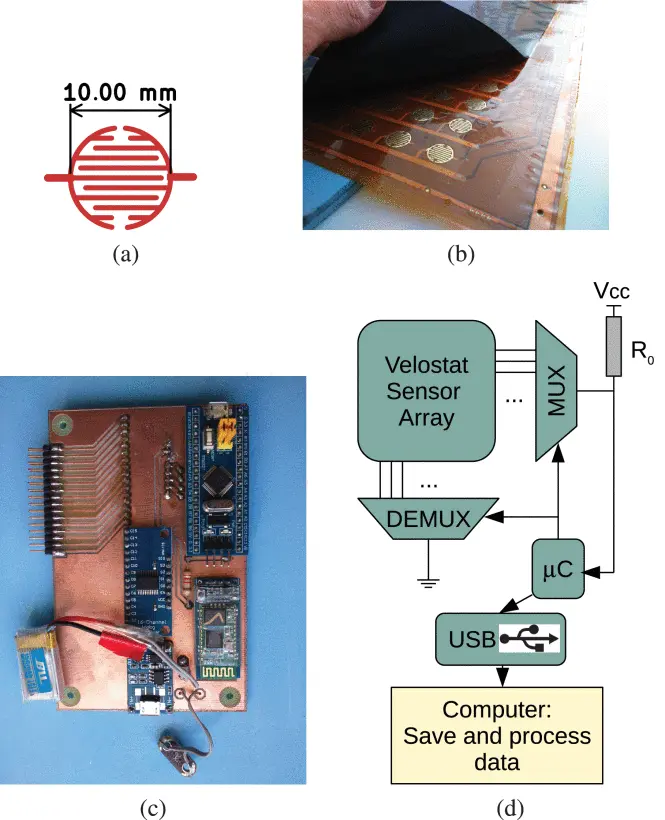
Plantar pressure systems assist in measuring force distribution and analyzing balance, gait, and posture. However, low-cost systems rely on sensors that exhibit complex nonlinearities, reducing their accuracy. A Velostat-based tactile sensor has been characterized, enabling researchers to model creep and hysteresis. Consequently, center-of-pressure measurements obtained from a Pressure Sensitive Mat closely resemble those from a Force Platform, making stability tests more accessible and accurate for healthcare applications and human-motion analysis.
Smart Diaper With Printed Capacitive Sensors and Integrated Front-End to Monitor Voided Fluid Volume
Author: Tanweer Muhammad, Tanweer Muhammad, Gillan Liam, Halonen Kari A.I., Monga Dipesh Chander, Sepponen Raimo, Tanzer I. Oguz
Published in: IEEE Sensors Journal (Volume: 24, Issue: 9, May 2024)
Summary Contributed by: Muhammad Tanweer (Author)
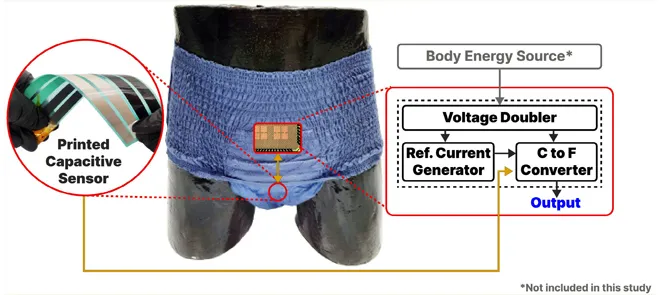
Caring for elderly individuals with urinary incontinence often requires frequent diaper checks and manual weighing, which can be uncomfortable for patients and time-consuming for caregivers. This work presents a smart adult diaper that integrates flexible printed capacitive sensors with an ultralow-power integrated front-end circuit to detect wetness. This smart diaper can estimate urine volume and has the potential to support future battery-less operation using harvested energy sources in wearable healthcare.
Estimating Internal and Reaction Forces in Cable Slabs Using High-Speed Imaging
Author: Al Saaideh Mohammad, Al-rawashdeh Yazan M., Al Janaideh Mohammad, Alatawneh N., Pumphrey M.
Published in: IEEE Sensors Journal (Volume: 26, Issue: 5, March 2026)
Summary Contributed by: Al Saaideh Mohammad (Author)
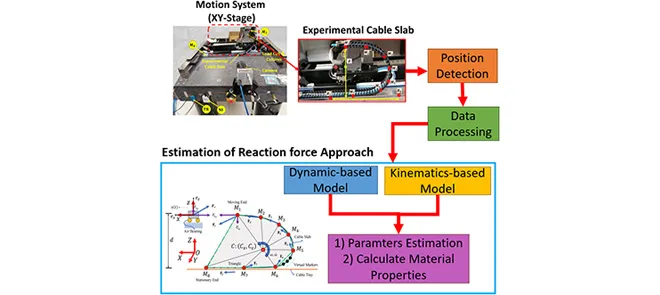
Cable slabs in precision motion systems generate reaction forces that can affect positioning accuracy. Measuring these forces requires the use of intrusive load cells. This paper introduces a vision-based method that estimates internal and reaction forces by tracking markers on the cable slab with a high-speed camera. Two models were developed: a dynamics-driven (Voigt viscoelastic) and a kinematics-driven (Newton's second law) model; both were experimentally validated under cyclic and acyclic motion profiles.
Design of a Closed-Loop Wireless Power Transfer System for an Implantable Drug Delivery Device
Author: Del Bono Fabiana, Bontempi Andrea, Demarchi Danilo, Dentis Andrea, Di Trani Nicola, Grattoni Alessandro, Motto Ros Paolo
Published in: IEEE Sensors Journal (Volume: 24, Issue: 6, March 2024)
Summary Contributed by: Fabiana Del Bono (Author)
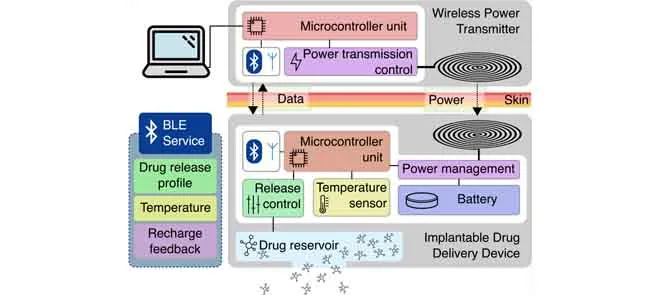
Active implantable medical devices (AIMDs) are surgically implanted devices that provide continuous or intermittent therapy for various medical conditions. Though they offer the potential for continuous, personalized therapies, the safety of in-body charging remains a concern. This work introduces a compact, closed-loop wireless power transfer (WPT) system that adapts in real time to movement and misalignment, ensuring reliable charging while preventing overheating—paving the way for long-term, connected implantable therapies.
Published in: IEEE Sensors Journal (Volume: 25, Issue: 20, October 2025)
Summary Contributed by: Gross Sonja (Author)
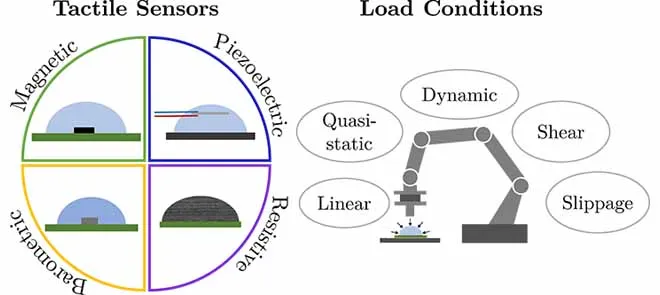
Tactile sensing is essential for strong robotic grasping and human-like interaction. However, developing effective tactile sensors is challenging due to differing experimental methods. This study experimentally compares nine tactile sensor prototypes based on commercially available barometric, magnetic, piezoresistive, and piezoelectric components. Using a robot-driven benchmark setup, it evaluates the performance of these sensors under loading conditions relevant to grasping, providing reproducible insights to enhance tactile sensor design and sensor fusion strategies.
SSCATeR: Sparse Scatter-Based Convolution Algorithm With Temporal Data Recycling for Real-Time 3-D Object Detection in LiDAR Point Clouds
Author: Dow Alexander John Stephen, Bartlett Ben, Dooly Gerard, Manduhu Manduhu, Riordan James, Santos Matheus
Published in: IEEE Sensors Journal (Volume: 26, Issue: 6, March 2026)
Summary Contributed by: Alexander Dow (Author)
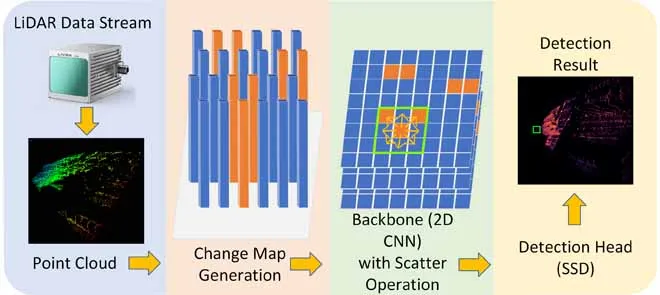
Drone swarm operations are becoming increasingly common, but they require a fast, efficient 3-D object detection method for safe navigation. This paper aims to reduce the latency of LiDAR-based drone detection networks by introducing a sparse scatter-based convolution algorithm with temporal data recycling (SSCATeR). SSCATeR reuses previous results where the point cloud remains unchanged, reducing processing latency without compromising accuracy. The approach enables real-time implementation and improves responsiveness in dynamic environments.
Published in: IEEE Sensors Journal (Volume: 26, Issue: 5, March 2026)
Summary Contributed by: Eduardo Palermo (Author)
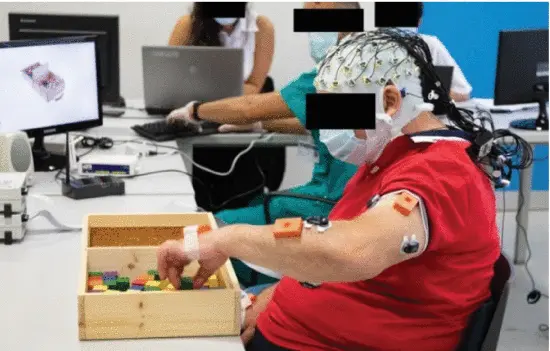
Upper limb function in stroke survivors is usually evaluated using the Box and Block test (BBT). In this work, researchers conducted an experiment involving stroke survivors and healthy controls. They employed motion capture technology, using an inertial measurement unit (IMU)-based system and a biomechanical model to identify indices of stroke-related motor impairment. A series of indices associated with hand motion and lumbar angle emerged as kinematic biomarkers of the pathology.
NEMO: Real-Time Noise and Exhaust Emissions Monitoring for Sustainable and Intelligent Transportation Systems
Author: Rauniyar Ashish, Berge Truls, Kuijpers Ard, Litzinger Paul, Peeters Bert, Gils Erik Van, Kirchhoff Nikolas, Hakegard Jan Erik
Published in: IEEE Sensors Journal (Volume: 23, Issue: 20, October 2023)
Summary Contributed by: Ashish Rauniyar (Author)
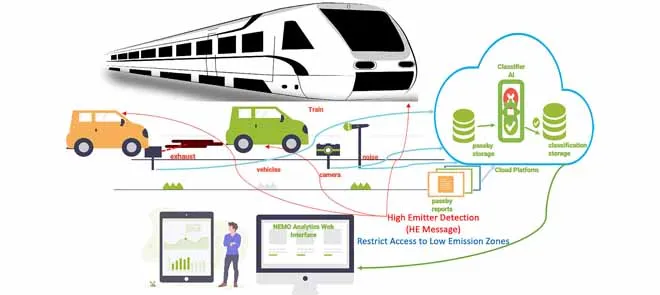
Transport noise affects over 113 million Europeans, while vehicles account for 29% of global CO2 emissions. NEMO (Noise and Emissions Monitoring and Radical Mitigation) is a real-time, AI-powered remote sensing system that simultaneously detects noise and exhaust emissions from road vehicles and trains. It instantly identifies high emitters and notifies drivers through in-vehicle displays, email, or SMS. Tested across multiple European cities, NEMO empowers smarter low-emission zone enforcement.
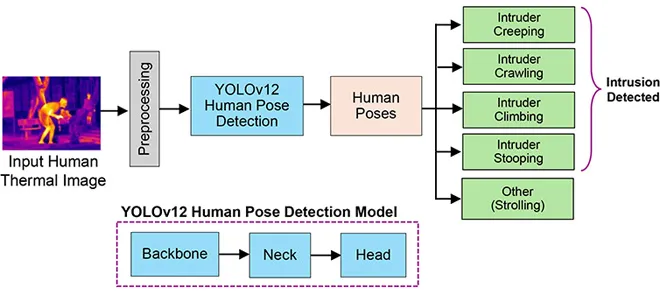
Automated real-time intrusion alert systems are crucial for security and surveillance. Thermal imaging, an effective alternative to traditional RGB systems, enhances privacy and performance, especially in low-light conditions. The proposed framework uses the YOLO architecture for real-time human pose classification from thermal images, improving low-visibility surveillance. It classifies five intruder pose categories and optimizes the YOLOv12n model for maximum accuracy and efficiency, while evaluating performance under various image degradation conditions.
Smart bandages can accelerate healing, avoiding infections of severe injuries or surgical wounds by real-time wound assessments. The wound’s healing state can be predicted by tracking parameters like temperature, pressure, pH, and acidity. A smart bandage prototype embedded with wireless temperature and pressure sensors based on a conductive polymer, PEDOT: PSS (poly(3,4-ethylenedioxythiophene) polystyrene sulfonate), and an NFC (Near-field communication) tag is proposed. This battery-less system provides a cost-effective alternative for medical applications.
Unmanned aerial vehicles (UAV) applications are often heavily dependent on artificial intelligence (AI) methods. Traditional cloud-based AI can find it hard to meet various UAV requirements, such as low latency and energy consumption. Edge AI, where AI is run on-device or at edge servers, is a viable solution. The researchers present an in-depth review of the convergence of edge AI and UAVs.
A non-profit organization, IEEE is the world's largest technical professional organization dedicated to advancing technology for the benefit of humanity.
Copyright 2023 IEEE – All rights reserved. Use of this website signifies your agreement to the IEEE Terms and Conditions
This site is also available on your smartphone.