Get exclusive breakthroughs on sensors in IoT, energy, healthcare, and more, delivered straight to your inbox.
"IEEE Sensors Alert" is a pilot project of the IEEE Sensors Council. Started as one of its new initiatives, this weekly digest publishes teasers and condensed versions of our journal papers in layperson's language.
Articles Posted in the Month (January 2023)
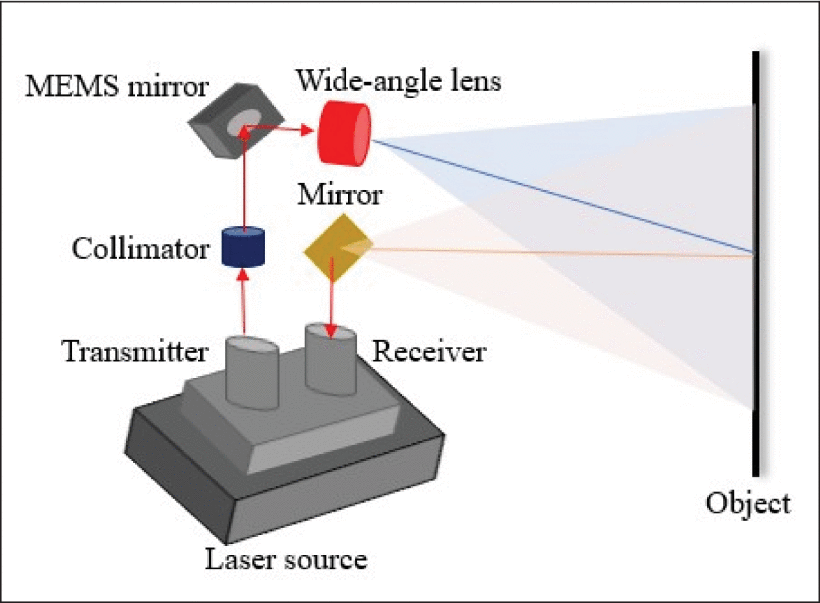
Design and Realization of Wide Field-of-View 3D MEMS LiDAR
Author: Chia-Hsing Lin, Hao-Sheng Zhang, Chia-Ping Lin, Guo-Dung J. Su
Published in: IEEE Sensors Journal (Volume: 22, Issue: 1, January2022)
Summary Contributed by: Dayarnab Baidya
The usual MEMS mirror-based Light detection and ranging (LiDAR) systems are suitably lightweight and accurate but have a narrow field of view (FOV). The proposed LiDAR prototype with a customized wide-angle lens in front of the MEMS mirrors could successfully scan a large FOV to produce a 3D image with negligible distortion. Successful integration may increase its potential use in autonomous vehicles, drones, mobile robotic devices, disaster prediction etc.
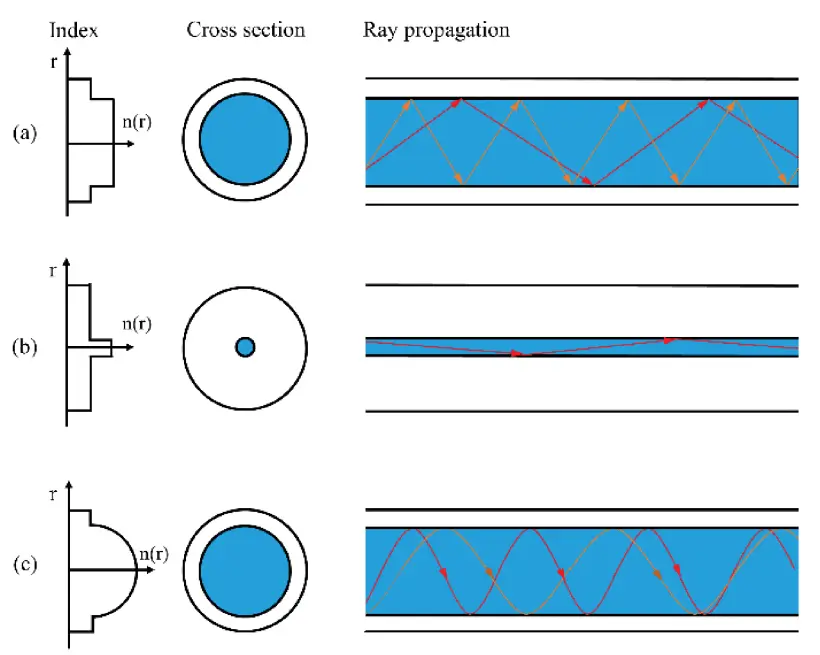
Polymer Optical Fiber Liquid Level Sensor: A Review
Author: Runjie He, Chuanxin Teng, Santosh Kumar, Carlos Marques, Rui Min
Published in: IEEE Sensors Journal (Volume: 22, Issue: 2, January 2022)
Summary Contributed by: Rui Min (Author)
Polymer optical fibers (POFs) are compact, flexible, and resistant to chemical corrosion and electromagnetic interference. POFs are an excellent choice for high accuracy liquid level sensing. The materials like polymethyl methacrylate (PMMA) and perfluorinated polymer (CYTOP) are selected based on their bandwidth, chemical, and absorption characteristics. POFs with intensity modulation and wavelength modulation show better performance in liquid-level sensing.
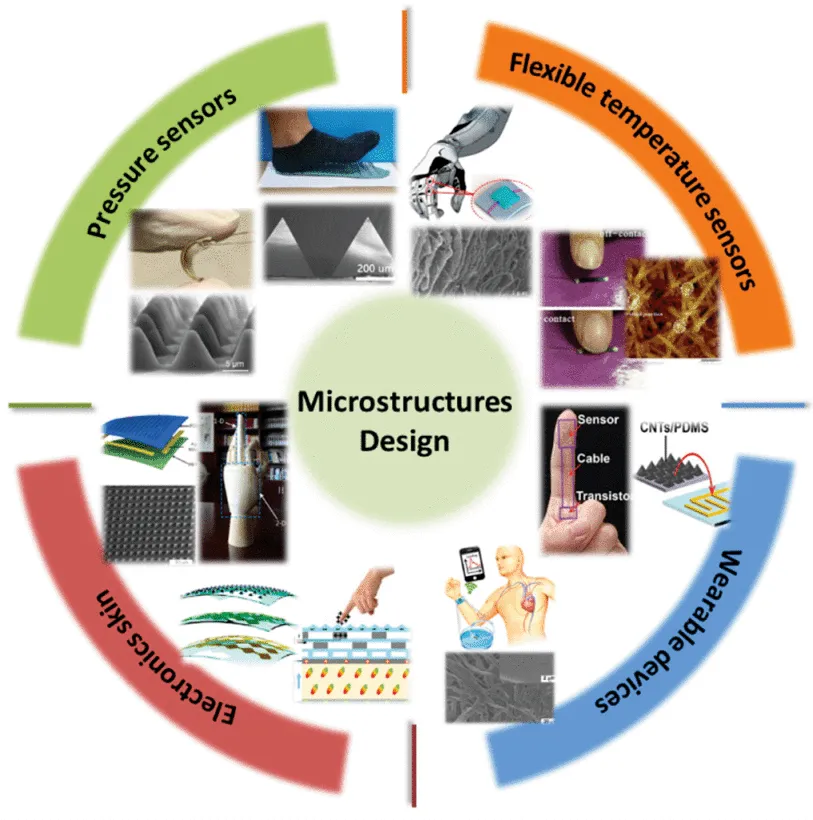
Recent Applications of Different Microstructure Designs in High Performance Tactile Sensors: A Review
Author: Xuguang Sun, Tiezhu Liu, Jun Zhou, Lei Yao, Shuli Liang, Ming Zhao, Chunxiu Liu, Ning Xue
Published in: IEEE Sensors Journal (Volume: 21, Issue: 9, May2021)
Summary Contributed by: E.V.V. Hari Charan
The Internet of Things, robot hands, and smart living has increased the demand to develop flexible tactile sensors. The tactile sensors have perspective applications in healthcare monitoring, electronic skin, and artificial intelligence. The microstructure of the sensing unit is an essential factor in developing and improving the tactile sensor's sensitivity, response time, resolution, and robustness.
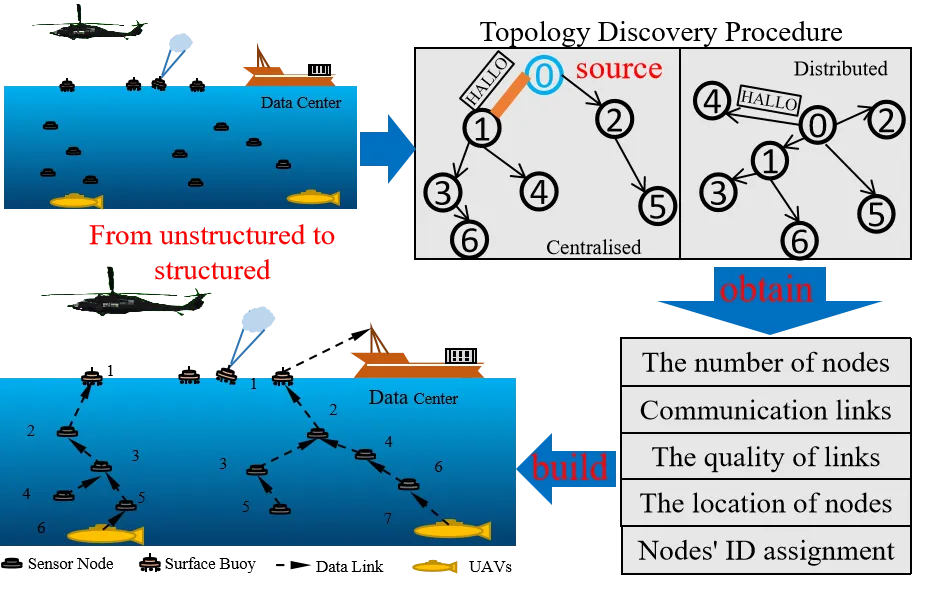
Fundamentals and Advancements of Topology Discovery in Underwater Acoustic Sensor Networks: A Review
Author: Yuan Liu, Haiyan Wang, Xiaohong Shen, Ruiqin Zhao, Lin Cai
Published in: IEEE Sensors Journal (Volume: 21, Issue: 19, October 2021)
Summary Contributed by: Yuan Liu (Author)
Underwater acoustic sensor networks (UANs) are an enabling technology to explore and uncover the mysterious oceans, a vast unknown territory on Earth. The first and often neglected challenge to building a UAN is to discover network topology. The study presented here provides a comprehensive review of existing approaches for UAN topology discovery, the challenges, and the opportunities beckoning further research.
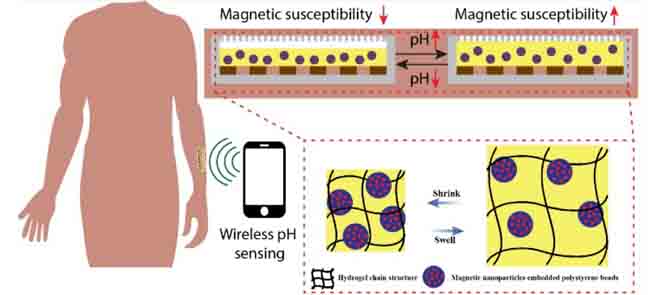
Susceptibility of Stimuli-Responsive Hydrogels With Embedded Magnetic Microparticles for Inductively Wireless Chemical Sensing
Author: J. H. Park, S. H. Song, M. Ochoa, H. Jiang
Published in: IEEE Sensors Journal (Volume: 22, Issue: 2, January 2022)
Summary Contributed by: Abhishek Srivastava
Understanding the role of pH value in clinical diagnostic and drug delivery has recently gained research interest. Measuring pH value helps diagnose and assess different medical conditions, like skin structure and wound status, during a healing process. pH sensing is also used to control the release of the drug at the site of its measurement. The paper presents the susceptibility characterization of magnetic microparticles for sensing pH values for biomedical applications.
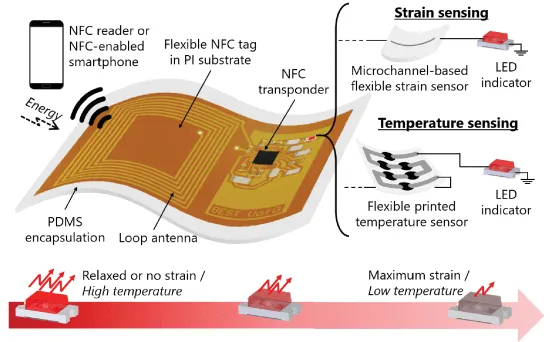
Neglecting quality monitoring can lead to contamination and degradation of packaged food. Temperature variation during storage encourages the growth of microorganisms and bacteria, making supervision essential for quality control. Smart packaging with inbuilt temperature and strain sensors can detect these anomalies caused by microbial contamination. The sensor also incorporates an NFC (near field communication) tag and an LED (light emitting diode) indicator for user-friendly notification.
Published in: IEEE Sensors Journal (Volume: 21, Issue: 22, November 2021)
Summary Contributed by: Pranjali Maru
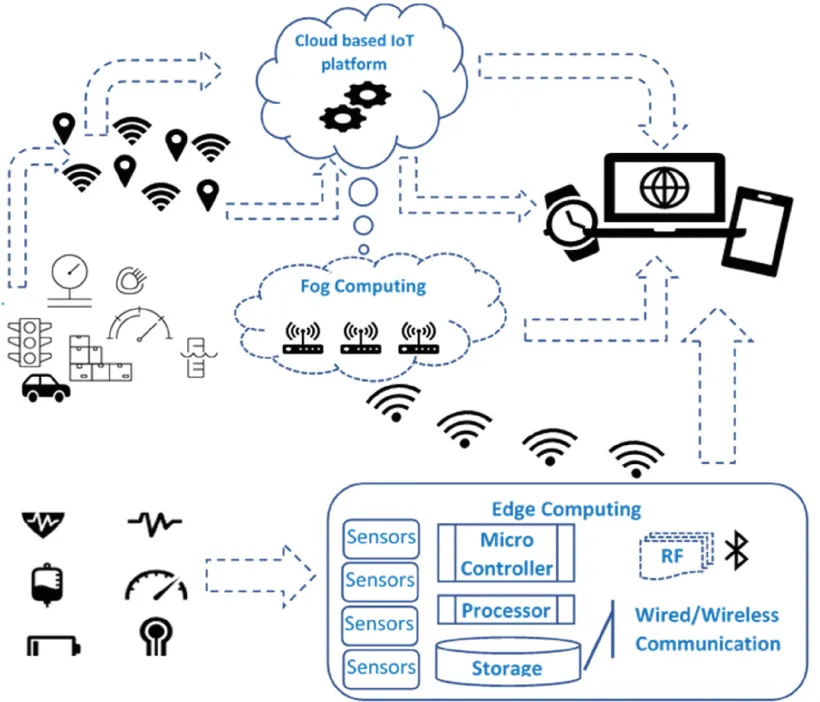
IoT applications, with their unique functionality and applications, are improving human lives. Analysis of a large amount of sensor data collected from these applications is made possible with the help of AI. The convergence of AI and IoT has proven to be a successful idea and has found its applications in health care, agriculture, the environment, and transportation.
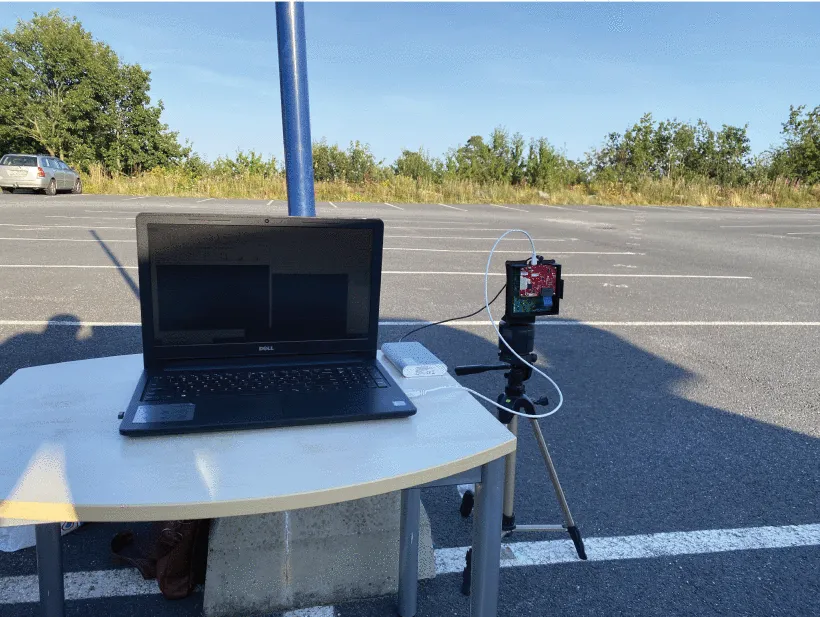
In autonomous systems, mmWave radar sensors are highly reliable for target localization and tracking. However, due to the limited number of transceivers, they cannot accurately estimate the angle of arrival (AoA) of the targets. The researchers developed a novel machine learning-based AoA estimation and field of view (FoV) enhancement techniques for mmWave FMCW radars operating in the frequency range of 77-81 GHz. It has an improved field of view in both azimuth and elevation.
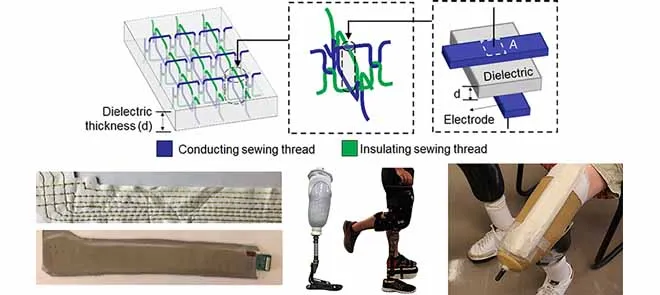
Textile-Based Pressure Sensors for Monitoring Prosthetic-Socket Interfaces
Author: Jordan Tabor, Talha Agcayazi, Aaron Fleming, Brendan Thompson, Ashish Kapoor, Ming Liu, Michael Y. Lee, He Huang, Alper Bozkurt, Tushar K. Ghosh
Published in: IEEE Sensors Journal (Volume: 21, Issue: 7, April 2021)
Summary Contributed by: Jordan Tabor (Author)
Transtibial amputees face many challenges while wearing prosthetic devices, including chronic discomfort. The commercially available rigid sensors are often used to understand the inner prosthetic environment better. It causes amputees additional discomfort during use. Here, the researchers propose a flexible, textile-based sensing method for prosthetic monitoring and a systematic approach to testing and integrating the sensors within prosthetics.
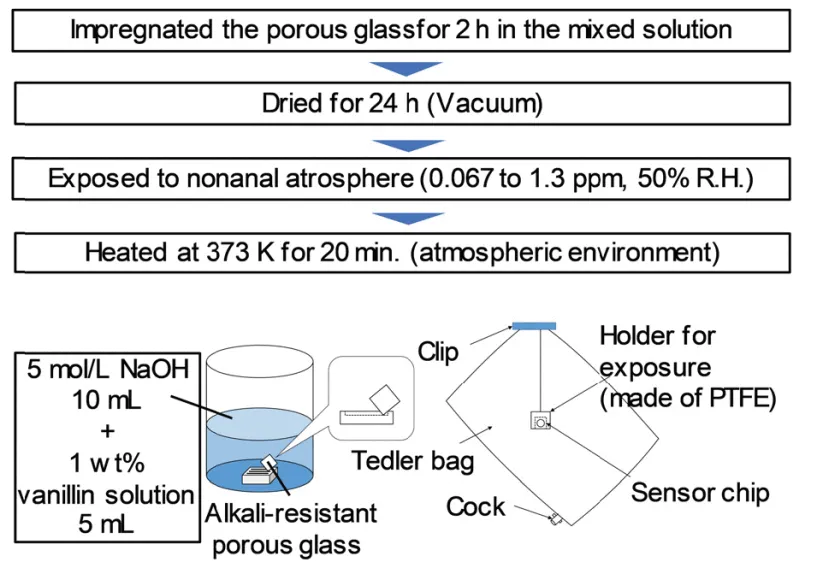
Early-stage lung cancer is difficult to detect. High-accuracy lung cancer diagnostic methods have previously been reported by measuring the concentration of nonanal gas in exhaled breath. Here, the researchers used alkaline catalysts in nonanal detection reactions inside a suitable glass with nanoscale pores by developing an alkali-resistant porous glass, thus fabricating a simple and highly sensitive nonanal gas sensor.
Improper and prolonged storage of perishable food items like meat and fruits may lead to microbial contamination and spoilage. The paper presents an electronic nose (EN) system, a portable electronic gas-sensing device comprising a sensor array-based gas identification, concentration estimation system, and data acquisition circuit boards. A machine learning algorithm assists it. It accurately detects gases like ammonia (NH3), hydrogen sulphide (H2S), and ethanol (C2H5OH) emitted by spoiled food.
Wearable electronics, mobile applications, the Internet of Things (IoT) technology, and remote monitoring have revolutionized the health care system. The technological advancement in microfabrication techniques has enabled miniaturization and multi-sensing biosensors devices to monitor vital parameters in bioprocesses. Along with its multiple benefits like compact size, low cost, low power consumption, it can also monitor Cell’s density, oxygen, lactate, glucose, temperature, and pH in real-time.
A non-profit organization, IEEE is the world's largest technical professional organization dedicated to advancing technology for the benefit of humanity.
Copyright 2023 IEEE – All rights reserved. Use of this website signifies your agreement to the IEEE Terms and Conditions
This site is also available on your smartphone.