Get exclusive breakthroughs on sensors in IoT, energy, healthcare, and more, delivered straight to your inbox.
"IEEE Sensors Alert" is a pilot project of the IEEE Sensors Council. Started as one of its new initiatives, this weekly digest publishes teasers and condensed versions of our journal papers in layperson's language.
Articles Posted in the Month (April 2026)
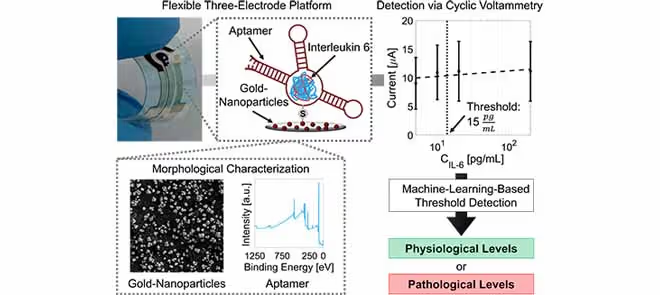
Machine Learning-Enhanced Flexible IL-6 Sensor for Rapid Threshold Detection
Author: Ploner Moritz, Antrack T., Bianchi Valentina, Boni Andrea, Canteri R., De Munari Ilaria, Lugli Paolo, Petti Luisa, Resnati D., Shkodra Bajramshahe, Stighezza M., Vanzetti L.
Published in: IEEE Sensors Journal (Volume: 25, Issue: 23, December 2025)
Summary Contributed by: Moritz Ploner (Author)
Early detection of elevated interleukin-6 (IL-6), an important biomarker of inflammation, is essential for effectively managing inflammatory diseases. Conventional blood test methods are invasive and unsuitable for continuous monitoring. This paper introduces a conformable sweat-based sensor that integrates electrochemical sensing with machine learning to detect IL-6, which alerts when IL-6 reaches abnormal levels. This innovative approach enables rapid, more reliable real-time point-of-care diagnostics and improves wearable health monitoring systems.
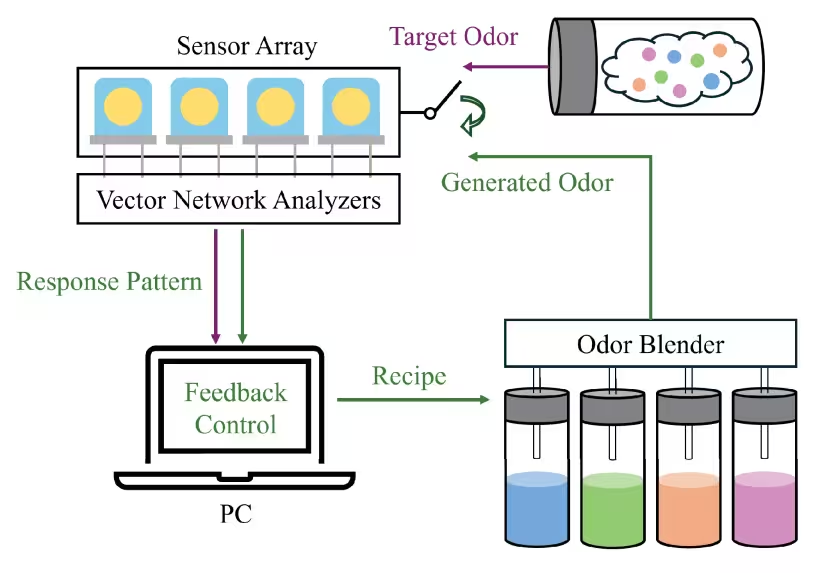
Quantifying odor mixtures is essential for recording and reproducing specific odors. However, it poses challenges due to the cross-sensitivity of gas sensors. This work measured frequency shifts and resistance changes of multiple harmonics in a Quartz Crystal Microbalance (QCM) sensor array. The approach significantly improved the selectivity of the sensors and accuracy in quantifying quaternary odor mixtures, opening prospects in environmental monitoring, healthcare diagnostics, food quality control, and artificial olfaction systems.
Published in: IEEE Sensors Journal (Volume: 25, Issue: 21, November 2025)
Summary Contributed by: Federica Villa (Author)
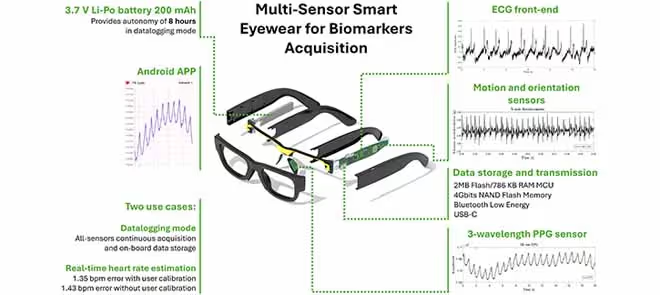
Smart eyewear, or smart glasses, is an innovative wearable tech for unobtrusive health monitoring. However, most available smart eyewear has limited sensor integration and processing capabilities. This paper presents a standalone multisensor platform fully embedded into a standard eyewear frame, capable of tracking cardiorespiratory and activity metrics for over eight hours. It paves the way for comfortable, non-invasive, wearable health technology for early diagnosis and personalized real-time healthcare monitoring.
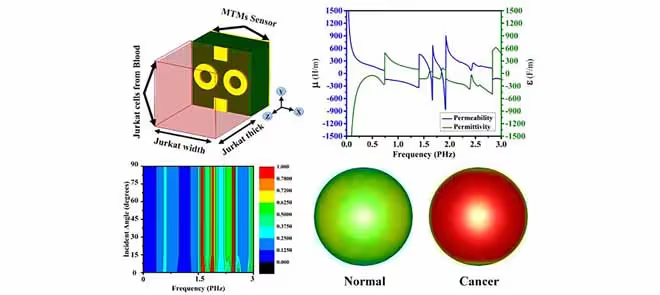
Development of a High-Sensitivity Triple-Band Nano-Biosensor Utilizing Petahertz Metamaterials for Optimal Absorption in Early-Stage Leukemia Detection
Author: Hamza Musa, Islam Md. Shabiul, Islam Mohammad Tariqul, Farmani Ali, Iffat Naqvi Syeda, Koziel Slawomir, Lavadiya Sunil, Sanches Bruno, Ud Din Iftikhar
Published in: IEEE Sensors Journal (Volume: 25, Issue: 8, April 2025)
Summary Contributed by: Saurabh Dubey
An early detection of Leukemia, a life-threatening blood cancer, is critical for improving patient outcomes. However, current diagnostic methods, such as bone marrow biopsies, are invasive and time-consuming. This study presents a triple-band petahertz nano-biosensor designed for label-free detection of leukemia-related changes in blood samples. The proposed platform enables sensitive, noninvasive analysis through distinct electromagnetic signatures. This technology supports rapid screening, lab-on-chip integration, and future AI-assisted diagnostics for blood cancer.
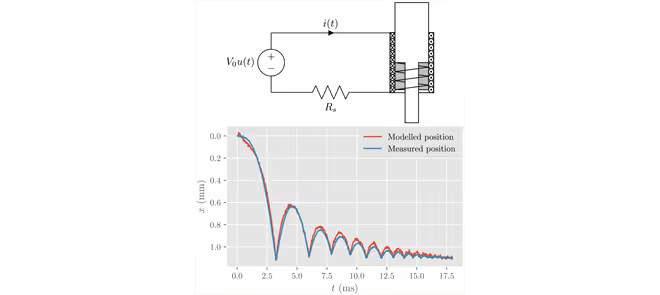
Impact Solenoid Modeling for Current-Dependent Piston Position Estimation
Author: Spekreijse Sam, Hayes Michael, Yang Le
Published in: IEEE Sensors Journal (Volume: 25, Issue: 24, December 2025)
Summary Contributed by: Spekreijse (Author)
Impact solenoids are specialized electromagnets with captive pistons that convert electrical energy into mechanical impact. They are used in industrial automation, automotive systems, and electromechanical devices, where precise piston position measurements are crucial. However, it requires dedicated sensors, which increases costs. This study presents a method for tracking the piston position of off-the-shelf solenoids during impacts by measuring the coil current. This sensorless approach achieves near-accurate position estimation across various solenoid models.
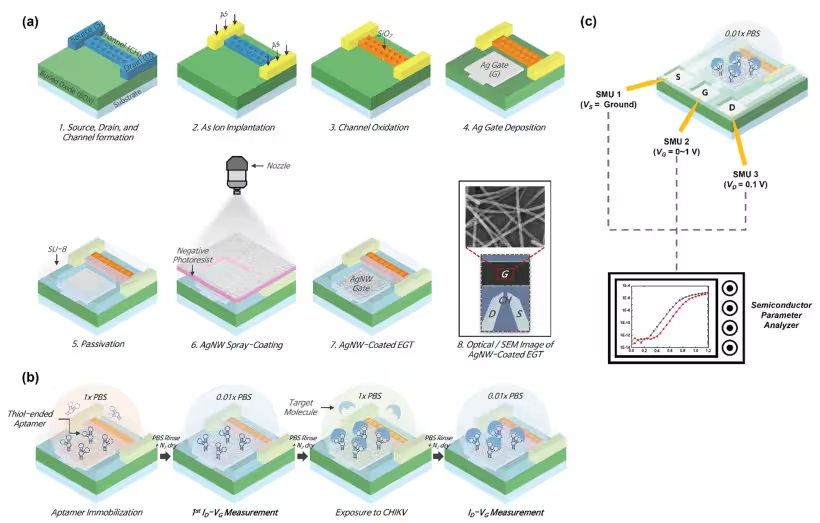
Highly Enhanced Sensing Performances of Si-Based Electrolyte-Gated Transistor (EGT) Using Silver Nanowire Coating Method in Chikungunya Detection
Author: Lee Jeong-soo, Do Jeonghyeon, Kim Kihyun, Shin Seong-Hwan, Son Jongmin
Published in: IEEE Sensors Journal (Volume: 25, Issue: 24, December 2025)
Summary Contributed by: Jeong-Soo Lee (Author)
Chikungunya virus (CHIKV) remains challenging to diagnose early due to symptom overlap with other mosquito-borne diseases. This work presents a highly sensitive silicon-based biosensor enhanced with a silver nanowire-coated gate. These nanowires boost the electrical performance and surface reactivity of the sensor, enabling rapid, accurate, and ultralow-concentration detection of viral proteins. The approach significantly improves sensitivity and selectivity, offering a promising route toward early detection and reliable point-of-care diagnostics.
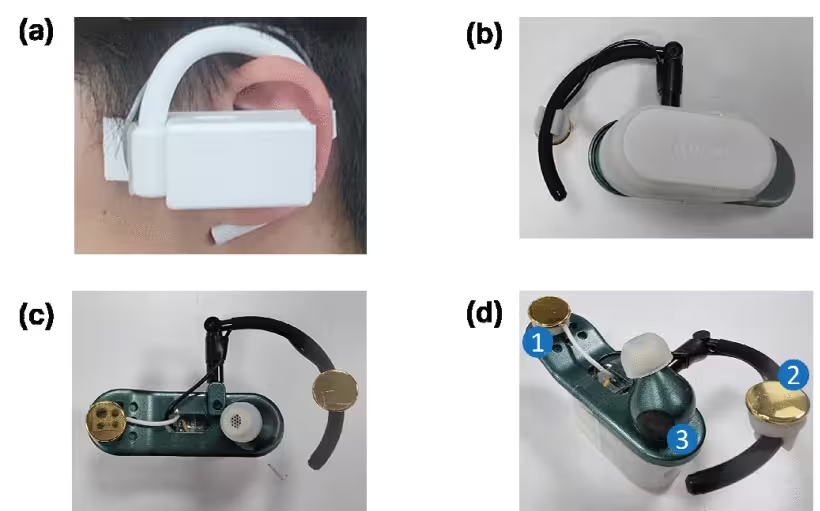
Development of a New Around-the-Ear Electroencephalography Device for Passive Brain–Computer Interface Applications
Author: Ahn Hyunjin, Im Chang-hwan, Kim Jung-Hwan, Kim Minsu, Kim Seonho, Kim Suhye, Kim Yoosung, Oh Eunkyu, Park Dasom
Published in: IEEE Sensors Journal (Volume: 25, Issue: 18, September 2025)
Summary Contributed by: Hyunjin Ahn (Author)
A brain-computer interface (BCI) enables users to control external devices using their brain signals. This paper introduces a compact around-the-ear electroencephalography device that captures brain signals through discreet sensors placed around the ear. It demonstrates reliable signal quality, better performance across passive BCI tasks, preference prediction, and drowsiness detection. This wearable device paves the way for monitoring brain activity in fields such as neuromarketing and neuroeducation, demonstrating its practical potential.
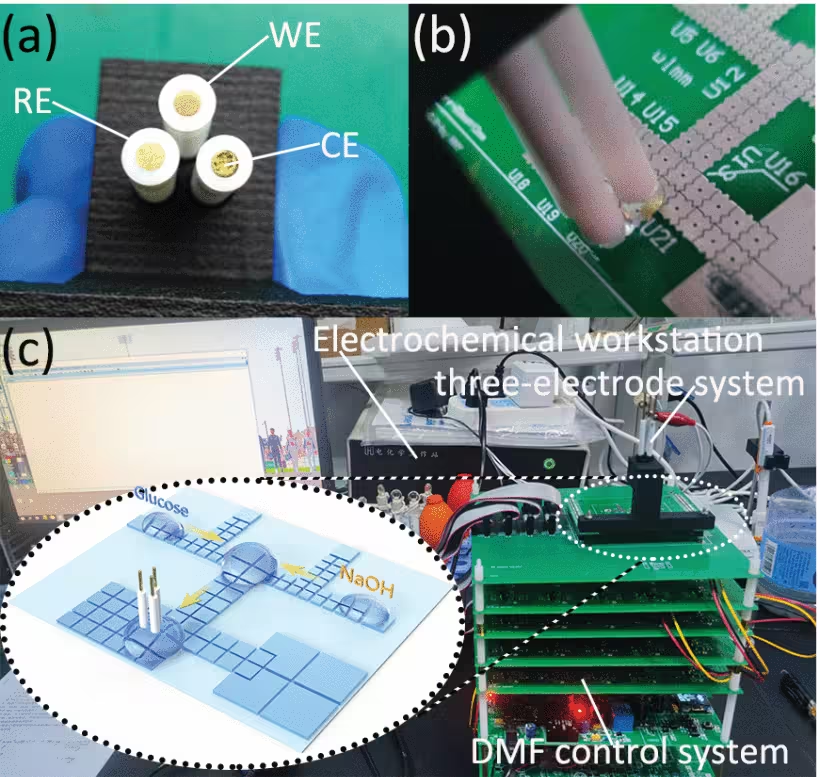
Easy-to-Fabricate Digital Microfluidic Chip Based on PCB With Glucose Enzyme-Free Detection Function
Author: Xu Chuanpei, Cen Yuanyin, Han Guo-Cheng, Huang Heyue, Li Siyu, Zhan Tao, Zhang Bo
Published in: IEEE Sensors Journal (Volume: 25, Issue: 24, December 2025)
Summary Contributed by: Heyue Huang and Chuanpei Xu (Authors)
Glucose is a crucial health indicator. This study presents an easy-to-fabricate digital microfluidic chip built on a printed circuit board (PCB), enabling precise control of sample and sodium hydroxide (NaOH) droplets to create an alkaline environment necessary for enzyme-free glucose detection. The Simple fabrication process, reliable sensing performance, and low cost of this portable PCB-based microfluidic device open possibilities for lab-on-chip applications, point-of-care diagnostics, and wearable devices for broader use.
Published in: IEEE Sensors Journal (Volume: 25, Issue: 24, December 2025)
Summary Contributed by: Wu Zhicheng (Author)
Moisture sensors have a wide range of applications in environmental monitoring, agriculture, food processing, healthcare, and scientific research. This study fabricates porous polyimide (PI) moisture sensors using the nonsolvent-induced phase separation (NIPS) method. By balancing the micropore size and imidization degree of porous PI films, it achieves fast response (9 s) and low humidity hysteresis (2.8% RH) in moisture sensing, providing a novel strategy for developing next-generation high-performance moisture sensors.
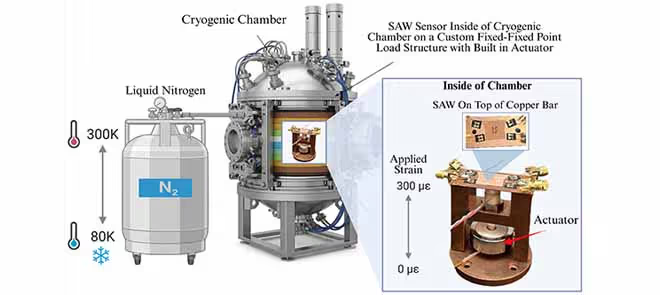
Temperature and Strain Sensing Characteristics of a 128° YX-Cut LiNbO3 Rayleigh-Mode SAW Sensor From Room to Cryogenic Temperatures
Author: Li Fang, E Fernando Camino, Kohler Michael, Luo Jiaxing, Voiculescu Ioana R.
Published in: IEEE Sensors Journal (Volume: 25, Issue: 24, December 2025)
Summary Contributed by: Fang Li (Author)
Surface acoustic wave (SAW) sensors offer a unique way to monitor extreme cryogenic environments without batteries or wiring. This study explores a lithium-niobate SAW device that accurately detects temperature and mechanical strain from room temperature down to cryogenic levels. It also analyzes how acoustic waves behave under various conditions, emphasizing the sensor's reliability and sensitivity, and advancing its applications in aerospace, cryogenic engineering, biomedicine, and next-generation wireless sensing technologies.
The usual MEMS mirror-based Light detection and ranging (LiDAR) systems are suitably lightweight and accurate but have a narrow field of view (FOV). The proposed LiDAR prototype with a customized wide-angle lens in front of the MEMS mirrors could successfully scan a large FOV to produce a 3D image with negligible distortion. Successful integration may increase its potential use in autonomous vehicles, drones, mobile robotic devices, disaster prediction etc.
RFID-a radio-frequency identification technology, is gaining popularity as a wireless sensor for track and trace applications. The high cost of chipped-RFID tags makes them unsuitable for mass production. The Chipless-RFID tag is lightweight, durable, reliable, and energy-sufficient and can be mass-produced using inexpensive conductive inks or yarns. Improving range and data capacity in chipless-RFID tags could make them indispensable as wearables.
A non-profit organization, IEEE is the world's largest technical professional organization dedicated to advancing technology for the benefit of humanity.
Copyright 2023 IEEE – All rights reserved. Use of this website signifies your agreement to the IEEE Terms and Conditions
This site is also available on your smartphone.