



Easy-to-Fabricate Digital Microfluidic Chip Based on PCB With Glucose Enzyme-Free Detection Function
Blood glucose testing is a routine part of many physical examinations. As the number of people with diabetes increases, regular blood glucose monitoring has become even more crucial. The enzyme-free detection method can quickly and accurately measure glucose using electrochemical methods without requiring glucose oxidase or other enzymes.
The enzyme-free electrochemical detection method for glucose offers high sensitivity and good stability, with broad prospects for point-of-care testing (POCT) and blood glucose monitoring. Digital microfluidic (DMF) chips excel at an enzyme-free detection method that requires an alkaline environment and at manipulating the mixing of tiny droplets to adjust their pH. However, the traditional fabrication process for digital microfluidic chips is relatively complex and costly. Hence, there are currently relatively few applications that combine digital microfluidic chips with glucose enzyme-free detection.
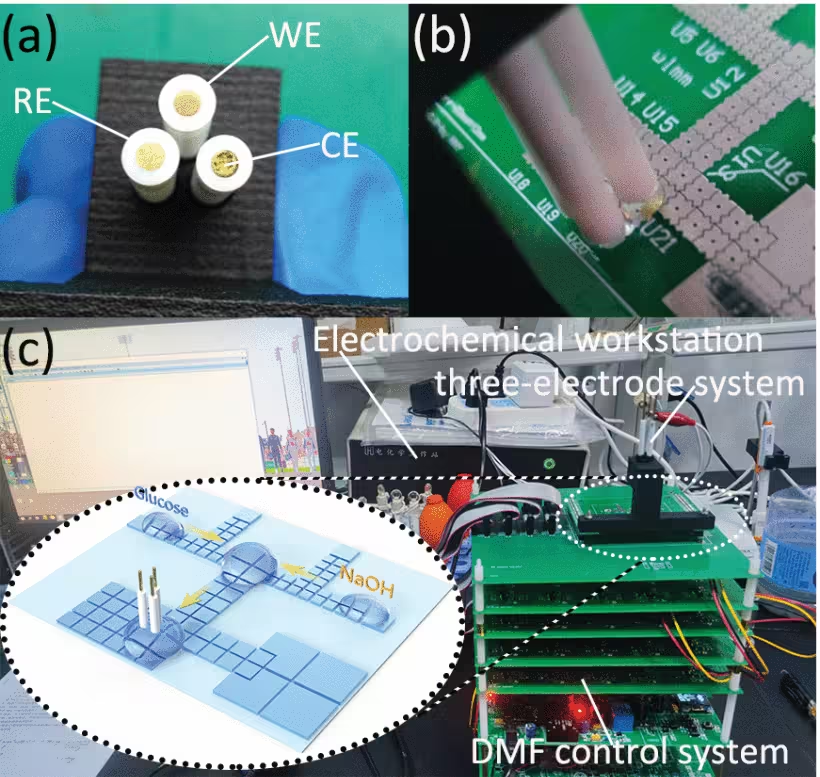
This study presents a complete glucose enzyme-free detection system based on DMF. It aims to fabricate DMF chips using common or relatively low-cost materials and achieve mainstream detection performance through the accompanying droplet-driven method and three-electrode system.
The researchers developed a printed circuit board (PCB)-based DMF chip fabrication process using cling film as the dielectric layer and silicone oil as the hydrophobic layer, suitable for do-it-yourself (DIY) use. They also designed a multi-step driving method that moves the droplets through multiple steps, with each advancing only a part of the droplet, enabling more stable driving of the droplets at lower voltages.
The researchers also designed a gold-gold-gold (Au-Au-Au) tri-electrode system using unmodified metal disc electrodes, which are readily obtainable, can be restored by mechanical polishing when their sensitivity decreases, and can be reused repeatedly.
An electrode activation method was designed with 2 steps: step 1 (clean the test area) and step 2 (use ultrapure water to clean the test area). A glucose detection method was designed with 3 steps: step 1 (electrochemical cleaning), step 2 (electrolysis of water), and step 3 (i–t curve test).
The tests were conducted in aqueous glucose solutions, with pH 5 PBS (simulating a sweat environment) and pH 7.4 PBS (simulating a blood environment). The experimental results showed that this study requires only 50 μL of sample for complete detection and can detect glucose concentrations of 0-20 mM across various environments.
For glucose aqueous solutions of 0-1 mM, the detection limit (LOD) can reach 73.09 μM, with R2 = 0.9981. For glucose aqueous solutions of 1-20 mM, the detection limit (LOD) is 1.03 mM, with R2 = 0.9834.
The researchers also used t-tests to analyze the test results and study the long-term stability, temperature sensitivity, and anti-interference ability of this testing method. These analyses further demonstrated that the method proposed in this study is a reliable detection method.
This study demonstrates that it is feasible to fabricate a glucose enzyme-free detection device with good detection capabilities using common materials and relatively simple processes. This research can serve as a reference for the design of digital microfluidic chips and for research on sweat/blood glucose detection devices or wearable devices.