Get exclusive breakthroughs on sensors in IoT, energy, healthcare, and more, delivered straight to your inbox.
"IEEE Sensors Alert" is a new service of the IEEE Sensors Council. Started as one of its new initiatives, this weekly digest publishes teasers and condensed versions of our journal papers in layperson's language.
Articles Posted in the Month (June 2025)
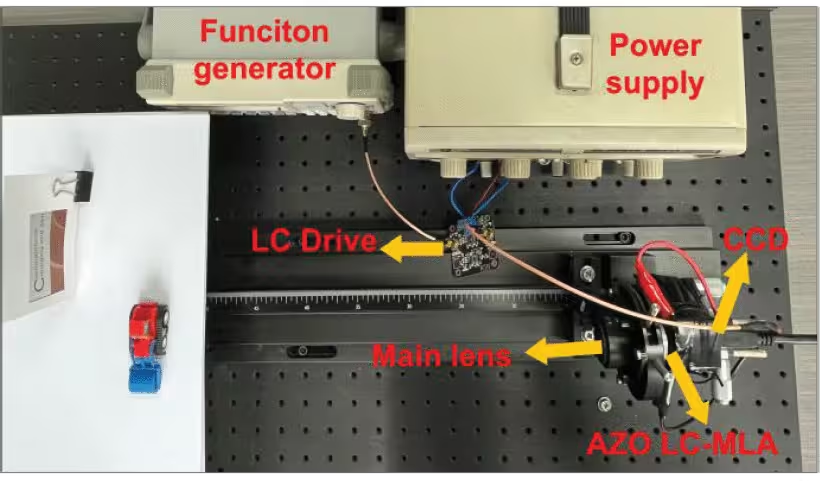
Liquid Crystal Microlens Arrays Based on Aluminum-Doped Zinc Oxide Oriented Microstructure Facilitate Light Field Image Resolution Enhancement
Author: Li Hui, Li Zikang, Qiao Chuan, Wu Yuntao
Published in: IEEE Sensors Journal (Volume: 25, Issue: 4, February 2025)
Summary Contributed by: Hui Li (Author)
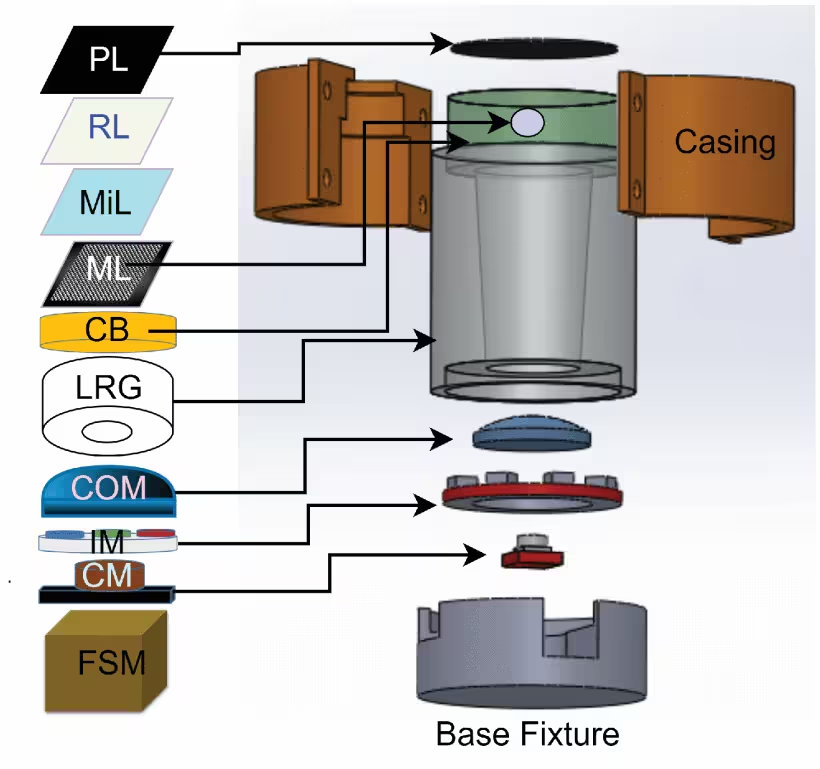
Light-field cameras are excellent at capturing comprehensive scene information; however, they often face issues due to unstable liquid crystal (LC) alignment in their liquid crystal microlens arrays (LC-MLAs). This study introduces an LC-MLA imaging system based on an aluminum-doped zinc oxide (AZO) alignment layer, achieving ordered LC alignment. The system enhances image resolution by integrating full variational denoising and convex optimization, contributing significantly to the advancements in light-field imaging technology.
Design and Test of a High-Sensitivity MEMS Capacitive Resonator for Photoacoustic Gas Detection
Author: Shi Junhui, Gao Da, Ren Danyang, Wang Yuqi, Yin Yonggang
Published in: IEEE Sensors Journal (Volume: 24, Issue: 24, December 2024)
Summary Contributed by: Anupama
Photoacoustic spectroscopy (PAS) enables precise trace gas detection by converting absorbed laser energy into acoustic signals. This study introduces a high-sensitivity micro-electromechanical system (MEMS) capacitive resonator for photoacoustic gas detection designed by altering the overlapping areas to minimize gas damping. Experimental results demonstrate increased sensitivity and stability of the resonator and improved trace gas detection methods. The advancement paves the way for more sensitive and accurate environmental monitoring and other applications.
HOT Watch: IoT-Based Wearable Health Monitoring System
Author: Jhansi Bharathi Madavarapu, S. Nachiyappan, S. Rajarajeswari, N. Anusha, Nirmala Venkatachalam, Rahul Charan Bose Madavarapu, A. Ahilan
Published in: IEEE Sensors Journal (Volume: 24, Issue: 15, October 2024)
Summary Contributed by: Saurabh Dubey
Heart rate oxygen rate temperature watch (HOT Watch) transforms IoT-based health monitoring by providing real-time tracking of vital signs with an accuracy exceeding 99.4%. It outperforms other leading devices available. Powered by IoT and the Pan-Tompkins algorithm(PTA), it efficiently processes health data and transmits it via Bluetooth for instant notification. GPS tracking and real-time alerts facilitate prompt medical responses, making it a dependable solution for personal and remote healthcare.
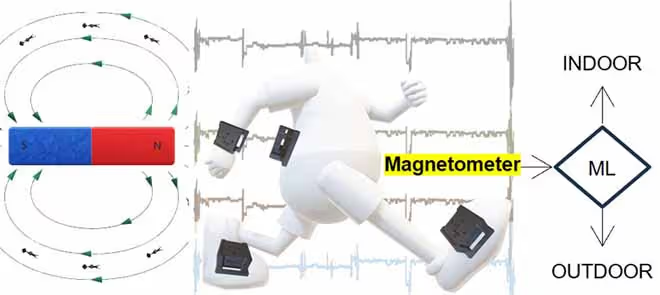
Discriminating Between Indoor and Outdoor Environments During Daily Living Activities Using Local Magnetic Field Characteristics and Machine Learning Techniques
Author: Vincenzo Marcianò, Andrea Cereatti, Stefano Bertuletti, Tecla Bonci, Lisa Alcock, Eran Gazit, Neil Ireson, Antonio Bevilacqua, Claudia Mazzà, Fabio Ciravegna, Silvia Del Din, Jeffrey M. Hausdorff, Georgiana Ifrim, Brian Caulfield, Marco Caruso
Published in: IEEE Sensors Journal (Volume: 25, Issue: 1, January 2025)
Summary Contributed by: Marco Caruso (Author)
Wearable sensors are essential for context-aware applications. But can they distinguish between indoor and outdoor environments? This study presents a novel method for distinguishing indoor and outdoor environments by analyzing magnetometer data and deep learning models to improve traditional inertial-based methods. It offers more reliable and high classification accuracy. The approach opens new possibilities for enhanced navigation and supports environmental detection in wearable and mobile health monitoring systems.
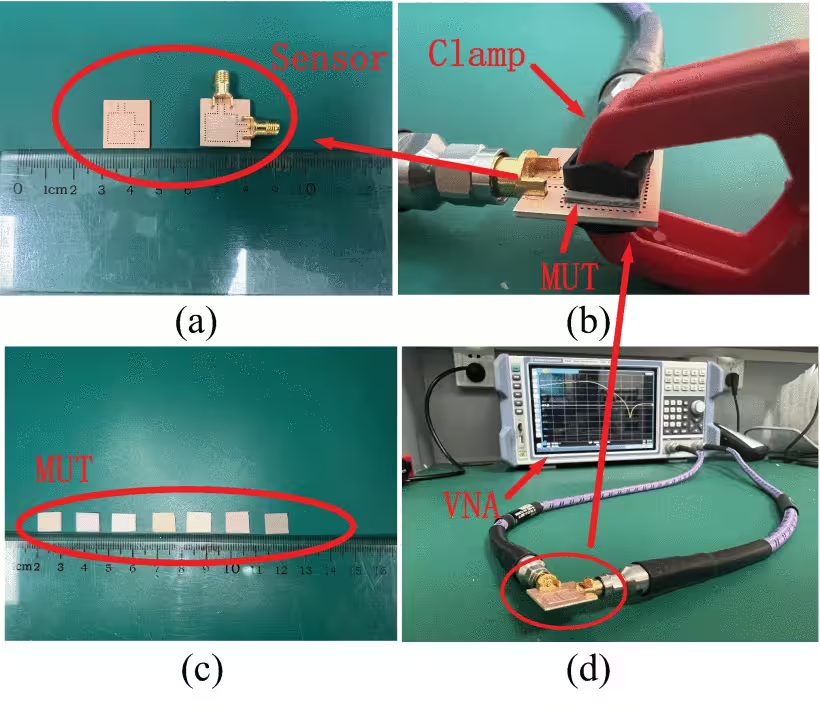
A Microwave Sensor Based on Grounded Coplanar Waveguide for Solid Material Measurement
Author: Liu Guohua, Gong YuXiang, Jiang Shuren, Zhang Jiaqi, Zhang Rui
Published in: IEEE Sensors Journal (Volume: 25, Issue: 3, February 2025)
Summary Contributed by: Liu Guohua (Author)
Accurate measurement of permittivity is crucial for characterizing the electromagnetic properties of materials. This study presents a compact, high-sensitivity microwave sensor utilizing a grounded coplanar waveguide (GCPW) integrated with a parallel interdigital capacitor (P-IDC) and split-ring resonator (SRR). This design enhances electric field concentration and signal isolation, enabling precise permittivity detection. The optimized GCPW and interdigital capacitor (IDC) parameters show significant potential in advanced communication and electronic applications.
Published in: IEEE Sensors Journal (Volume: 24, Issue: 24, December 2024)
Summary Contributed by: Saurabh Dubey
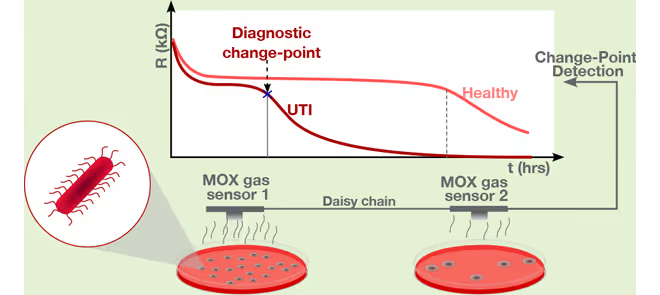
Urinary tract infections (UTIs) are among the most common infections worldwide. This paper introduces an innovative gas-phase detection technology for UTI diagnostics that uses metal-oxide sensors and change-point detection (CPD) to efficiently identify bacterial growth through volatile organic compounds (VOCs) emissions. The approach showed promising results for rapid, non-invasive UTI detection, enabling real-time monitoring, reducing diagnostic delays, minimizing unnecessary antibiotic intake, and providing cost-effective point-of-care diagnostics with minimal equipment.
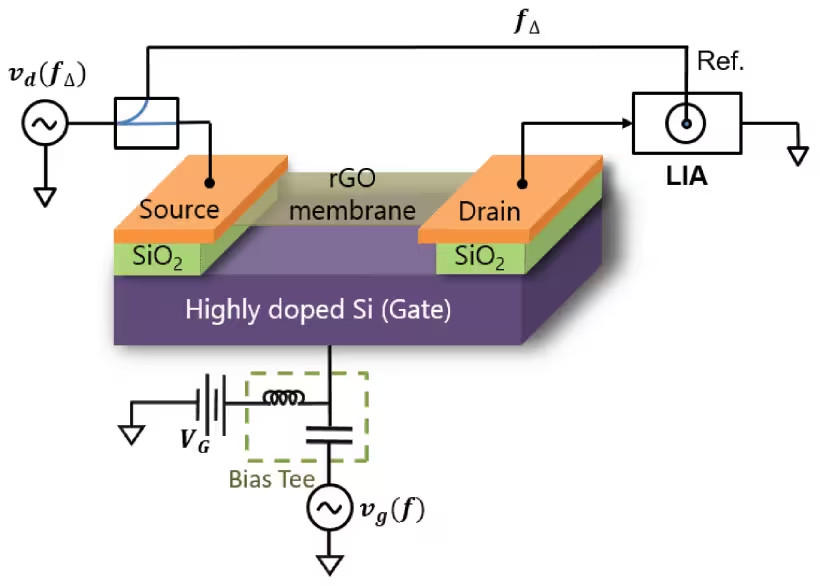
Nanoelectromechanical resonators are some of the most sensitive devices to external perturbations that can be built. However, reading nanoscale vibrational motion with the help of electrical signals in the background of noise from a profusion of sources can be very challenging. The method in this paper utilizes the materials’ intrinsic piezoresistivity to transduce the mechanical vibrations to electrical signals, effectively leveraging a simple circuit configuration compared to existing methods.
High-Throughput Separation of Alexandrium Cells Based on Deterministic Lateral Displacement Arrays With Different Post Shapes
Author: Wang Junsheng, Ding Gege, Liu Jiayue, Wang Yanjuan, Wen Jie, Yan Yuxian, Zhao Jun
Published in: IEEE Sensors Journal (Volume: 24, Issue: 24, December 2024)
Summary Contributed by: Kamalesh Tripathy
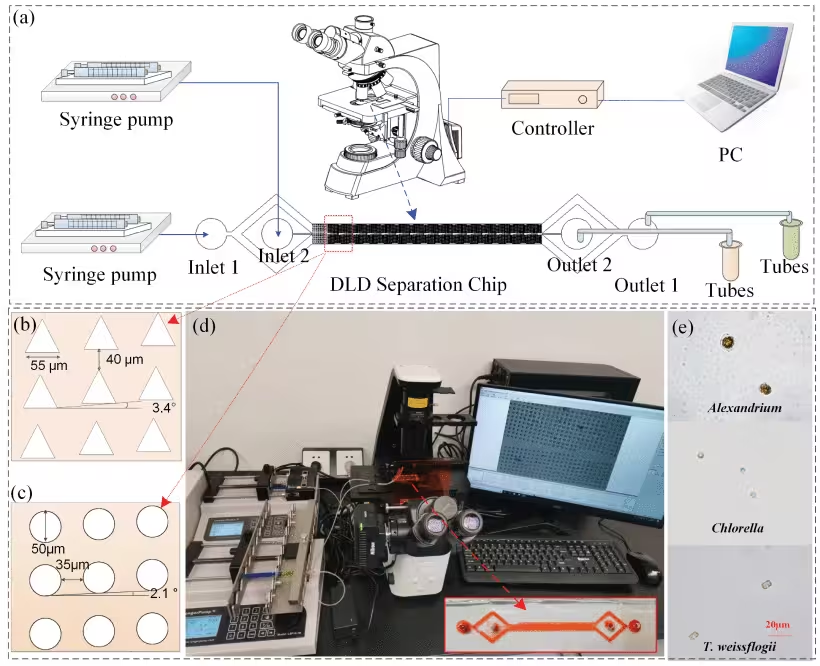
Separating and purifying algae cells is crucial for studying algae and monitoring algal blooms in water bodies. This paper explores a novel algae separation technique, mainly for Alexandrium algae, a leading cause of red tide that affects the marine environment. It utilizes a deterministic lateral displacement (DLD)-based microfluidic chip with two different micropillar designs to separate microalgae cells, facilitating fast, high-throughput, and large-scale separation of Alexandrium cells vital for protecting marine ecosystems.
A 30-nΩ Accuracy Low Power Two-Step Ratiometric Shunt Resistance Measurement System Using a Switching Regulator- Based Current Generator for Shunt- Based Current Sensors
Published in: IEEE Sensors Journal (Volume: 24, Issue: 24, December 2024)
Summary Contributed by: Shogo Kawahara (Author)
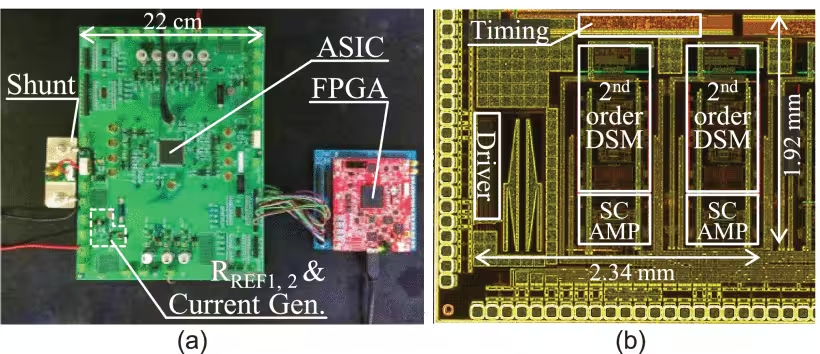
Shunt-based current sensors have low offset and low gain error, and they are used for accurate estimation of the state-of-charge of the batteries in automotive applications. However, the gain error changes by ~1% due to the long-term drift of the shunt resistance (RS). This paper proposes a two-step ratiometric resistance measurement system that can measure a 25 µΩ RS with an accuracy of ≤ 30 nΩ (0.12%) to calibrate the drift.
Split Gate Bulk-Planar Junctionless FET-Based Biosensor for Label-Free Detection of Biomolecules
Author: Deepika Singh, Ganesh C. Patil, Bikash Dev Choudhury
Published in: IEEE Sensors Journal (Volume: 24, Issue: 18, September 2024)
Summary Contributed by: Saurabh Dubey
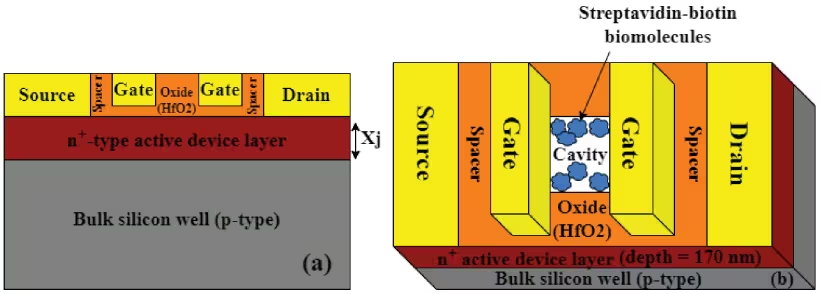
The split-gate Bulk-planar junctionless field-effect transistors (SG-BPJLFET) biosensor offers cost-effective, high sensitivity, and precise detection of biomolecules through drain current changes. Its innovative design enhances selectivity and sensitivity by leveraging a split-gate structure and junctionless architecture, ensuring effective biomolecule interaction and charge modulation. The device exhibits fast response and high performance due to the reduced leakage current and scalable fabrication. It holds the potential for medical diagnostics and advanced biosensing.
Double-Beam Cantilever Probe for Crack Probability Analysis of Multilayer Substrates During Wafer Probing
Author: Tremmel Florian, Holmer Rainer, Kutter Christoph, Nagler Oliver
Published in: IEEE Sensors Journal (Volume: 24, Issue: 24, December 2024)
Summary Contributed by: Tremmel Florian (Author)
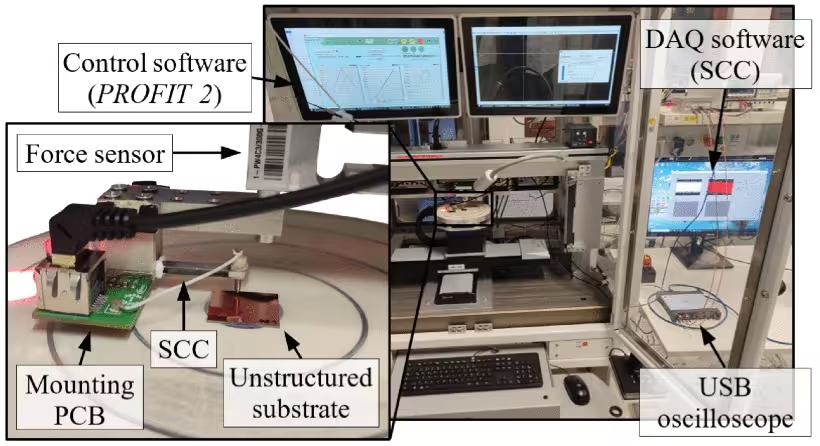
Semiconductor devices undergo mechanical stress during functionality checks in the wafer prober, which may cause hidden cracks. This paper introduces an innovative double-beam cantilever probe to evaluate these cracks in multilayer substrate during wafer probing. This sensor solution regulates the load limits of the chips and detects crack sounds faster in real-time, ensures safer and more reliable chip testing, and offers a promising solution for wafer probing processes in semiconductor manufacturing.
Subblescope: Novel Thin-Film Haptic Sensing Using a Single-Bubble Approach
Author: Debadutta Subudhi, Prasanna K. Routray, Manivannan Muniyandi
Published in: IEEE Sensors Journal (Volume: 24, Issue: 18, September 2024)
Summary Contributed by: Anupama
The Subblescope is a novel vision-based haptic sensor that uses a single air bubble embedded in a flexible elastomer to detect and measure forces. By capturing and analyzing the deformation of the bubble, the sensor can perform precise measurements of force and torque, enabling accurate tactile sensing. This simple yet effective design has potential applications in robotics, virtual reality, and human-computer interaction.
Acoustofluidic Particle Trapping in a Structured Microchannel Using Lateral Transducer Modes
Author: Fuchsluger Andreas, Andrianov Nikolai, Cselyuszka Norbert, De Pastina Annalisa, Ecker Rafael, Jakoby Bernhard, Mitteramskogler Tina, Voglhuber-Brunnmaier Thomas
Published in: IEEE Sensors Journal (Volume: 24, Issue: 24, December 2024)
Summary Contributed by: Fuchsluger Andreas (Author)
Acoustofluidics uses sound waves for contactless manipulation of particles and fluids within microfluidic systems, which is relevant for various medical applications. This study presents a novel lateral-mode acoustofluidic trapping device using a disc-shaped resonator to create a two-dimensional standing wave for efficient particle trapping. The device operates at lower frequencies and efficiently traps large sizes and volumes of particles, demonstrating high predictability, reproducibility, and stability, making it suitable for advanced particle manipulation.
Ultrahigh Sensitivity Surface Plasmon Resonance Magnetic Field Sensor Based on D-Shape Four-Hole Fiber
Author: Chen Zhenshi, Chen Cheng, Chu Paul K., Fu Haihao
Published in: IEEE Sensors Journal (Volume: 24, Issue: 24, December 2024)
Summary Contributed by: Payal Savani
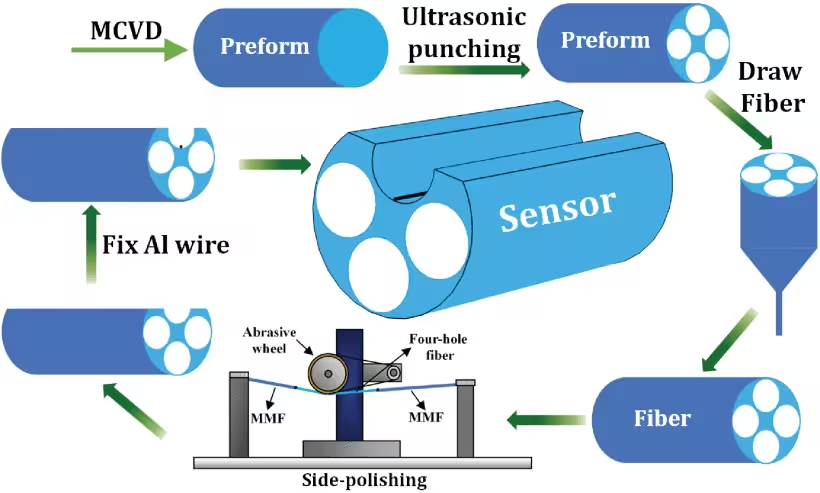
Magnetic field sensors are essential in modern technology, with applications ranging from smart gadgets, biomedicine, industrial automation, and environmental monitoring to aerospace technology. This paper presents a highly sensitive sensor using surface plasmon resonance (SPR) and a D-shaped four-hole fiber designed for accurate magnetic field detection. Integrating SPR with fiber optics enhances the devices' sensitivity and performance, advancing its potential applications in areas where detecting weak magnetic signals is crucial.
Antibody-Free SERS Detection of Severe Fever With Thrombocytopenia Syndrome Virus Using Micron Bowl Array PDMS Substrates
Author: Hsu Wei-li, Wang Gou-jen, Lin Ying-Ting, Lin Ze-Cheng, Tseng Ching-Yu
Published in: IEEE Sensors Journal (Volume: 25, Issue: 4, February 2025)
Summary Contributed by: Hsu Wei-li (Author)
Severe fever with thrombocytopenia syndrome (SFTS) is a newly identified zoonotic infectious disease discovered in several East Asian countries. It is caused by the SFTS virus (SFTSV), also known as Dabie bandavirus or Huaiyangshan virus. The paper presents a novel surface-enhanced Raman scattering (SERS) chip with silver nanoparticles (AgNPs) uniformly deposited on a micron bowl array polydimethylsiloxane (PDMS) substrate to detect the virus responsible for SFTS effectively.
Knee injuries and other minor or chronic knee conditions are prevalent. Monitoring rehabilitation or medication progress in knee treatment is time-consuming, expensive, and requires regular imaging, follow-ups, and several tests. However, knee health can be monitored and “joint health score” calculated remotely with wearable sensors that pick up sound, swelling, temperature and motion. Packaging these sensors into a wearable brace is vital for monitoring the knee.
Epilepsy is one of the most prevalent neurological diseases among humans. It can lead to severe brain injuries, strokes, and brain tumors. Early detection of seizures is critical to improving the day-to-day lives of patients. The researchers propose two deep learning approaches, using EEG data as input, which can detect epileptic seizures one hour before they occur.
A non-profit organization, IEEE is the world's largest technical professional organization dedicated to advancing technology for the benefit of humanity.
Copyright 2023 IEEE – All rights reserved. Use of this website signifies your agreement to the IEEE Terms and Conditions
This site is also available on your smartphone.