Get exclusive breakthroughs on sensors in IoT, energy, healthcare, and more, delivered straight to your inbox.
"IEEE Sensors Alert" is a new service of the IEEE Sensors Council. Started as one of its new initiatives, this weekly digest publishes teasers and condensed versions of our journal papers in layperson's language.
Articles Posted in the Month (September 2024)
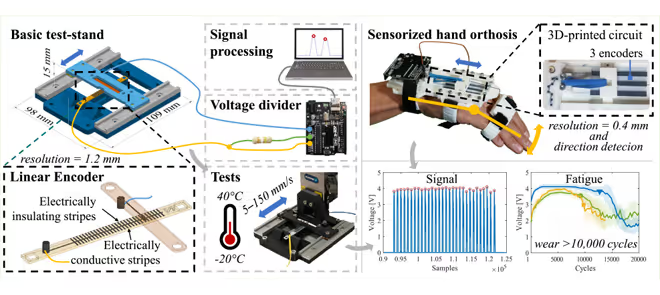
3-D-Printing and Reliability Evaluation of an Easy-to-Fabricate Position Sensing System for Printed Functional Wearable Assistive Devices
Author: Michalec Paweł, Faller Lisa-Marie
Published in: IEEE Sensors Journal (Volume: 24, Issue: 4, February 2024)
Summary Contributed by: Michalec Paweł (Author)
The demand for advanced medical devices has created challenges in integrating sensors into cost-effective wearable medical assistive devices. The paper presents a novel, fully 3D-printed linear encoder developed using commercially available electrically conductive and nonconductive materials. This easy-to-fabricate technology was tested in a sensorized hand orthosis (sHO). It aims to enhance the functionality of wearable assistive devices by accurately detecting and monitoring movements, thus offering promising solutions for rehabilitation devices.
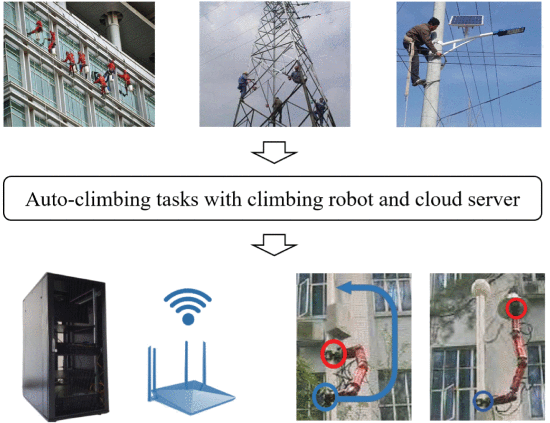
CAMs-SLAM: Cloud-Based Multisubmap VSLAM for Multisource Asynchronous Sensing of Biped Climbing Robots
Author: Zhang Hong, Chen Weinan, Gu Shichao, Zhu Lei
Published in: IEEE Sensors Journal (Volume: 24, Issue: 14, July 2024)
Summary Contributed by: Hong Zhang (Author)
Understanding and navigating the surroundings is a key feature of biomimetic Biped climbing robots (BiCRs). This is achieved through visual simultaneous localization and mapping (VSLAM). The paper presents a cloud-based asynchronous multisubmap VSLAM (CAMs-SLAM) system, which assists these robots with necessary computing, mapping, environment perception, and autonomous navigation. Even with weak internet connections and low data, this system demonstrates its feasibility and superiority in autonomous climbing applications, offering practical benefits for real-world use.
TSF: Two-Stage Sequential Fusion for 3D Object Detection
Author: Heng Qi, Peicheng Shi, Zhiqiang Liu, Aixi Yang
Published in: IEEE Sensors Journal (Volume: 22, Issue: 12, June 2022)
Summary Contributed by: Anupama
This paper introduces a two-stage sequential fusion (TSF) method for 3D object detection in autonomous driving. TSF fuses the raw LiDAR point cloud with corresponding image data to produce an improved point cloud. The study also analyzes the impact of the fusion module on detection capabilities and explores the balance between accuracy and speed. The results show that TSF substantially boosts LiDAR detection accuracy, especially in small-object detection.
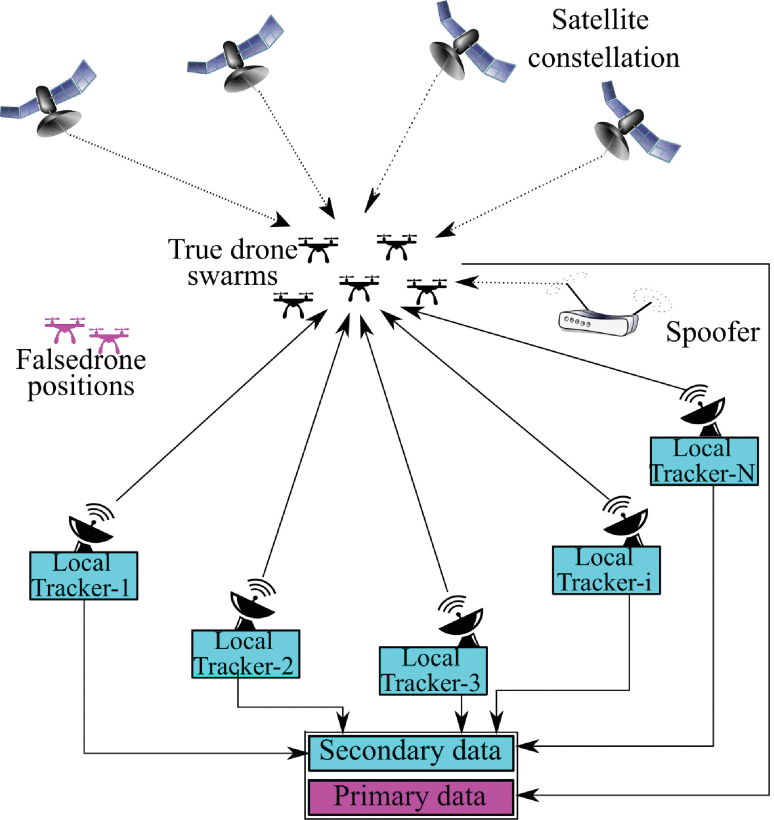
GPS-based navigation, widely used worldwide, is cost-effective for providing position, velocity, and time data. However, it is susceptible to spoofing, especially in UAVs (unmanned aerial vehicles). The paper proposes a GPS spoofing detection and mitigation method using distributed radar tracking and data fusion techniques. The approach combines primary and secondary data through extended Kalman filters and track-to-track association. It ensures accuracy even during spoofing attacks, making it ideal for drone swarms.
Published in: IEEE Sensors Journal ( Volume: 22, Issue: 10, May 2022)
Summary Contributed by: Kamalesh Tripathy
Micro-Electro-Mechanical-Systems (MEMS) based piezoresistive pressure sensors are widely used across various industries. However, these sensors are prone to failure due to junction leakage at high-temperature applications. The paper presents three piezoresistive pressure sensors designed using different technologies: standard diffused piezoresistors, oxide-isolated polysilicon, and single crystal silicon piezoresistors. Tested up to 200°C and 140 bar, all sensors showed reduced sensitivity with temperature, with oxide-isolated polysilicon sensors exhibiting the best performance.
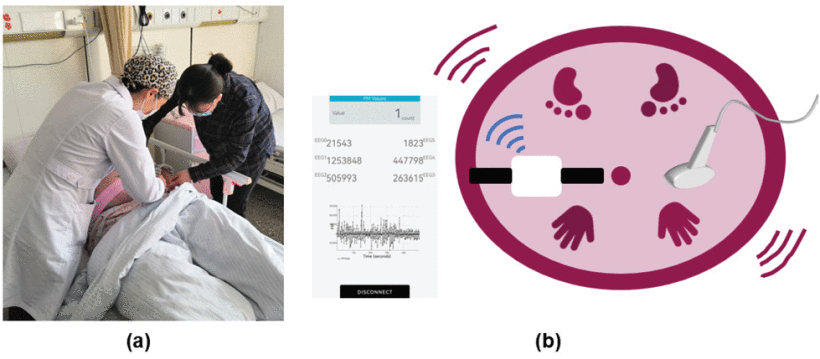
Fetal Movement Detection by Wearable Accelerometer Duo Based on Machine Learning
Author: Jingyi Xu, Chao Zhao, Bo Ding, Xiaoxia Gu, Wenru Zeng, Liang Qiu, Hong Yu, Yang Shen, Hong Liu
Published in: IEEE Sensors Journal (Volume: 22, Issue: 12, June 2022)
Summary Contributed by: Chao Zhao (Author)
Fetal movement monitoring is vital for fetal health. The accuracy of the maternal perception in monitoring fetal movement varies. In this work, a wearable device with two accelerometers and machine learning algorithms was developed for accurate and continuous fetal movement monitoring. It aims for accuracy comparable to ultrasound. The device showed promising results in fetal movement monitoring, potentially providing valuable insights into the fetal biological profile during the perinatal period.
Single Aerosol Particle Detection by Acoustic Impaction
Author: Nadine Karlen, Tobias Rüggeberg, Bradley Visser, Jana Hoffmann, Daniel A. Weiss, Ernest Weingartner
Published in: IEEE Sensors Journal (Volume: 22, Issue: 12, June 2022)
Summary Contributed by: Saurabh Dubey
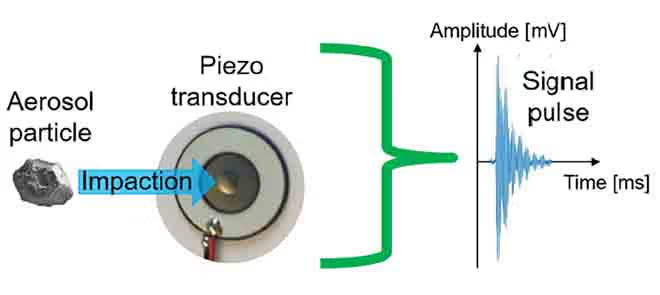
Accurate detection of aerosol particles is vital for health and addressing climate risks. The paper discusses DustEar, a state-of-the-art measurement method, which employs an acoustic Piezo transducer to accelerate particles in a nozzle, enabling precise detection of individual aerosol particles up to 15 μm. The design reduces airflow interference and noise levels, ensuring accurate single-particle measurement. It has diverse applications in drug quality control, pollution source analysis, and environmental management.
Estimating Relative Angles Using Two Inertial Measurement Units Without Magnetometers
Author: Seung Yun Song, Yinan Pei, Elizabeth T. Hsiao-Wecksler
Published in: IEEE Sensors Journal (Volume: 22, Issue: 20, October 2022)
Summary Contributed by: Seung Yun Song (Author)
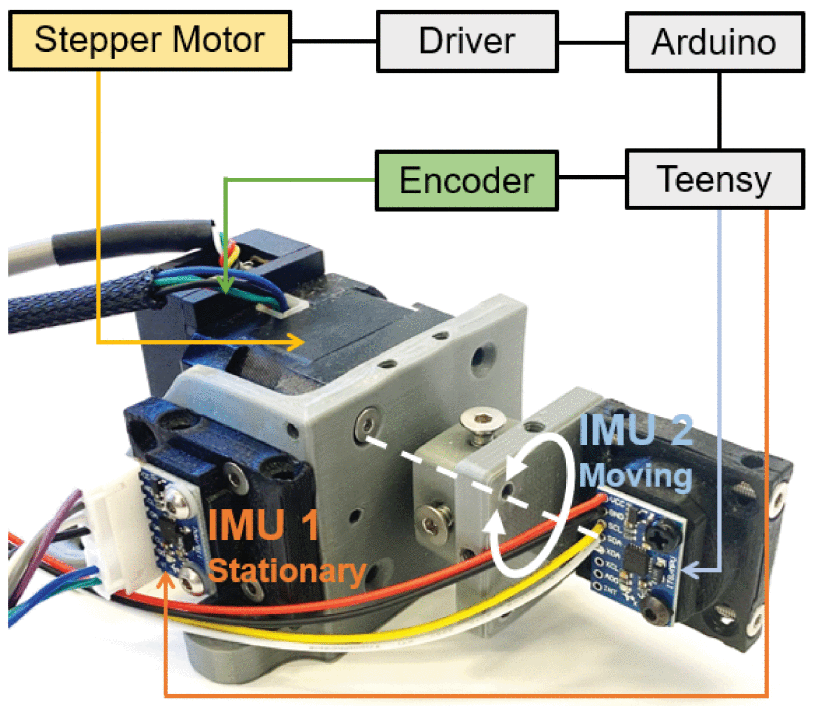
Wearable technology heavily relies on miniature sensors called inertial measurement units (IMU). IMUs are vital for computing body segment angular kinematics in biomechanics and clinical settings. This study presents a low-cost two 6-axis IMU system without magnetometers to estimate relative angles. It validates existing algorithms for 3D orientation computation. The system's user-friendly design and accurate orientation calculation hold promise for advancements in virtual reality, health monitoring, and wearable technologies.
Published in: IEEE Sensors Journal (Volume: 22, Issue: 14, July 2022)
Summary Contributed by: Anupama
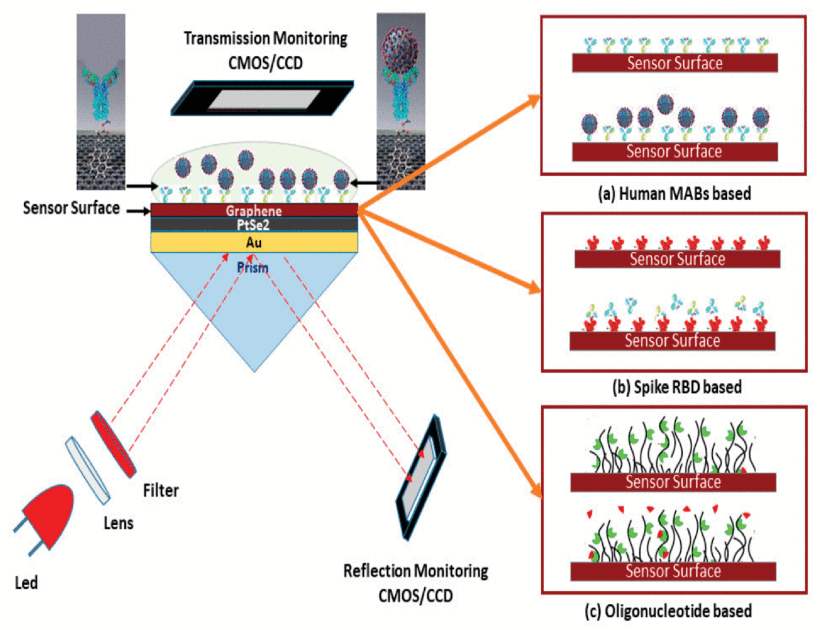
Severe acute respiratory syndrome coronavirus 2 (SARS-CoV-2) requires rapid and accurate detection to control its spread. When COVID-19, a disease caused by the SARS-CoV-2 virus, became a Global pandemic, a novel method for fast identification of the new coronavirus was developed using Surface Plasmon Resonance (SPR) techniques. This paper reviews the potential of SPR-based biosensing chips and sensors for portable devices to rapidly and accurately detect the SARS-CoV-2 virus.
Balanced Adaptation Regularization Based Transfer Learning for Unsupervised Cross-Domain Fault Diagnosis
Author: Qin Hu, Xiaosheng Si, Aisong Qin, Yunrong Lv, Mei Liu
Published in: IEEE Sensors Journal (Volume: 22, Issue: 12, June 2022)
Summary Contributed by: Qin Hu (Author)
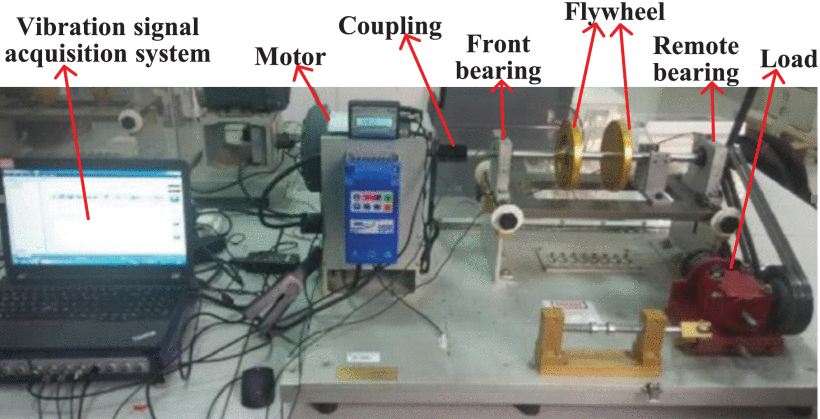
Fault diagnosis technology for rolling bearings is crucial for preventing mechanical accidents. In the field of fault diagnosis, inconsistent data distribution due to variable working conditions hampers diagnostic accuracy. This study proposes a novel method, Balanced Adaptation Regularization-based Transfer Learning (BARTL), leveraging enhanced multi-scale sample entropies. BARTL improves feature discriminability and similarity across conditions, achieving accurate diagnosis and surpassing existing transfer learning methods, as validated by two public datasets.
Deep Transfer Learning With Self-Attention for Industry Sensor Fusion Tasks
Author: Ze Zhang, Michael Farnsworth, Boyang Song, Divya Tiwari, Ashutosh Tiwari
Published in: IEEE Sensors Journal (Volume: 22, Issue: 15, August 2022)
Summary Contributed by: Anupama
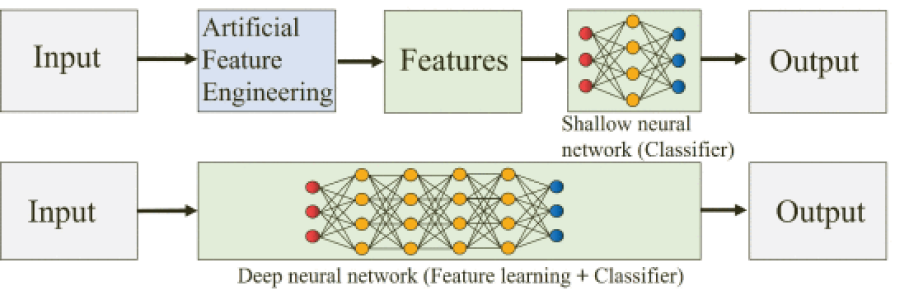
The paper introduces a promising approach using deep transfer learning techniques to address the challenges in processing multisource, heterogeneous data in Industry 4.0. By repurposing a Transformer model pre-trained from data-rich natural language domain, the proposed method allows industrial applications to leverage deep learning capabilities with minimal training data requirements. It represents a significant step toward making Industry 4.0 more efficient, faster, and cost effective.
Published in: IEEE Sensors Journal (Volume: 22, Issue: 11, June 2022)
Summary Contributed by: Weiguan Zhang (Author)
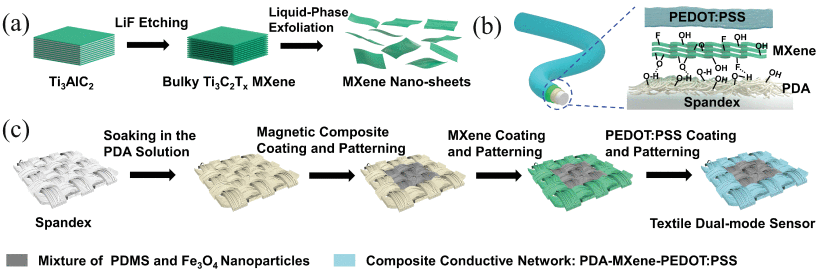
In smart control of robots, proximity and pressure information complement each other in detecting objects from approach to contact. Using a simple and cost-effective fabrication method, the researchers developed a textile-based sensor combining magneto-straining (proximity) and piezoresistive modes (pressure). This sensor exhibits high sensitivity for proximity and pressure perception. The unique design offers a seamless transition between modes, making it suitable for applications in human-machine interaction and intelligent prosthetics.
Usage of IR Sensors in the HVAC Systems, Vehicle and Manufacturing Industries: A Review
Author: Muhammad Adeel Altaf, Jongsik Ahn, Danish Khan, Min Young Kim
Published in: IEEE Sensors Journal (Volume: 22, Issue: 10, May 2022)
Summary Contributed by: Kamalesh Tripathy
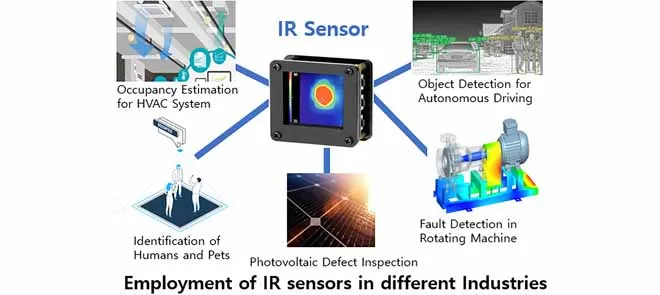
Thermal sensors are used in various industries to measure temperature and convert it into a readable output. Its selection depends on cost, resolution, and accuracy, which are crucial factors to consider when designing the sensor system. This paper explores the significance of infrared sensors as thermal sensors in detecting temperature, movement, and occupancy. It reviews the use of thermal sensors in HVAC (Heating, ventilation, and air conditioning) systems, vehicles, and manufacturing industries.
Self-Supervised Monocular Depth Estimation Using Hybrid Transformer Encoder
Author: Seung-Jun Hwang, Sung-Jun Park, Joong-Hwan Baek, Byungkyu Kim
Published in: IEEE Sensors Journal (Volume: 22, Issue: 19, October 2022)
Summary Contributed by: Seung-Jun Hwang (Author)
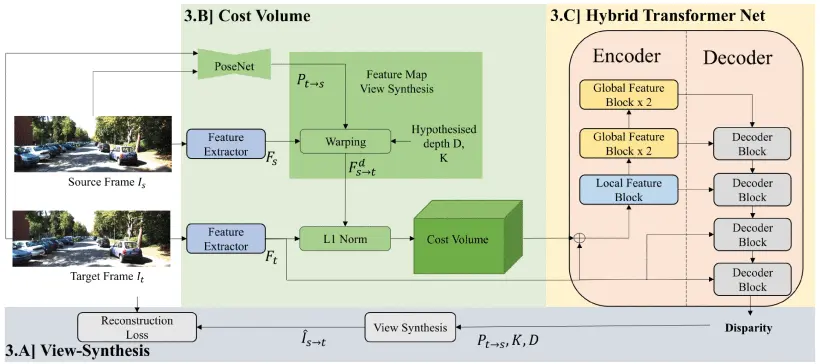
Depth estimation using camera sensors is vital in autonomous driving, robotics, 3D scene reconstruction, and augmented reality. This paper presents a novel method for monocular-camera depth estimation using a hybrid transformer encoder-decoder. The self-supervised view synthesis method used eliminates the need for depth supervision. It uses a cost-volume structure, combining neural network and transformer architectures for accurate depth prediction. The system enhances global feature representation with an attention decoder, improving depth estimation accuracy.
Published in: IEEE Sensors Journal (Volume: 22, Issue: 20, October 2022)
Summary Contributed by: Saurabh Dubey
The CMOS Algae Growth Period Monitor, consisting of an algae sensor and a CMOS converter, is a cutting-edge solution for monitoring algae growth in algaculture applications. It utilizes a proton exchange membrane to translate algae growth data into a duty cycle, facilitating rapid assessment. With increased sensitivity, it functions in suboptimal conditions and has a maximum linear error of only 0.49%. Integration with IoT technology holds potential applications in the advanced monitoring of aquatic life.
Maintaining indoor air quality (IAQ) is crucial for health and wellness. Accurate data analysis and contextual anomaly detection are essential for IAQ monitoring. The paper introduces a hybrid deep-learning model, combining long short-term memory (LSTM) with autoencoder (AE). LSTM learns typical carbon dioxide (CO2) time sequence patterns, while AE computes optimal reconstruction errors and detects anomalies. Achieving 99.50% accuracy in real-world testing, the model shows promise for enhancing IAQ monitoring.
Sea surface target detection is vital for maritime security, surveillance, and rescue operations. The complexity of the marine environment makes it difficult to achieve robust, reliable, and adaptive target detection. Deep learning methods show better feature extraction ability and classification accuracy. The study proposes a new approach to marine target detection in complex background conditions using marine dual-channel convolutional neural networks (MDCCNN) with a false-alarm controllable classifier (FACC).
A non-profit organization, IEEE is the world's largest technical professional organization dedicated to advancing technology for the benefit of humanity.
Copyright 2023 IEEE – All rights reserved. Use of this website signifies your agreement to the IEEE Terms and Conditions
This site is also available on your smartphone.