Get exclusive breakthroughs on sensors in IoT, energy, healthcare, and more, delivered straight to your inbox.
"IEEE Sensors Alert" is a new service of the IEEE Sensors Council. Started as one of its new initiatives, this weekly digest publishes teasers and condensed versions of our journal papers in layperson's language.
Articles Posted in the Month (March 2026)
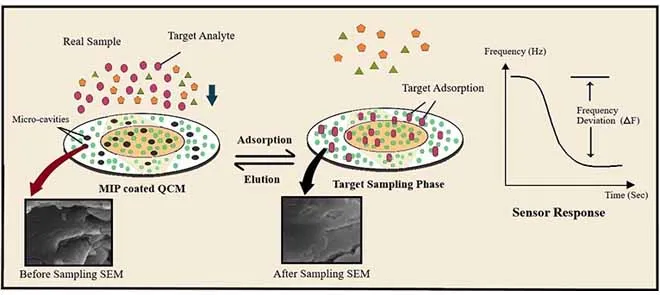
A Molecular Imprinted Quartz Crystal Microbalance Sensor for Reliable Detection of Alpha-Terpineol in Various Pine Essential Oils
Author: Banerjee Roy Runu, Bhattacharyya Banerjee Mahuya, Gangopadhyay Deepam, Kundu Sumit, NAG SHREYA, Pramanik Panchanan
Published in: IEEE Sensors Journal (Volume: 25, Issue: 15, August 2025)
Summary Contributed by: Runu Banerjee Roy (Author)
Alpha-terpineol (A-Te), a naturally occurring compound found in essential oils, has antimicrobial, antioxidant, and anti-inflammatory properties. This paper introduces a novel molecularly imprinted Quartz Crystal Microbalance (QCM) sensor for detecting A-Te in pine essential oils. This portable, robust molecularly imprinted polymer (MIP)-based QCM sensor combines high sensitivity, selectivity, and machine learning technology for qualitative determination of A-Te. The targeted detection method enables rapid authentication and quality assurance of aromatic oils.
Detection of CWA Simulants by Electronic Nose Based on Low-Powered MEMS Gas Sensor Array
Author: Cheng Zhenxing, Sun Xuhui, Hu Xiaochun, Shen Qingqing, Tao Yi, Xu Mengxue, Zhang Hongpeng, Zhang Pingping, Zhang Shumin, Zhong Yihong
Published in: IEEE Sensors Journal (Volume: 25, Issue: 15, August 2025)
Summary Contributed by: Saurabh Dubey
Early detection of toxic chemical warfare agents (CWAs) requires reliable portable systems capable of real-time sensing. This study presents a novel MEMS-based electronic nose that integrates a 24-sensor metal-oxide array to identify CWA simulants via unique response fingerprints. Its low-power microhot-plate sensors deliver a quick response time, and machine learning achieves 99% accuracy across different environments, ensuring robust, sensitive, and highly selective CWA monitoring for defense and public safety applications.
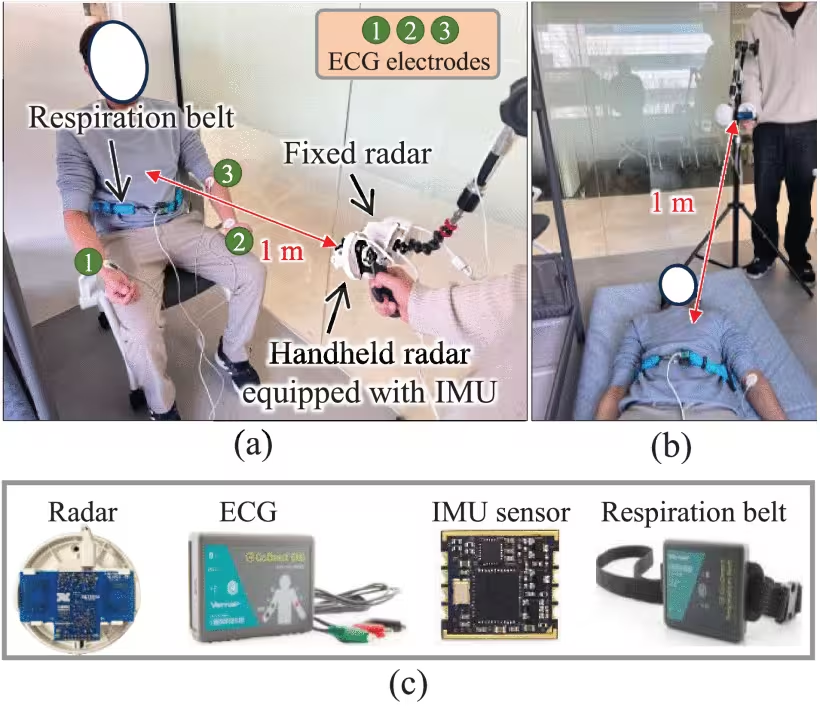
Remote Vital Sign Monitoring With IMU-Assisted Handheld IR-UWB Radar Sensor
Author: Cho Sung Ho, Abdullah Sohaib, Ahmed Shahzad, Yoon Seongkwon
Published in: IEEE Sensors Journal (Volume: 25, Issue: 16, August 2025)
Summary Contributed by: Sung Ho Cho (Author)
Radar-based human vital sign measurement has attracted significant attention owing to its noncontact, non-invasive, privacy-preserving nature. However, the potential of handheld radar devices remains to be explored. The novel approach presented here extracts heart rate (HR) and breathing rate (BR) using a handheld impulse-radio ultrawideband (IR-UWB) radar equipped with an inertial measurement unit (IMU) sensor. It will open the door to continuous health and wellness tracking and outdoor emergency assistance.
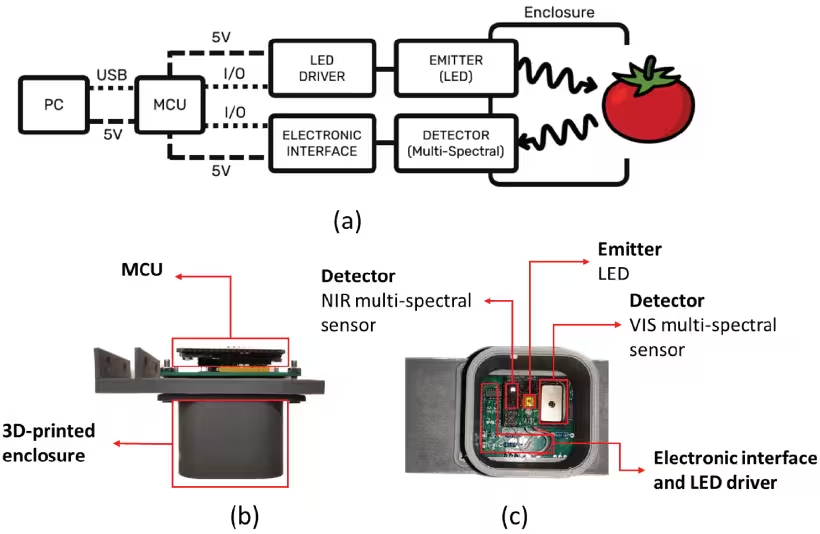
Certifying fruit ripeness at harvest is crucial for ensuring optimal quality, effective storage, and successful market distribution. This study presents a novel low-cost multispectral device that integrates a broadband light-emitting diode (LED) and visible and near-infrared (VIS–NIR) sensors to assess fruit ripeness in the field. It categorizes multiple ripeness classes using automatic feature selection and machine-learning algorithms, achieving high accuracy and providing an affordable, robust solution for smart harvesting.
Published in: IEEE Sensors Journal (Volume: 25, Issue: 15, August 2025)
Summary Contributed by: Shawana Tabassum (Author)
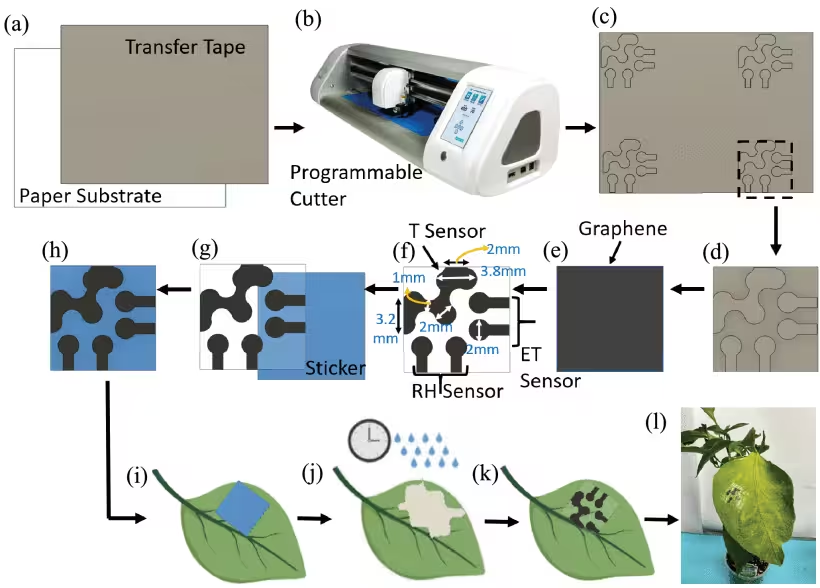
Imagine a "tattoo" for plants that helps them "talk" with agriculturist and researchers about their physiological processes. This paper presents a paper-thin, flexible sensor that sticks to a leaf like a temporary tattoo for real-time, continuous monitoring of ethylene, a key plant stress hormone. This breakthrough tattoo sensor will enable smarter crop management and early stress detection in plants before any visible damage occurs.
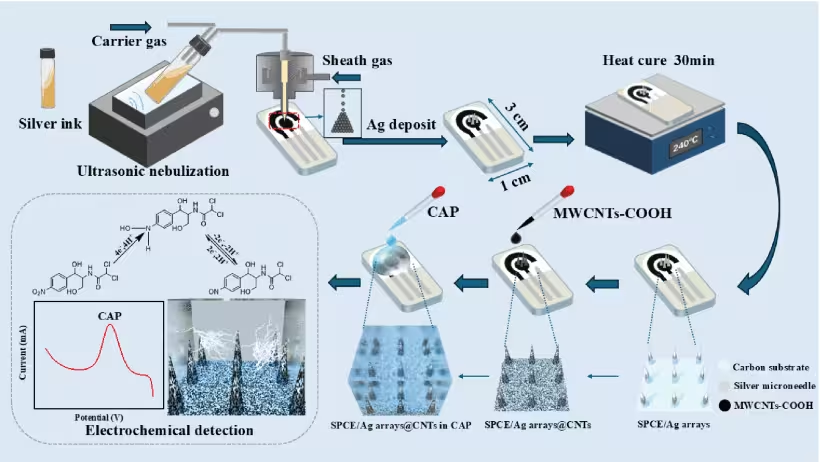
Silver Microneedle Array Printed via Aerosol Jet Enhance the Electrochemical Detection of Carboxylated Carbon Nanotubes for Chloramphenicol
Author: Cao Lei, Xiong Shixian, Fan Lanlan, Gu Feng, Liu Feng, Liu Shiji, Liu Yin, Liu Zhecheng, Zhu Qian
Published in: IEEE Sensors Journal (Volume: 25, Issue: 15, August 2025)
Summary Contributed by: Cao Lei (Author)
Excessive use of Chloramphenicol (CAP), a widely used broad-spectrum antibiotic in livestock, is harming the environment and health. This paper introduces a carboxylated multiwalled carbon nanotube (MWCNTs-COOH)-decorated 3-D silver microneedle array, fabricated using aerosol jet printing (AJP) technology on a screen-printed carbon working electrode (SPCE). This approach enabled compact, minimally invasive, and sensitive detection of CAP, facilitating quicker, more accurate environmental monitoring, enhancing food safety, and supporting public health protection.
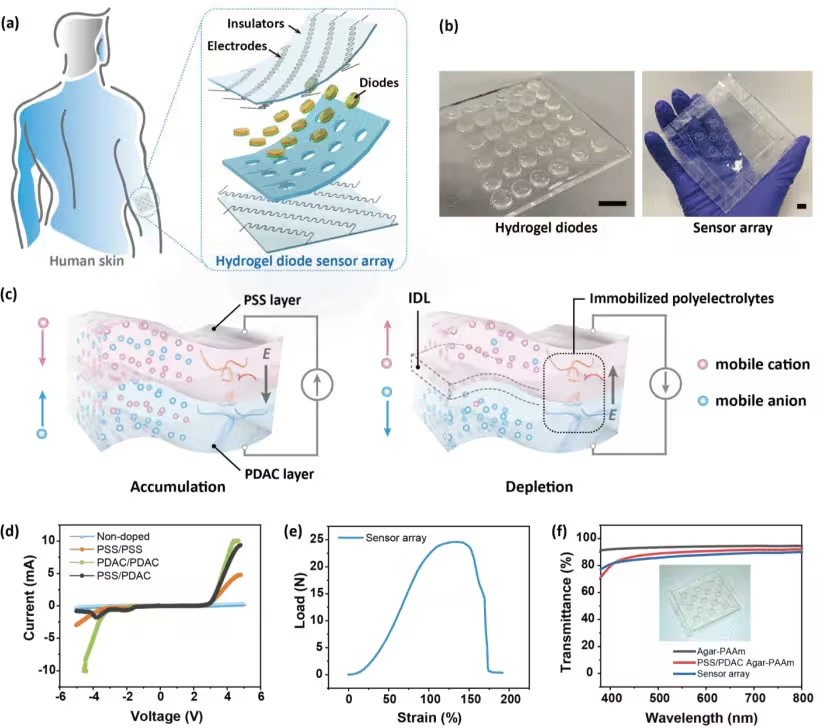
A Stretchable Tactile Sensor Array Based on Hydrogel Ionic Diodes
Author: Liu Xinyu, Wu Xia, Zhang Zefang
Published in: IEEE Sensors Journal (Volume: 25, Issue: 16, August 2025)
Summary Contributed by: Xinyu Liu (Author)
Human skin transmits the sensation of touch through precisely regulated ionic signals. Researchers developed a soft-gel tactile sensor array that integrates ionic diodes, applying this principle to robotic skin. These diodes control the movement of ions similar to biological synapses, converting gentle pressure into ionic responses. The innovation brings artificial skin closer to mimicking the functions of real skin, showing potential for advanced iontronic applications in robotics and prosthetics.
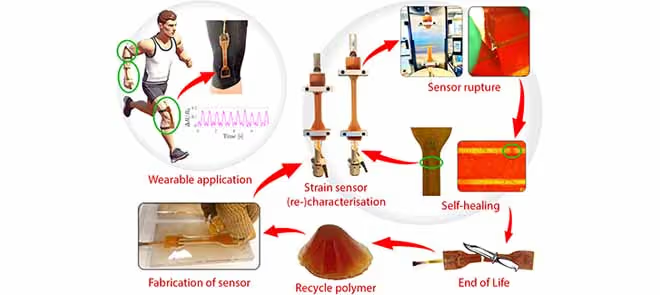
The fragility of smart wearables has driven demand for flexible, stretchable sensors. This study presents a self-healing, recyclable strain sensor made from a Diels–Alder polymer and liquid metal, which can fully restore its functionality even when cut in half. This durable, repairable, and eco-friendly stretchable device, with excellent sensing performance, is well-suited for smart wearables and paves the way for sustainable soft electronics in health monitoring and robotics.
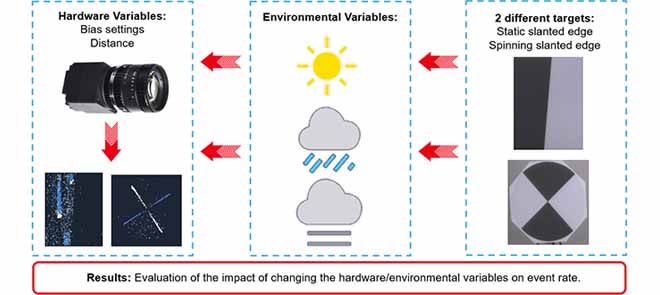
Evaluating Event-Based Vision Sensing in Rain and Fog
Author: Delaney Ethan, Brophy Tim, Collins Fiachra, Deegan Brian, Glavin Martin, Jones Edward, Ward Enda
Published in: IEEE Sensors Journal (Volume: 25, Issue: 16, August 2025)
Summary Contributed by: Ethan Delaney (Author)
Event-based sensors are being considered for use in automotive perception systems, due to their high temporal resolution, high dynamic range, and low latency. However, their performance in adverse weather conditions must be validated before large-scale rollout. This study characterizes the impact of rain and fog on event camera performance in controlled conditions. It introduces methods to mitigate these effects, offering fresh insights for autonomous vehicles, outdoor monitoring, and robotics.
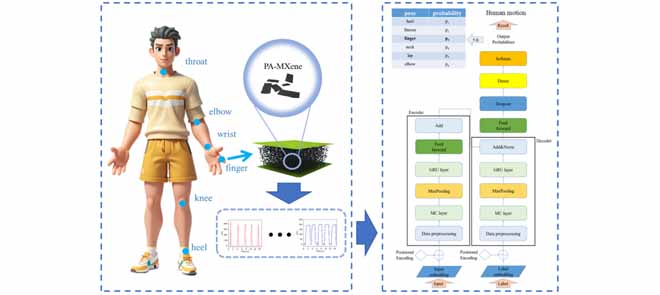
Phytic Acid/MXene@Polyurethane Sponge-Based Flexible Pressure Sensor With Assistance of MC-GRU Model for Motion Posture Recognition
Author: Zhang Dongzhi, Guo Yihong, Wang Weiwei, Xia Hui, Yang Chunqing, Zhang Hao, Zhou Lina
Published in: IEEE Sensors Journal (Volume: 25, Issue: 15, August 2025)
Summary Contributed by: Payal Savani
Pressure sensors, essential for flexible electronics, face limitations in detection range and structural instability. This study presents a flexible pressure sensor fabricated using phytic acid-modified MXene nanosheets coated on a polyurethane sponge. The device demonstrates high sensitivity (16.71 kPa⁻¹), a broad detection range (0–175 kPa), and excellent flame retardancy. When integrated with a multilayer convolutional gated recurrent unit (MC-GRU) model, the system achieved high-fidelity human-motion recognition, enabling next-generation smart wearables and human–machine interfaces.
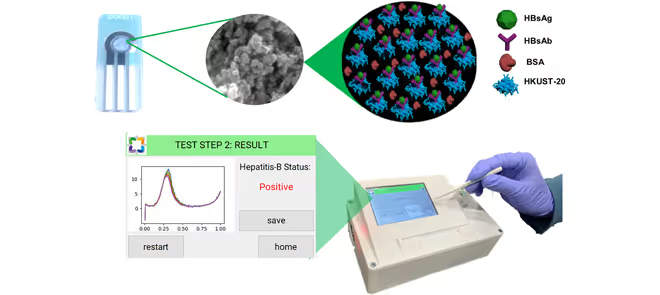
HBV-Testing: HKUST-1-Modified Electrochemical Immunosensor for Point-of-Care Testing of Hepatitis B
Author: Yuliarto Brian, Dewi Kariana Kusuma, Raihan Muhammad Fadlan, Septiani Ni Luh Wulan, Wustoni Shofarul
Published in: IEEE Sensors Journal (Volume: 25, Issue: 15, August 2025)
Summary Contributed by: Brian Yuliarto (Author)
Early detection of Hepatitis B is crucial to prevent severe liver conditions. The hepatitis B surface antigen (HBsAg) appears early in infection, making it a key biomarker. This study introduces the HBV-Test, a portable electrochemical immunosensor designed for rapid, affordable HBsAg detection at the point-of-care. Using a copper-based nanomaterial (HKUST-1), it almost accurately identifies viral antigens in 5 minutes. Its robust clinical performance supports its use directly in healthcare systems.
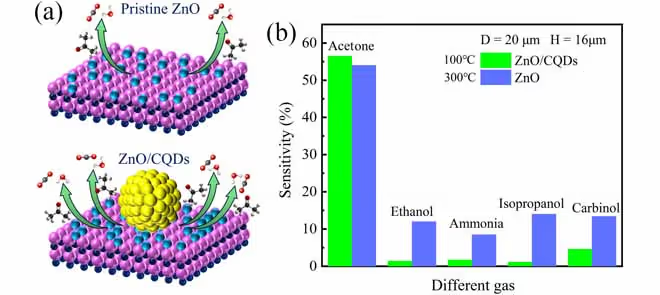
High-Sensitivity CQDs-Modified ZnO Nanowire Gas Sensor Fabricated on 3-D Substrate for Acetone Detection
Author: Ma Liuhong, Chen Pandi, Duan Zhiyong, Fu Yingchun, He Fan, Li Mengke, Li Puguang, Si Chaowei, Zhang Xin
Published in: IEEE Sensors Journal (Volume: 25, Issue: 12, June 2025)
Summary Contributed by: Saurabh Dubey
A Carbon quantum dot (CQD)-modified zinc oxide (ZnO) nanowire gas sensor designed on a 3-D micropillar substrate enables high-sensitivity, low-temperature acetone detection. The 3-D structure increases surface area, while CQD form p–n heterojunctions that enhance adsorption and selectivity. This sensor shows scalable, energy-efficient, and reliable performance, achieving higher sensitivity and lower operating temperature than unmodified ZnO, making it ideal for industrial, environmental, and commercial applications in acetone monitoring.
Published in: IEEE Sensors Journal (Volume: 25, Issue: 15, August 2025)
Summary Contributed by: Frank J. Wouda (Author)
With increasing life expectancy, gait disorders that worsen with age have become a global concern. Presently, body-worn devices with multiple on-body sensors are required for accurate gait monitoring. This study proposes a novel portable gait analysis setup that combines an ultra-wideband (UWB) sensor and an inertial measurement unit (IMU) on each foot to track accurately their positions (within 2.5cm) and orientation (within 4 degrees) in real time without drift.
Published in: IEEE Sensors Journal (Volume: 25, Issue: 15, August 2025)
Summary Contributed by: Payal Savani
In diabetes management, noninvasive and painless glucose monitoring is challenging. This work presents a flexible, side-gated field-effect transistor (FET) test strip that uses graphene oxide (GO)-catalyzed CuO-ZnO hollow spheres for saliva-based glucose sensing. Demonstrating excellent reproducibility and repeatability, this portable platform achieved an ultra-low limit of detection (0.001 μM) and high sensitivity (1600 μA·mM⁻¹) across a wide range of saliva concentrations, offering a point-of-care solution for glucose monitoring.
Electrochemical Study of a WO₃ NPs/MoO₃ Heterojunction-Based Dual-Enzyme Amperometric Acetylcholine Sensor
Author: Chou Jung-chuan
Published in: IEEE Sensors Journal (Volume: 25, Issue: 15, August 2025)
Summary Contributed by: Jung-Chuan Chou (Author)
Acetylcholine (ACh) is a crucial neurotransmitter, and fluctuations in its concentration are associated with neurodegenerative diseases. This study presents an amperometric dual-enzyme acetylcholine sensor integrating tungsten oxide (WO₃) nanoparticles with a molybdenum oxide (MoO₃) thin film to form a heterojunction structure. Dual-enzyme immobilization enables a wide linear range, ultra-low detection limit, high selectivity, and stable operation. The sensor shows potential for mass-producible, low-cost platforms for real-time neurochemical monitoring and portable biomedical applications.
Our corneal surface and tears make an excellent alternative to blood as a source of biomarkers. Incorporating sensors into contact lenses could provide a convenient, non-invasive platform for continuously detecting and monitoring diseases like glaucoma, diabetes, and heart disease. Researchers explored current technologies for sensing materials, energy, and data transmission techniques in electronic contact lens sensors. The study systematically explores the challenges and future trends.
The progress on fire sensing technologies has been quite substantial due to advancements in sensing, information, and communications technologies. The sensing system’s hardware and algorithm ensure its excellent ability to detect early fire with less false positives. The information and communication technology focuses on issuing an early warning to notify the occupants and the fire department. Developing a robust fire system demands establishing the benchmark parameters for heat, flame, smoke, and gas levels detection in every fire scenario.
A non-profit organization, IEEE is the world's largest technical professional organization dedicated to advancing technology for the benefit of humanity.
Copyright 2023 IEEE – All rights reserved. Use of this website signifies your agreement to the IEEE Terms and Conditions
This site is also available on your smartphone.