Get exclusive breakthroughs on sensors in IoT, energy, healthcare, and more, delivered straight to your inbox.
"IEEE Sensors Alert" is a new service of the IEEE Sensors Council. Started as one of its new initiatives, this weekly digest publishes teasers and condensed versions of our journal papers in layperson's language.
Articles Posted in the Month (January 2026)
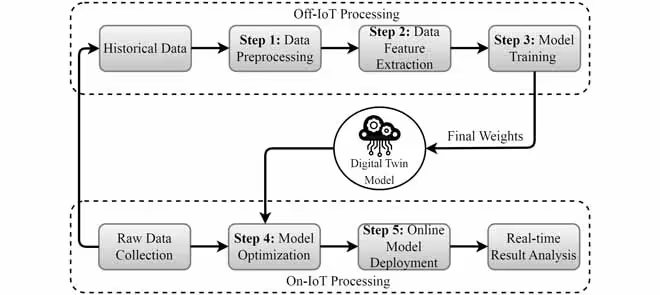
Digital Twin-Assisted Fuzzy Logic-Inspired Intelligent Approach for Flood Prediction
Published in: IEEE Sensors Journal (Volume: 25, Issue: 15, August 2025)
Summary Contributed by: Kamalesh Tripathy
Flood prediction is crucial for disaster management. This paper introduces a novel smart framework designed with digital twin modelling, Internet of Thing (IoT) sensing, neuro-fuzzy learning, and blockchain security to forecast flood risks with exceptional accuracy. By combining real-time environmental data with modelling complex hydrological interactions, this approach delivers a highly reliable Flood Index Value with testing accuracy above 95%, making it an efficient tool for disaster preparedness and planning.
Published in: IEEE Sensors Journal (Volume: 25, Issue: 13, July 2025)
Summary Contributed by: Subham Das (Author)
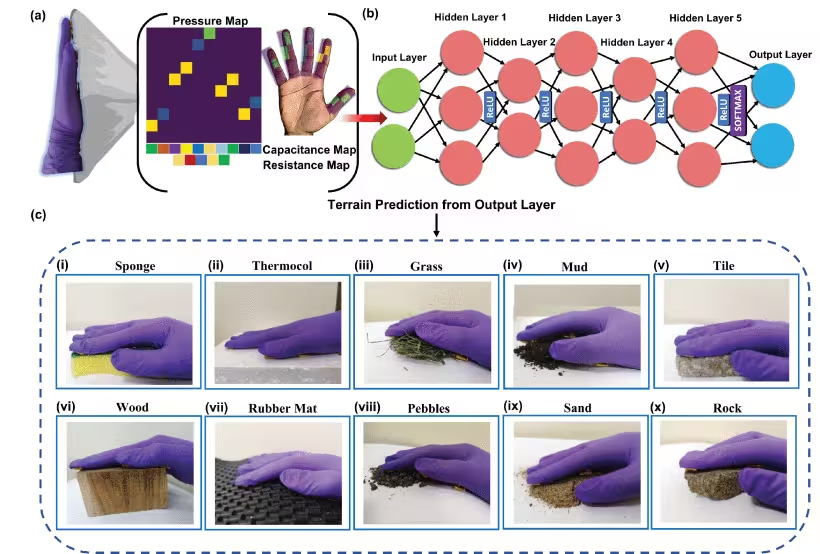
Replicating the complexity of human touch is challenging. This research introduces a novel tactile sensing skin designed to detect and interpret surface textures accurately. Combining a flexible tactile sensor and a thermal sensor creates a system capable of distinguishing surface features with precision. By integrating machine learning, the system can identify terrain with high accuracy, bringing machines closer to mimicking human touch and advancing the field of intelligent robotics and prosthetics.
Published in: IEEE Sensors Journal (Volume: 25, Issue: 16, August 2025)
Summary Contributed by: Kamonrat Phopin (Author)
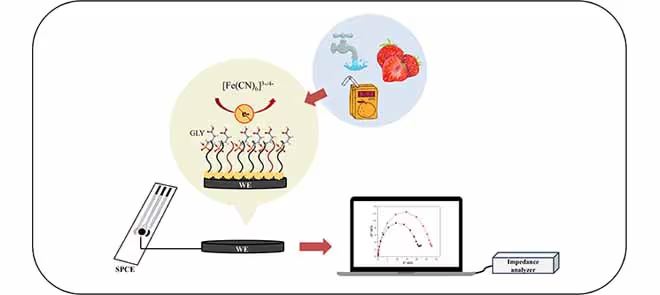
Hazardous pesticides have posed life-threatening effects to human livelihood and wellness for a decade. This paper presents an aptamer-based impedimetric sensor for glyphosate (GLY) detection in environmental and food commodities. The proposed aptasensor offers a simple, cost-effective, and fast alternative to conventional methods. It also demonstrates effective real-world performance, including a wide dynamic range and satisfactory cross-reactivity against common interferences, making it promising for real-life applications.
Published in: IEEE Sensors Journal (Volume: 25, Issue: 2, January 2025)
Summary Contributed by: Elzenheimer Eric (Author)
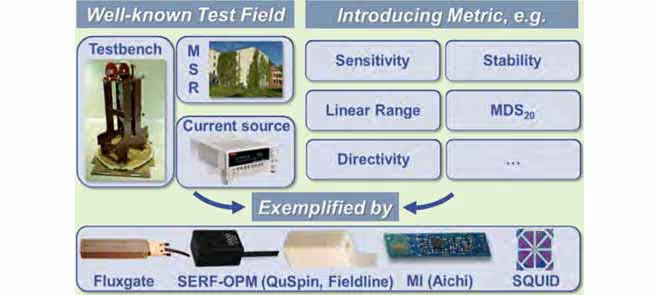
Benchmarking highly sensitive magnetometers is essential across diverse application fields. This study introduces, for the first time, a dedicated test bench and a set of key parameters that enable cross-technology comparison between non-cryogenic magnetometers and Superconducting Quantum Interference Devices (SQUIDs). It exemplifies and standardizes definitions of core metrics such as sensitivity, linear range, stability, directivity, frequency response, time delay, and noise spectral density within a controlled evaluation framework.
Published in: IEEE Sensors Journal (Volume: 25, Issue: 15, August 2025)
Summary Contributed by: Saurabh Dubey
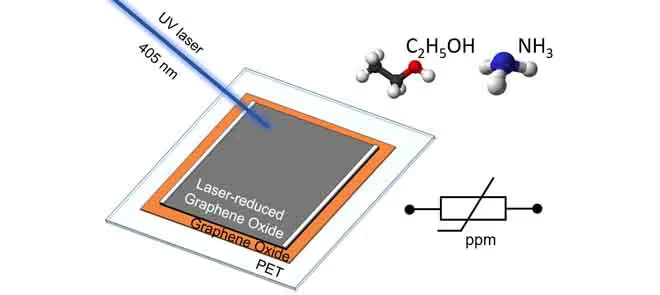
A laser-reduced graphene oxide (LrGO) sensor offers a low-cost, scalable, and additive-free solution for real-time detection of ammonia and ethanol gases. Fabricated directly on PET films via laser reduction, the sensor achieves sensitivities of 0.0402 %/ppm for ammonia and 0.0140 %/ppm for ethanol at room temperature. With simple fabrication, stable performance, and strong linear response, LrGO enables sustainable, eco-friendly gas sensing for environmental and workplace safety monitoring.
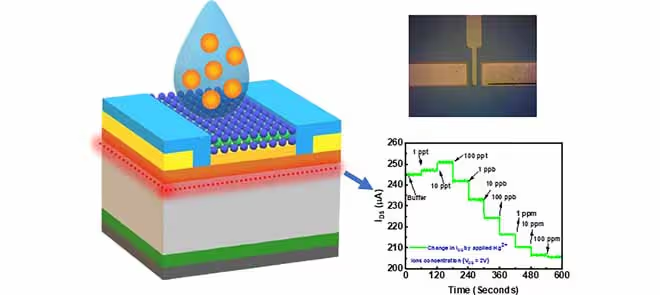
Mercury (Hg²⁺) contamination poses severe health risks, yet current detection is slow and costly. This study introduces a breakthrough MoS2-functionalized MgZnO/CdZnO high-electron-mobility transistor (HEMT) sensor for ultrasensitive detection of Hg²⁺ ions. Using chemical vapor–deposited grown MoS2, the device could detect mercury ions at an ultralow concentration (as low as 6.5 ppt) within 4 seconds. This highly selective, portable solution provides reliable, real-time monitoring for water quality and environmental surveillance.
Two-Electrode Screen-Printed pH Sensors for Monitoring Soil and Other Growing Media
Author: Whiting Gregory, Arias Ana, Atreya Madhur, Barba Juan Pablo Cisneros, Baumbauer Carol L., Bihar Eloise, Bruno Nicholas, Crichton Catherine A., Goodrich Payton J., Lahann Lucas, Pister Kris, Silver Whendee L., Strand Elliot J., Yuan Titan
Published in: IEEE Sensors Journal (Volume: 25, Issue: 11, June 2025)
Summary Contributed by: Gregory L. Whiting (Author)
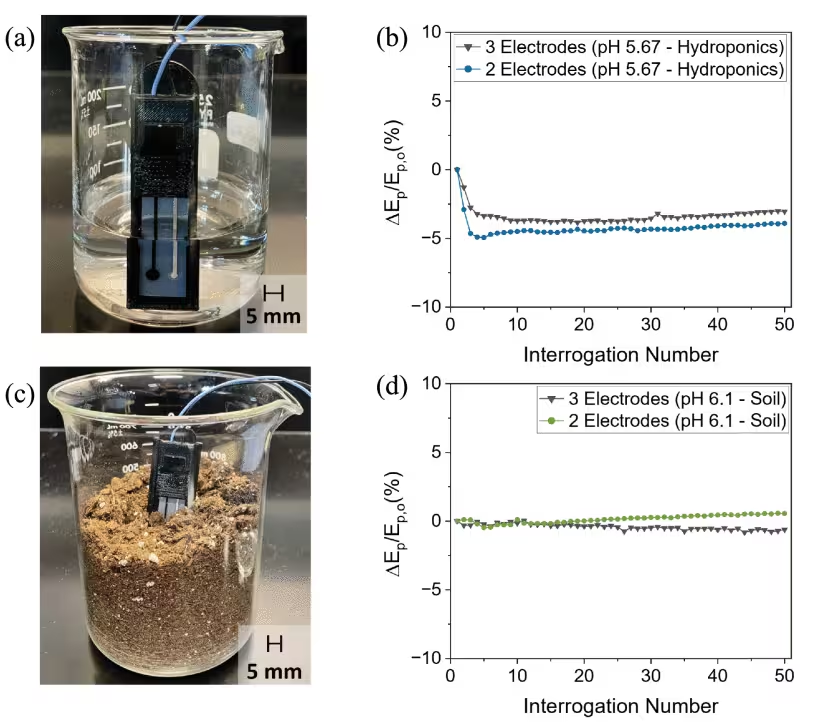
Monitoring the pH of growing media is essential for optimizing agricultural practices and maintaining both crop and environmental health. This study introduces a screen-printed pH sensor featuring a simplified two-electrode design consisting of an Alizarin working electrode and stabilizing Nafion/salt membranes. The design demonstrated stable, real-time pH measurements. It integrates affordable readout electronics, making it a reliable approach for high-density pH monitoring in environmental and agricultural applications.
Photo-Assisted Selective and Reversible Acetone Sensors Based on 2-D MoSe₂ Nanoflakes
Author: Ray S. K., Das Saranya, Das Shreyasi
Published in: EEE Sensors Journal (Volume: 25, Issue: 11, June 2025)
Summary Contributed by: Saranya Das (Author)
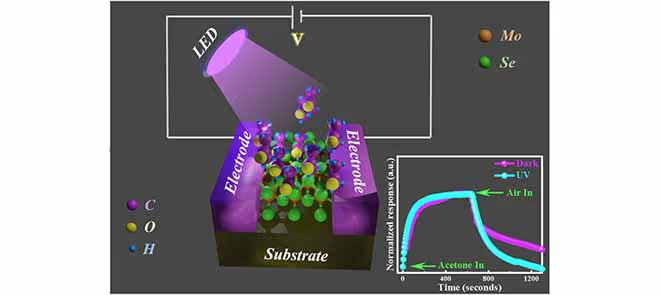
Driven by industrial growth and urbanization, research in volatile organic compounds (VOC) sensing has gained importance for environmental and medical applications. This study introduces a two-dimensional molybdenum diselenide (MoSe2)-based chemiresistor for acetone detection at room temperature, featuring high selectivity, low detection limit, and UV-light-enhanced recovery. Its simple design and low-cost fabrication make it promising for real-time VOC sensing applications.
Thermal Fault Detection of High-Speed Direct-Driven Blower Components Using Thermal-Visible Image Fusion and Semantic Segmentation
Author: Chu Ning, Ali Mohammad-Djafari, Cai Caifang, Li Li, Sun Zekun, Zhang Shanqing
Published in: IEEE Sensors Journal (Volume: 25, Issue: 12, June 2025)
Summary Contributed by: Payal Savani
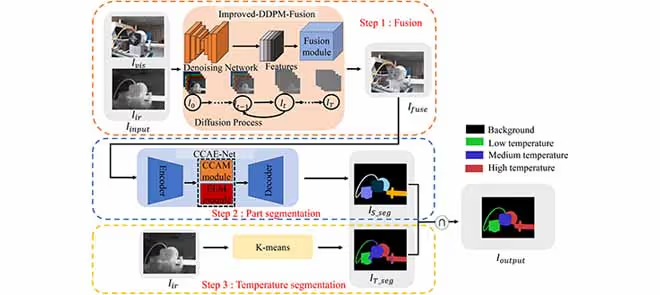
Thermal fault detection is crucial for maintaining industrial blowers, as high-speed rotation can lead to overheating and performance loss. The proposed system combines thermal infrared and visible images using an Improved Diffusion-Based Fusion (IDF) model. A lightweight Convolutional Cross-Attention Encoder Network (CCAE-Net) analyzes these images, segmenting components and identifying abnormal temperature zones. This method enables accurate, real-time monitoring, enhancing the reliability, efficiency, and safety of high-speed direct-driven blowers.
Published in: EEE Sensors Journal (Volume: 25, Issue: 11, June 2025)
Summary Contributed by: Ritu Poonia (Author)
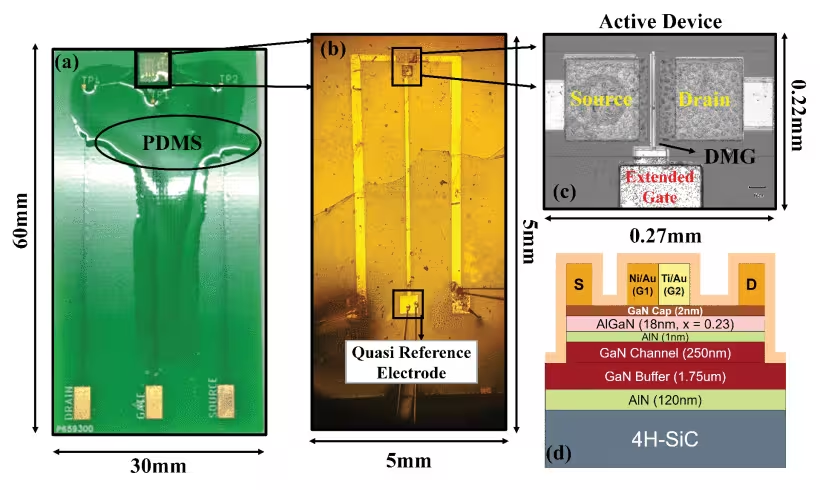
Mercury exposure poses a threat to both human health and the environment, necessitating its strict monitoring. This work introduces a dual-metal-gate AlGaN/GaN high-electron-mobility transistor (HEMT) sensor for mercury ion detection. The device features an extended electrode functionalized with thioglycolic acid for mercury detection and a quasi-reference electrode enabling gate biasing. The design improves sensitivity, selectivity, and stability while validating trace-level mercury detection through quantification analysis, offering a compact solution for environmental monitoring.
Ultralow-Cost and Selective Water-Based Colorimetric Ink for Indoor CO₂ Monitoring
Author: Maria González-Gómez, Ismael Benito-Altamirano, Joan Daniel Prades, Olga Casals, Cristian Fàbrega
Published in: IEEE Sensors Journal (Volume: 25, Issue: 11, June 2025)
Summary Contributed by: Maria González-Gómez (Author)
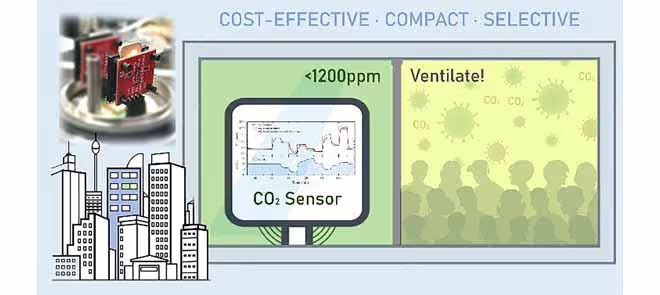
Indoor air quality (IAQ) control is increasingly recognized as crucial for human health. Carbon dioxide (CO₂) levels reflect co-exhaled pathogens and serve as an indicator of air quality. This work presents low-cost, printable CO₂ sensors using a novel water colorimetric ink. Operating within the relevant 150-1500 ppm range, they remain stable and selective even under 10-70% humidity. Their excellent specificity, repeatability, and affordability make them suitable for real-world applications.
Ethylenediamine-Coupled Lysine-Modified Pencil Graphite Electrode for the Quantification of Indigo Carmine
Author: R Rejithamol, Sadanandan Sandhya, C Devu, P J Sreelekshmi, V Devika
Published in: IEEE Sensors Journal (Volume: 25, Issue: 11, June 2025)
Summary Contributed by: R. Rejithamol (Author)
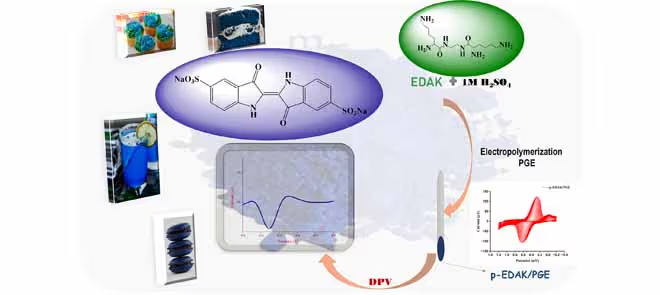
The widespread use of synthetic food colors has raised concerns about public health safety and the need for effective detection methods. In this study, a novel compound, ethylenediamine-coupled lysine (EDAK), was used to modify a pencil graphite electrode (PGE) through electropolymerisation for the detection of indigo carmine. The developed sensor exhibited high sensitivity, excellent selectivity, and a low detection limit, offering a cost-effective and reliable option for food safety monitoring.
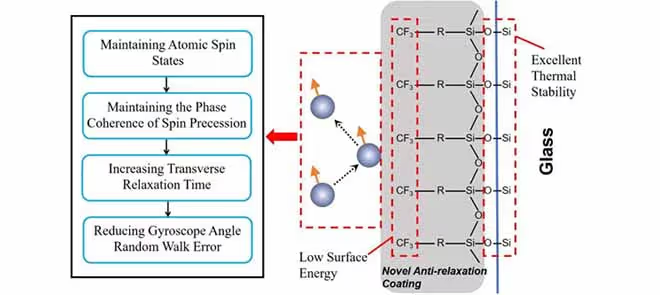
A Novel Anti-Relaxation Material Applied in Miniaturized Atomic Spin Gyroscope
Author: Li Shun, Bi Zhangzhe, Lin Longbin, Wu Yunong, Xu Fangqi, Zhang Haifeng
Published in: EEE Sensors Journal (Volume: 25, Issue: 11, June 2025)
Summary Contributed by: Saurabh Dubey
A novel perfluorododecyltrichlorosilane (PDTS) anti-relaxation coating enhances miniaturized atomic spin gyroscopes (NMRGs) by reducing spin relaxation in tiny vapor cells. Offering excellent thermal stability, strong adhesion, and ultralow surface energy, PDTS extends transverse relaxation time to 28.8 s, surpassing traditional methods. Validated via spectroscopy and atomic force microscopy, it improves spin coherence, sensitivity and reliability. Ideal for UAV navigation and GPS-denied environments, it enables next-generation compact gyroscopes with superior performance.
Radio Frequency Characterization of Gold Nanoparticles With 3-D Printed U-Cavity Sensor
Author: Kattel Bibek, Hutchcraft Winn Elliott, Syed Azeemuddin, Tanner Eden E. L., Vashisth Priyavrat
Published in: IEEE Sensors Journal (Volume: 25, Issue: 12, June 2025)
Summary Contributed by: Bibek Kattel (Author)
Gold nanoparticles (AuNPs) have diverse applications in medicine, electronics, optical devices, sensors, and sensing technologies. Hence, the development of advanced characterization technology to determine its potential toxicity is essential. This paper introduces a novel 3D-printed U-cavity sensor for radio frequency (RF) characterization of gold nanoparticles based on three different geometric shapes. Each nanoparticle's shape exhibited a unique RF spectral signature, enabling the accurate characterization of the gold nanoparticles.
Published in: IEEE Sensors Journal (Volume: 25, Issue: 12, June 2025)
Summary Contributed by: Kamalesh Tripathy
Cinnamic acid (CA) has multiple benefits, including its antioxidant, anti-inflammatory, antibacterial, and anticancer properties. However, its unregulated usage has harmful effects. This paper introduces a novel molecularly imprinted polymer-based graphite electrode developed for the detection and quantification of CA in black tea and cinnamon powder. Using differential pulse voltammetry, it shows a wide linear range (1–1000 µM) and a low detection limit (8.2 nM), exhibiting excellent repeatability and stability.
The usual MEMS mirror-based Light detection and ranging (LiDAR) systems are suitably lightweight and accurate but have a narrow field of view (FOV). The proposed LiDAR prototype with a customized wide-angle lens in front of the MEMS mirrors could successfully scan a large FOV to produce a 3D image with negligible distortion. Successful integration may increase its potential use in autonomous vehicles, drones, mobile robotic devices, disaster prediction etc.
RFID-a radio-frequency identification technology, is gaining popularity as a wireless sensor for track and trace applications. The high cost of chipped-RFID tags makes them unsuitable for mass production. The Chipless-RFID tag is lightweight, durable, reliable, and energy-sufficient and can be mass-produced using inexpensive conductive inks or yarns. Improving range and data capacity in chipless-RFID tags could make them indispensable as wearables.
A non-profit organization, IEEE is the world's largest technical professional organization dedicated to advancing technology for the benefit of humanity.
Copyright 2023 IEEE – All rights reserved. Use of this website signifies your agreement to the IEEE Terms and Conditions
This site is also available on your smartphone.