



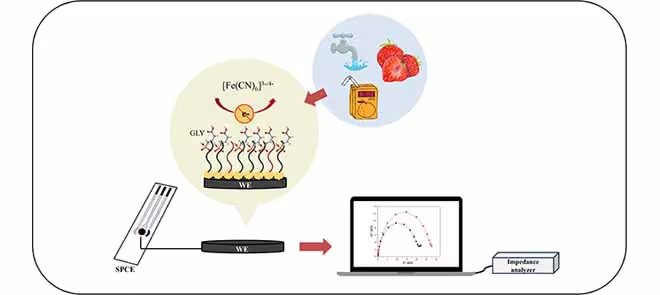
Impedimetric Study of Aptamer-Immobilized 4-Aminophenylacetic Acid-Modified Carbon Electrode for Glyphosate Detection
Glyphosate was classified as probably carcinogenic to humans (Group 2A) in 2015, but it is still in use in the majority of countries. Various measures, including regular monitoring of the environmental resources, have been implemented to minimize the use of this hazardous pesticide to safeguard human health. However, conventional detection methods, such as high-performance liquid chromatography (HPLC), still cannot meet this need due to their costly installation, operational expertise requirements, and complex maintenance procedures, rendering them unsuitable for field-based detection and particularly inaccessible for low- and middle-income countries.
The researchers here leveraged the integration of the aptamer and the electrochemical technique as an alternative platform for glyphosate detection to address the aforementioned gaps. The aptamer, or chemical antibody, demonstrated excellent binding affinity for its specific target, lower production costs, and superior shelf life.
In this study, a crucial step involved the efficient immobilization of the aptamer onto the electrode surface without disrupting its binding efficacy. An organic compound, 4-aminophenylacetic acid, was chosen to modify the substrate. This modification allows the aptamer to establish a uniform self-assembled monolayer (SAM). Moreover, electrochemical impedance spectroscopy (EIS), a highly sensitive technique for surface-binding events, was primarily used to generate the signal response following the interaction between the aptamer and glyphosate, with a frequency sweep from 0.5 to 100 kHz at a DC potential of +250 mV.
The fundamental interactions between the aptamer and glyphosate were evaluated using molecular docking simulations. It identified electrostatic interactions, hydrogen bonding, and van der Waals forces as the primary possible binding forces. The successful surface modification was also confirmed by thorough characterization using scanning electron microscopy (SEM), Fourier-transformed infrared (FTIR) spectroscopy, Raman spectroscopy, contact angle analysis, and complementary electrochemical studies using cyclic voltammetry (CV) and EIS.
The proposed aptasensor demonstrated a limit of detection (LOD) of 0.0515 μM and a sensitivity of 0.564 Ω·μM−1·cm−2, with an optimized incubation time of only 30 minutes. This performance is highly competitive with other advanced analytical methods while offering significantly faster analysis time than conventional laboratory techniques.
The established working range of 10 nM and 10 μM was also relevant, as it effectively encompassed the practical concentrations found in real-life scenarios. Moreover, minimal cross-reactivity was observed against common interferences, including glycine, captan, diquat, and paraquat, confirming the sensor’s high selectivity.
A real-world application was simulated by validating spiked samples in tap water, orange juice, and strawberry using the recovery study. This study quantified the method’s accuracy by determining the percentage of a known amount of analyte successfully detected after intentional addition to a sample. The percentage recovery observed across these samples ranged from 87.8% to 120.3%, which complies with the recommended recovery guidelines established by the Association of Official Analytical Chemists (AOACs).
To strengthen the reliability of this proposed aptasensor, all experiments were subjected to statistical analysis, ensuring that all results were statistically significant. Ultimately, the successful integration of aptamer recognition with electrochemical sensing provides a reliable, simple, and cost-effective platform for rapid, accessible glyphosate monitoring.