



Hierarchical Labeling and Layered-Training-Based CNN: An Application in Bearing Fault Diagnosis
Rolling bearings are essential components in modern industrial machinery. Their operational condition directly affects equipment safety, stability, and service life. Unexpected bearing failures can lead to production disruptions, increased maintenance costs, and even serious safety hazards. As a result, accurate and reliable fault diagnosis has become a key requirement in smart manufacturing and predictive maintenance systems.
Deep learning methods, particularly convolutional neural networks (CNNs), have achieved high accuracy in bearing fault diagnosis. However, most of these models operate on data-driven learning, commonly described as "black boxes." In safety-critical industrial environments, this limited interpretability reduces trust and limits practical deployment.
To address this issue, the researchers propose a convolutional neural network (CNN) architecture based on layered-training that integrates hierarchical labeling and a freezing mechanism. Hierarchical labels are constructed to reflect different diagnostic granularities. In this three-level framework, the first level distinguishes between normal and fault states, the second level identifies the location of the fault, and the third level assesses the size of the fault.
During training, each convolutional layer focuses on its corresponding task, and preceding layers are frozen before proceeding to a more refined classification stage. This structured design enables the network to learn features corresponding to the task at specific layers and enhances the interpretability of the extracted features.
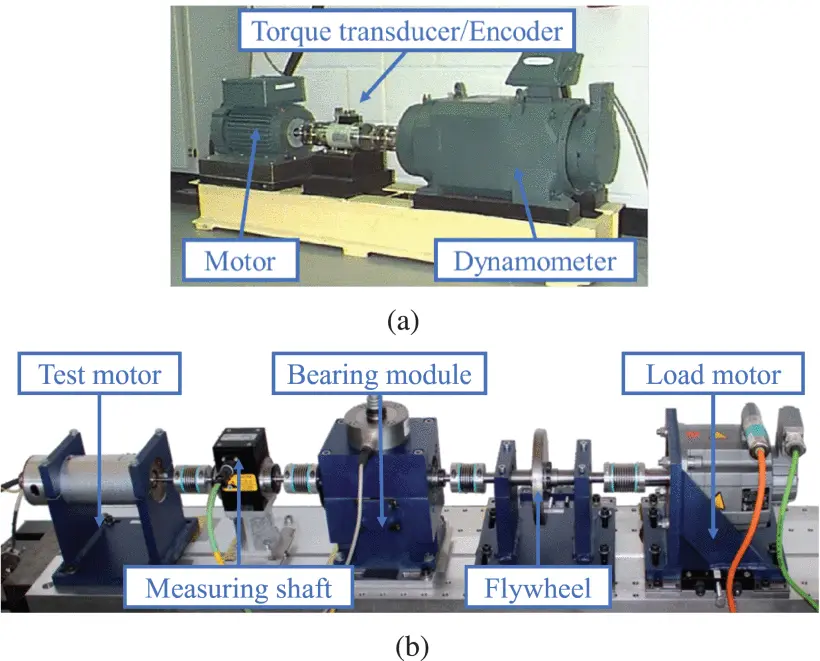
The proposed method was validated on the Case Western Reserve University (CWRU) and Paderborn University (PU) datasets. Experimental results show that the hierarchically trained CNN model achieves higher accuracy and better stability than traditional end-to-end CNN models. In noisy experiments, the proposed method demonstrates stronger robustness across different signal-to-noise ratios and exhibits less performance fluctuation.
Quantitative clustering analysis of the convolutional kernel weights shows that the proposed method learns features with stronger inter-class separation and a more compact intra-class distribution compared to baseline CNNs. This design enables the CNN to progressively extract features "from coarse to fine" according to the hierarchical structure of fault labels, thereby improving the interpretability of the inference process and its outcomes.
Feature map visualization results show that feature patterns become blurred at deeper layers in the baseline CNN. In contrast, the hierarchically trained CNN exhibits a clearer progression from coarse to fine features, with each layer focusing on different levels of fault-related characteristics. This confirms that hierarchical training establishes a meaningful correspondence between network layers and discontinuity granularity, thereby improving the model's interpretability.
This study demonstrates that integrating hierarchical labeling and progressive freezing mechanisms into CNN training can significantly improve the accuracy, stability, and interpretability of rolling bearing fault diagnosis. The proposed framework not only performs well under complex fault conditions but also shows potential for handling composite faults. It also helps detect faults early, prevents breakdowns, and reduces maintenance costs. In the future, this hierarchical training strategy can be extended to other neural network architectures and further validated under more complex combined fault scenarios.