Get exclusive breakthroughs on sensors in IoT, energy, healthcare, and more, delivered straight to your inbox.
"IEEE Sensors Alert" is a pilot project of the IEEE Sensors Council. Started as one of its new initiatives, this weekly digest publishes teasers and condensed versions of our journal papers in layperson's language.
Author: N. Bhavana, Mallikarjun M. Kodabagi, B. Muthu Kumar, P. Ajay; N. Muthukumaran, A. Ahilan
Published in: IEEE Sensors Journal (Volume: 24, Issue: 15, August 2024)
Summary Contributed by: Anupama
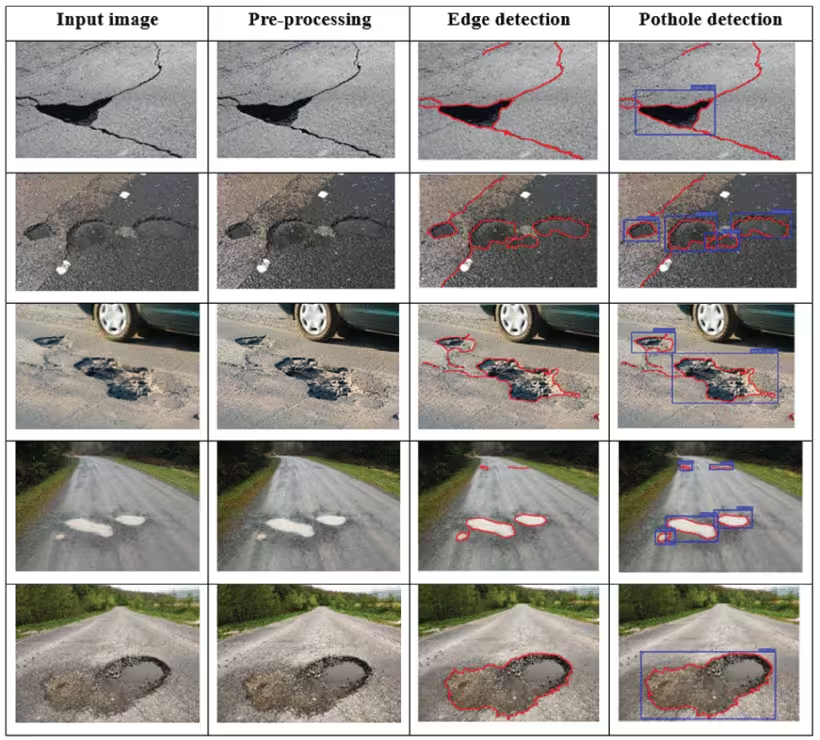
Road potholes pose significant risks to road safety and infrastructure. POT-YOLO is a novel real-time detection system combining edge segmentation with the You Look Only Once (YOLOv8) architecture. This innovative approach improves pothole localization by accurately identifying their contours. POT-YOLO demonstrates exceptional performance, ensuring accurate and efficient detection even in challenging conditions. Its real-time capabilities allow for deployment on edge devices, facilitating proactive maintenance and improving road safety.
Analysis and Design of Biplanar Coils Within Magnetic Shielding Room Considering Actual Ferromagnetic Boundaries
Author: Xu Xueping, Liu Yi, Sun Xin, Zhou Weiyong
Published in: IEEE Sensors Journal (Volume: 24, Issue: 24, December 2024)
Summary Contributed by: Xu Xueping (Author)
Studying the coupling relationship between the magnetic shield and coil is crucial for designing a magnetic field coil with high uniformity. This paper presents a novel method for designing high-uniformity biplanar coils inside a closed magnetic shielding room with ferromagnetic boundaries. The approach accounts for the permeability and thickness of the magnetic shielding materials to effectively improve the uniformity of the coil, which is important for achieving a near-zero magnetic field environment.
High-Sensitivity of Self-Powered Gas Sensors Based on Piezoelectric Nanogenerators With Y-Doped 1-D ZnO Nanostructures
Author: Ji Liang-wen, Chu Tung-Te, Chu Yen-Lin, Xie Jun-Hong
Published in: IEEE Sensors Journal (Volume: 24, Issue: 12, June 2024)
Summary Contributed by: Saurabh Dubey
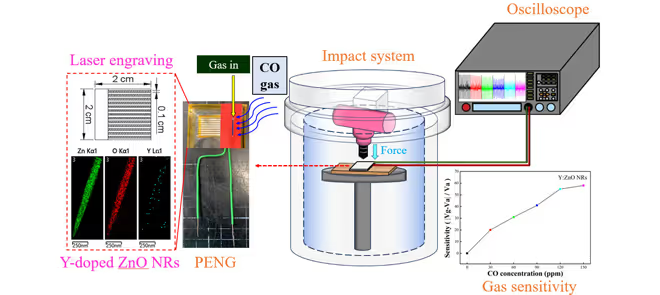
Self-powering sensors will make the sensing devices portable. This study explores a self-powered gas sensor using Yttrium-doped zinc oxide (Y-doped ZnO) nanorod arrays and piezoelectric nanogenerators (PENGs). The sensor demonstrated self-powering capability, offering portability and energy efficiency. It exhibits superior sensitivity to carbon monoxide (CO) compared to conventional sensors. The advantages include portability, improved gas adsorption and functionality, facilitating integration into the IoT systems, and wearable sensors for real-time environmental monitoring.
Published in: IEEE Sensors Journal (Volume: 24, Issue: 24, December 2024)
Summary Contributed by: Tobias Gnos (Author)
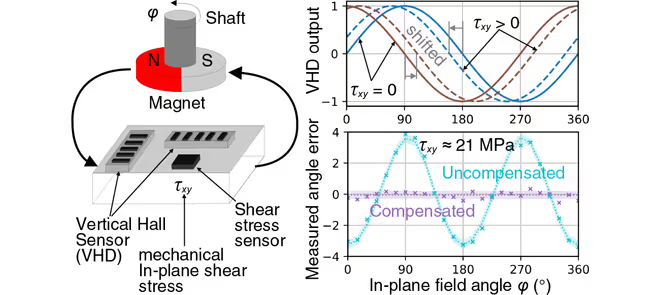
Vertical Hall Devices (VHD) offer a way for accurate low-cost angular position sensing. In-plane stresses on the silicon die caused by packaging or external forces challenge the increasing accuracy requirements in the automotive and automation industry over a wide temperature range. The study presents a novel active stress compensation method to increase the accuracy of angle measurements in CMOS-integrated VHD’s. The approach is particularly beneficial for applications requiring high-accuracy magnetic field sensing.
Published in: IEEE Sensors Journal (Volume: 24, Issue: 18, September 2024)
Summary Contributed by: Saurabh Dubey
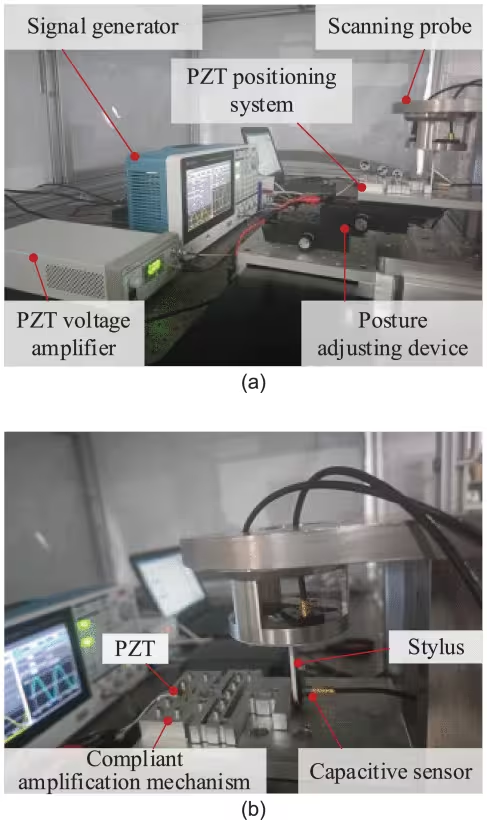
Contact scanning probes may have issues of reduced accuracy due to high speed and high frequency. This paper presents the innovative contact scanning probe, utilizing dual-parameter feedback to optimize pole configuration. It enhances accuracy by correcting high-speed and high-frequency errors with real-time accuracy and dynamic compensation. The approach aims to improve measurement accuracy and stability in high-speed scanning systems. It has promising potential in precision manufacturing, nanotechnology, and medical fields.
From Simulation to Surgery: Comprehensive Validation of an Optical Sensor for Monitoring Focal Laser Ablation of Solid Organ Tumors
Author: Geoghegan Rory, Hughes Griffith, Marks Leonard, Natarajan Shyam, Priester Alan, Sisk Anthony, Sun Songping, Tirado Richard
Published in: IEEE Sensors Journal (Volume: 24, Issue: 24, December 2024)
Summary Contributed by: Rory Geoghegan (Author)
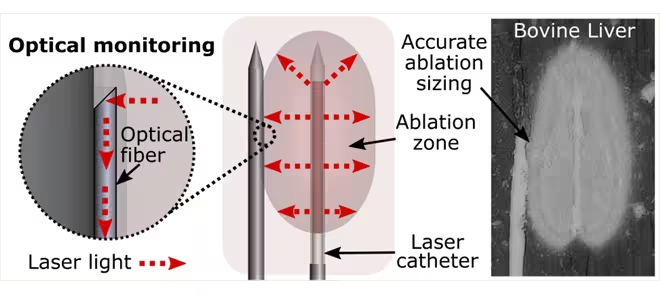
Focal laser ablation (FLA) is a minimally invasive procedure using thermal coagulation to treat tumors with fewer side effects than surgery. However, it lacks an accurate and affordable monitoring method. This paper presents an optical sensor for real-time monitoring of the ablation process. The sensor has been validated through simulations, ex vivo, and clinical studies and can detect the coagulation boundary precisely without tissue-specific calibration.
Exploring and Identifying Bias-Instability Noise Sources in Mode-Split MEMS Gyroscopes Based on Electrostatic Frequency Tuning
Author: Jie Lin, Yang Zhao, Guoming Xia, Qin Shi, Anping Qiu
Published in: IEEE Sensors Journal (Volume: 24, Issue: 18, September 2024)
Summary Contributed by: Kamalesh Tripathy
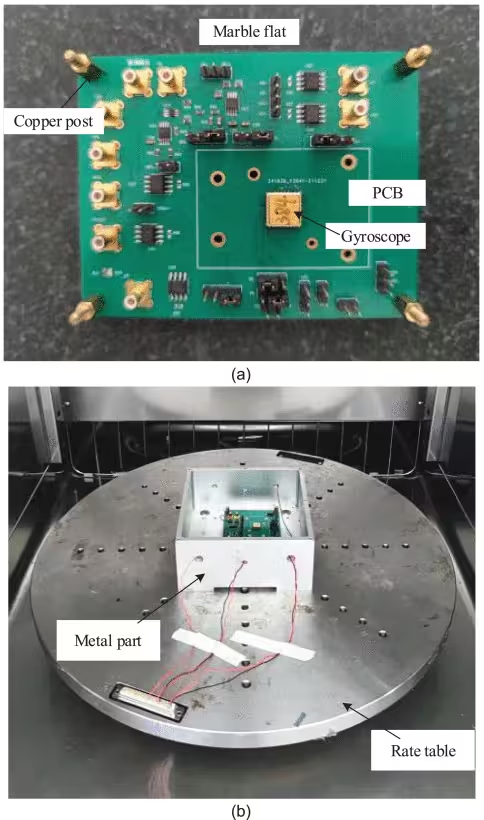
MEMS gyroscope has advanced with the advancements in processing and manufacturing technology. However, their structure and system-based noise level continue to pose challenges in proper implementation and restrict their performance with high accuracy and precision. This paper proposes a system-level noise model that analyzes the relationship between frequency split and noise performance. It identifies noise sources and contributes to bias instability, establishing a frequency-tuning criterion for different noise requirements.
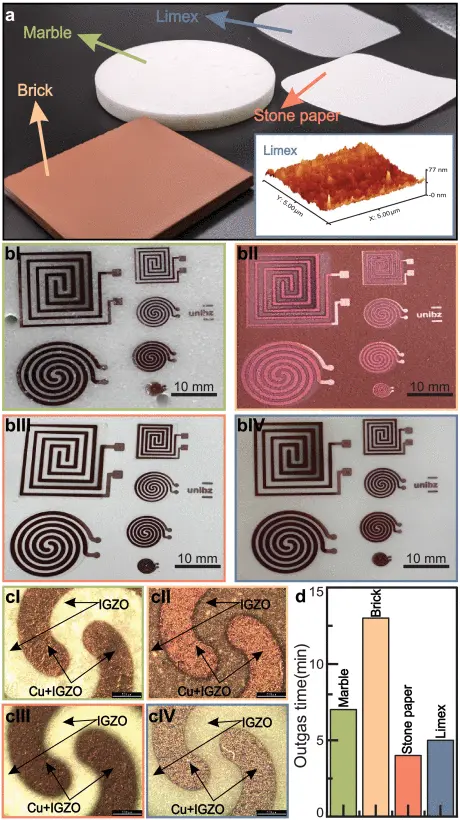
Conventional electronic substrates offer stability and reliability. However, they significantly contribute to electronic waste (e-waste). This study explores stone-based substrates, ranging from natural raw stone to stone paper, as sustainable alternatives for high-performance thin-film temperature sensors. Integrating biodegradable zinc (Zn)-based resistance temperature detectors (RTDs) and amorphous InGaZnO (IGZO)-based thermistors pave the way for dissolvable sensors and reusable substrates, thus leading to less harmful e-waste and advancing eco-friendly electronics.
EV-Fusion: A Novel Infrared and Low-Light Color Visible Image Fusion Network Integrating Unsupervised Visible Image Enhancement
Author: Wang Xia, Sun Qiyang, Yan Changda, Zhang Xin
Published in: IEEE Sensors Journal (Volume: 24, Issue: 4, February 2024)
Summary Contributed by: Saurabh Dubey
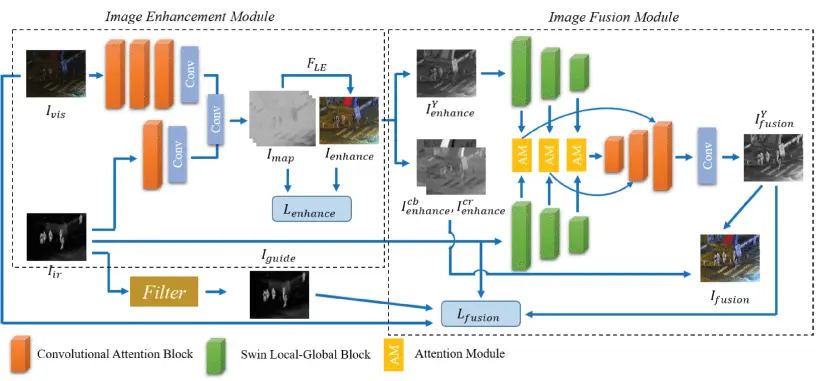
EV-Fusion is an innovative technology for low-light visibility applications. It enhances infrared and color images, surpassing nine leading methods in visual fidelity, brightness, and spatial frequency. Its real-time, high-contrast fusion capabilities show promise for military surveillance and traffic security, ensuring visibility of critical details in low-light conditions. Built on a Swin Local-Global Block framework, it utilizes color visible image enhancement and intensity image fusion modules to enhance texture and overall image quality.
Classification Strategies for Radar-Based Continuous Human Activity Recognition With Multiple Inputs and Multilabel Output
Author: Ingrid Ullmann, Ronny G. Guendel, Nicolas Christian Kruse, Francesco Fioranelli, Alexander Yarovoy
Published in: IEEE Sensors Journal (Volume: 24, Issue: 24, December 2024)
Summary Contributed by: Ullmann Ingrid (Author)
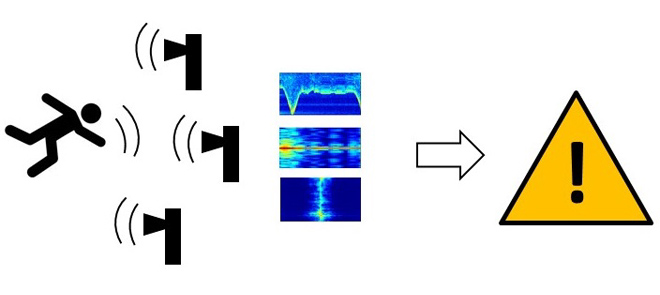
Fall detection systems can support independent living for people prone to falls. This paper introduces a novel approach using a radar-based continuous human activity recognition(HAR) system to study different activities by processing radar data in segments and using multilabel classification to recognize activities. The study explores deep learning methods, sensor networks, radar data types, and classification settings to enhance the effectiveness of accurate real-time activity recognition and detecting falls.
Road potholes pose significant risks to road safety and infrastructure. POT-YOLO is a novel real-time detection system combining edge segmentation with the You Look Only Once (YOLOv8) architecture. This innovative approach improves pothole localization by accurately identifying their contours. POT-YOLO demonstrates exceptional performance, ensuring accurate and efficient detection even in challenging conditions. Its real-time capabilities allow for deployment on edge devices, facilitating proactive maintenance and improving road safety.
The two-faced sensor system, JANUS, is designed to help beekeepers track bee activities like ‘Swarming’ and ‘Robbing’. The outward-looking Doppler radar monitors the bee flights while the inward-looking piezoelectric transducer senses the vibrations made by bees inside the hive. Researchers were able to use the level, duration and correlation between the two sensor signals to provide sufficient indication about different types of bee activity.
A non-profit organization, IEEE is the world's largest technical professional organization dedicated to advancing technology for the benefit of humanity.
Copyright 2023 IEEE – All rights reserved. Use of this website signifies your agreement to the IEEE Terms and Conditions
This site is also available on your smartphone.