Get exclusive breakthroughs on sensors in IoT, energy, healthcare, and more, delivered straight to your inbox.
"IEEE Sensors Alert" is a pilot project of the IEEE Sensors Council. Started as one of its new initiatives, this weekly digest publishes teasers and condensed versions of our journal papers in layperson's language.
Articles Posted in the Month (September 2026)
Bioinspired Tapered-Spring Turbulence Sensor for Underwater Flow Detection
Author: Yu Zhenhua, Jin Xiao, Nanayakkara Thrishantha
Published in: IEEE Sensors Journal (Volume: 26, Issue: 5, March 2026)
Summary Contributed by: Xiao Jin (Author)
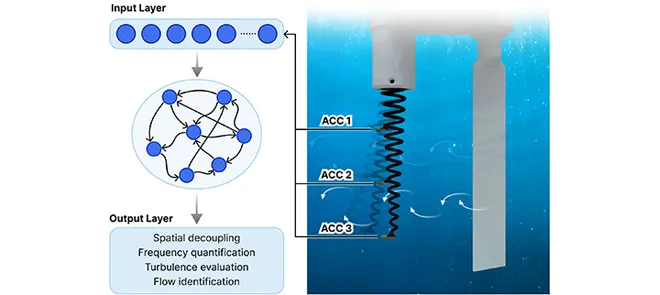
The mysterious underwater world is challenging to explore. Inspired by biological whiskers, this work presents a tapered-spring underwater sensor that converts flow-induced turbulence into spatially distributed vibration patterns. The system detects vortex shedding by combining mechanical encoding, embedded IMU sensing, frequency-domain analysis, Shannon entropy, and a lightweight logistic regression readout. It classifies hydrodynamic states in real time, offering a low-power sensing strategy for underwater robots operating in complex flow environments.
Published in: IEEE Sensors Journal (Volume: 26, Issue: 10, May 2026)
Summary Contributed by: Koffi Tresor Y. (Author)
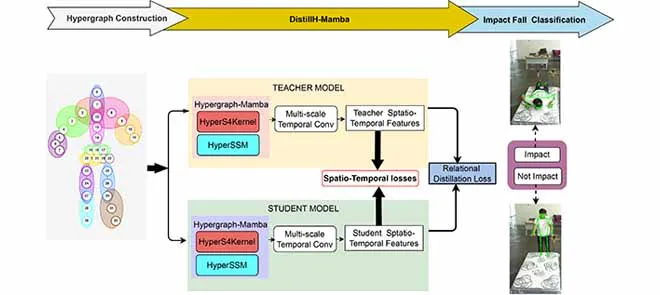
Detecting the precise moment of impact during a fall is challenging. DistillH-Mamba introduces an advanced fall detection method combining hypergraph modeling of multi-joint interactions with Mamba state-space temporal processing, compressed via relational knowledge distillation. It achieves high accuracy at lower computational cost, enabling faster, efficient impact-fall detection by capturing body movements and transferring knowledge from a larger model to a compact one, paving the way for real-time applications in wearable devices and smart healthcare.
Energy-Efficient Gas Sensing of NO and NO2 at Room Temperature Using Poly(triarylamine) Organic Semiconductor
Author: Panda Debashis, Singh Abhishek Kumar, Chaurasiya Akash
Published in: IEEE Sensors Journal (Volume: 26, Issue: 2, January 2026)
Summary Contributed by: Debashis Panda (Author)
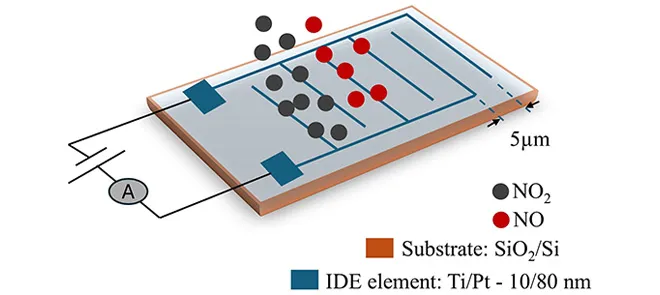
Nitrogen oxides (NO and NO2) generated by industrial activities pose a significant threat to the environment. This work demonstrates a room-temperature chemiresistive Nitrogen Oxides (NOx) gas sensor based on the p-type organic semiconductor poly(triarylamine) (PTAA). PTAA thin films deposited on interdigitated electrodes exhibit high response, excellent selectivity, and repeatability at a low operating voltage (1 V), highlighting their potential for low-power, real-time detection of toxic gases and NOx sensing applications.
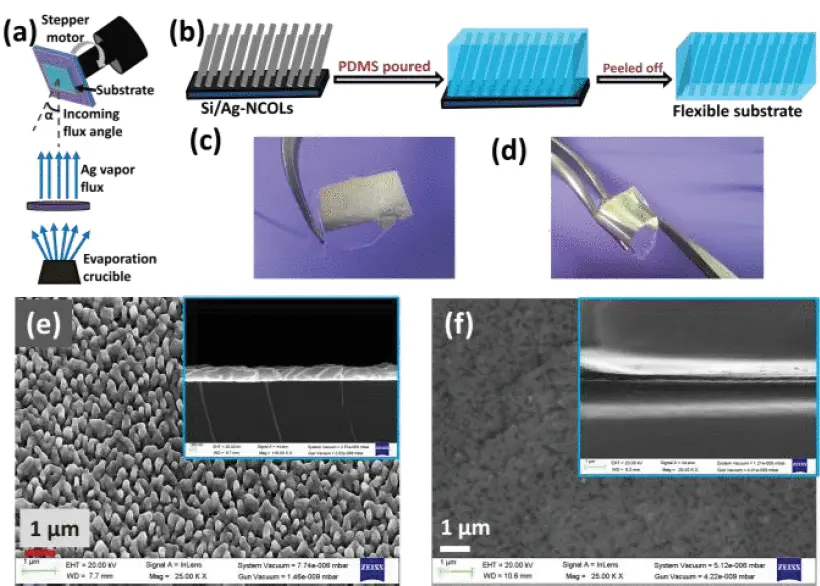
Mercury ions are one of the most hazardous heavy metal pollutants. This work presents a flexible plasmonic sensor comprising silver nano-columns (Ag-NCOLs) for detecting mercury ions (Hg2+) through rhodamine molecule’s fluorescence signal. The sensor can detect Hg2+ in liquid or dried form on the sensor chip, with detection limits of about 5 and 10 femtomolar (fM), respectively. These two sensing modes provide dual verification and support more reliable Hg2+ detection.
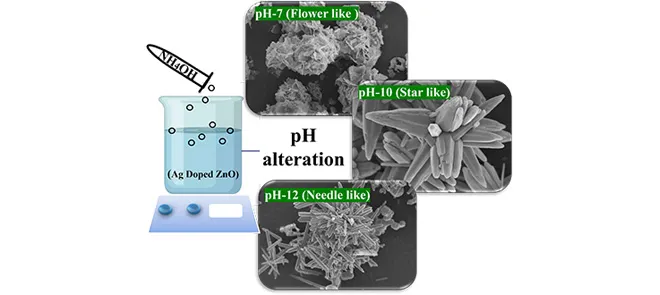
Hydrothermally Synthesized pH-Tailored Ag-Doped ZnO Nanostructure for Printed Room-Temperature NO₂ Gas Sensor
Author: Sumathi P., Behera Anupama, Patil Nikhila, Swaminathan Parasuraman, Thomas Neethu
Published in: IEEE Sensors Journal (Volume: 26, Issue: 4, February 2026)
Summary Contributed by: P. Sumathi (Author)
Effective monitoring of nitrogen dioxide (NO2) is essential for both human health and environmental safety. This paper presents a cost-effective silver-doped zinc oxide (AgZO) gas sensor developed through a pH-tailored hydrothermal technique. By evolving the morphology from flower-like to high-performing needle-like structure, the sensor achieves a 16.2% response at 32 PPM with rapid recovery. Its scalable, printable design enables low-cost integration into flexible electronics, enabling reliable, real-time gas detection.
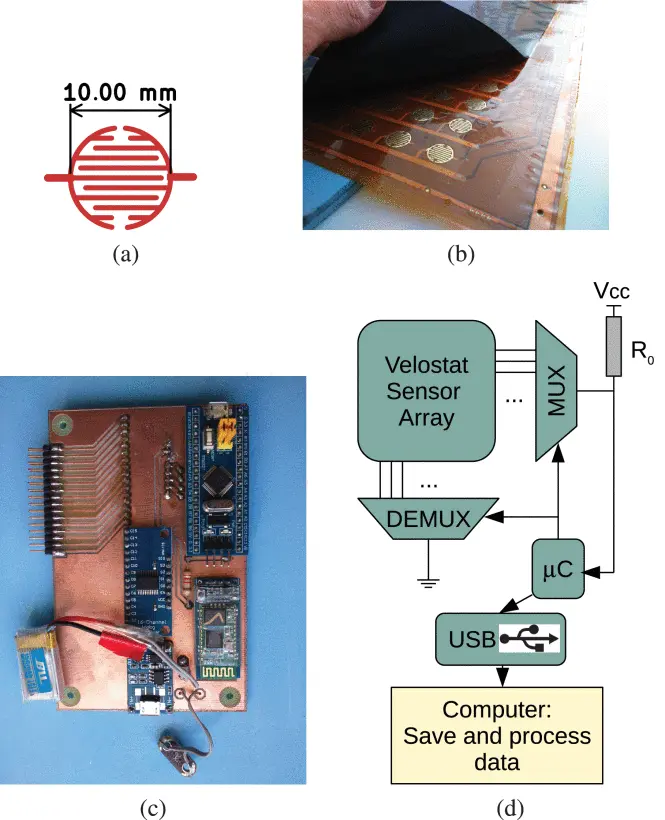
Creep and Hysteresis Compensation in Pressure-Sensitive Mats for Improving Center-of-Pressure Measurements
Author: Martinez-cesteros Javier, Sanchez-Duran Jose A., Plaza Inmaculada, Medrano Sanchez Carlos Tomas, Castellanos-Ramos Julian
Published in: IEEE Sensors Journal (Volume: 23, Issue: 23, December 2023)
Summary Contributed by: Martinez-cesteros Javier (Author)
Plantar pressure systems assist in measuring force distribution and analyzing balance, gait, and posture. However, low-cost systems rely on sensors that exhibit complex nonlinearities, reducing their accuracy. A Velostat-based tactile sensor has been characterized, enabling researchers to model creep and hysteresis. Consequently, center-of-pressure measurements obtained from a Pressure Sensitive Mat closely resemble those from a Force Platform, making stability tests more accessible and accurate for healthcare applications and human-motion analysis.
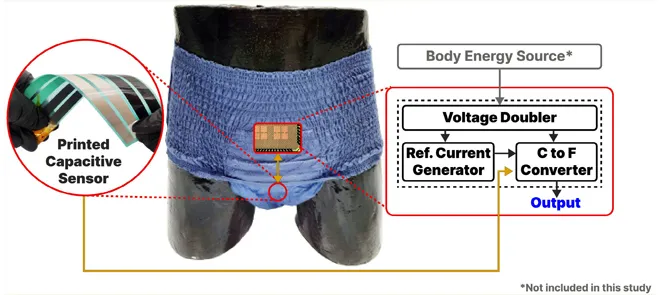
Smart Diaper With Printed Capacitive Sensors and Integrated Front-End to Monitor Voided Fluid Volume
Author: Tanweer Muhammad, Tanweer Muhammad, Gillan Liam, Halonen Kari A.I., Monga Dipesh Chander, Sepponen Raimo, Tanzer I. Oguz
Published in: IEEE Sensors Journal (Volume: 24, Issue: 9, May 2024)
Summary Contributed by: Muhammad Tanweer (Author)
Caring for elderly individuals with urinary incontinence often requires frequent diaper checks and manual weighing, which can be uncomfortable for patients and time-consuming for caregivers. This work presents a smart adult diaper that integrates flexible printed capacitive sensors with an ultralow-power integrated front-end circuit to detect wetness. This smart diaper can estimate urine volume and has the potential to support future battery-less operation using harvested energy sources in wearable healthcare.
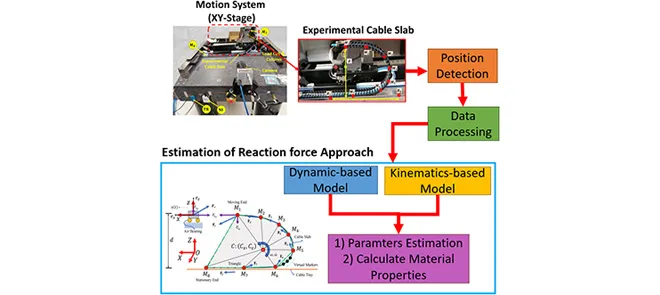
Estimating Internal and Reaction Forces in Cable Slabs Using High-Speed Imaging
Author: Al Saaideh Mohammad, Al-rawashdeh Yazan M., Al Janaideh Mohammad, Alatawneh N., Pumphrey M.
Published in: IEEE Sensors Journal (Volume: 26, Issue: 5, March 2026)
Summary Contributed by: Al Saaideh Mohammad (Author)
Cable slabs in precision motion systems generate reaction forces that can affect positioning accuracy. Measuring these forces requires the use of intrusive load cells. This paper introduces a vision-based method that estimates internal and reaction forces by tracking markers on the cable slab with a high-speed camera. Two models were developed: a dynamics-driven (Voigt viscoelastic) and a kinematics-driven (Newton's second law) model; both were experimentally validated under cyclic and acyclic motion profiles.
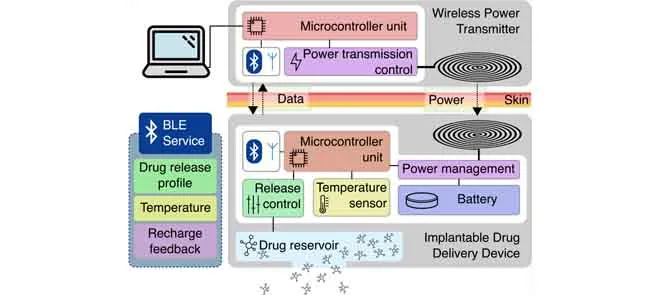
Design of a Closed-Loop Wireless Power Transfer System for an Implantable Drug Delivery Device
Author: Del Bono Fabiana, Bontempi Andrea, Demarchi Danilo, Dentis Andrea, Di Trani Nicola, Grattoni Alessandro, Motto Ros Paolo
Published in: IEEE Sensors Journal (Volume: 24, Issue: 6, March 2024)
Summary Contributed by: Fabiana Del Bono (Author)
Active implantable medical devices (AIMDs) are surgically implanted devices that provide continuous or intermittent therapy for various medical conditions. Though they offer the potential for continuous, personalized therapies, the safety of in-body charging remains a concern. This work introduces a compact, closed-loop wireless power transfer (WPT) system that adapts in real time to movement and misalignment, ensuring reliable charging while preventing overheating—paving the way for long-term, connected implantable therapies.
Published in: IEEE Sensors Journal (Volume: 25, Issue: 20, October 2025)
Summary Contributed by: Gross Sonja (Author)
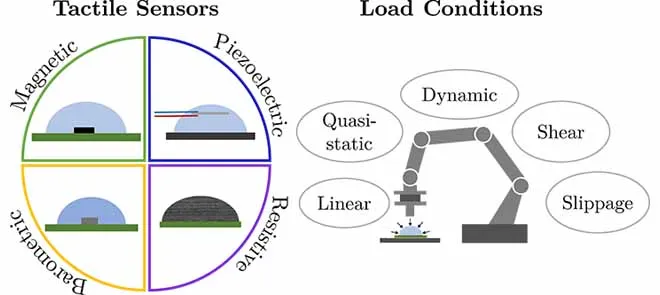
Tactile sensing is essential for strong robotic grasping and human-like interaction. However, developing effective tactile sensors is challenging due to differing experimental methods. This study experimentally compares nine tactile sensor prototypes based on commercially available barometric, magnetic, piezoresistive, and piezoelectric components. Using a robot-driven benchmark setup, it evaluates the performance of these sensors under loading conditions relevant to grasping, providing reproducible insights to enhance tactile sensor design and sensor fusion strategies.
Radar detection of smaller targets requires lowering the radar cross-section and velocity thresholds. With it, an abundance of target signatures gets generated, making it necessary to classify only relevant targets. Micro-motions of targets are significant characteristics. Micro-Doppler signatures have emerged as an effective method of classifying such targets. The study presents a systematic review of various micro-Doppler-based radar target signature analysis and classification techniques.
The recent COVID outbreaks highlighted the need for breathing rate monitoring and increased the demand for hospitalized patients. Monitoring breathing rate is vital for diagnosing diseases and observing patients with pulmonary conditions. The pros and cons of different techniques are studied and categorized under contact and remote modes of respiratory monitoring systems. Various Radar-based methods found to be more suitable for respiration monitoring are discussed.
A non-profit organization, IEEE is the world's largest technical professional organization dedicated to advancing technology for the benefit of humanity.
Copyright 2023 IEEE – All rights reserved. Use of this website signifies your agreement to the IEEE Terms and Conditions
This site is also available on your smartphone.