Get exclusive breakthroughs on sensors in IoT, energy, healthcare, and more, delivered straight to your inbox.
"IEEE Sensors Alert" is a pilot project of the IEEE Sensors Council. Started as one of its new initiatives, this weekly digest publishes teasers and condensed versions of our journal papers in layperson's language.
Articles Posted in the Month (May 2026)
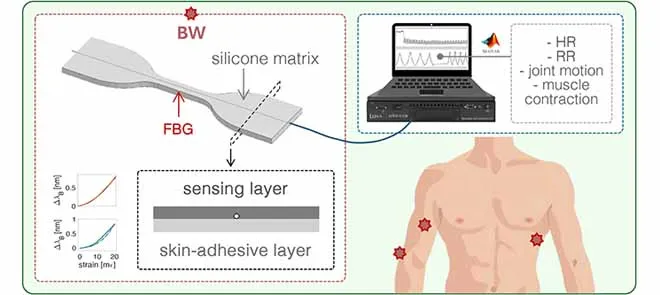
A Stretchable, Skin-Adhesive FBG-Based Wearable Sensor for Human Health Monitoring: From Vital Signs to Biomechanical Activity
Author: Schena Emiliano, Condo Ilaria, Giannitelli Sara Maria, Lo Presti Daniela, Trombetta Marcella
Published in: IEEE Sensors Journal (Volume: 26, Issue: 1, January 2026)
Summary Contributed by: Schena Emiliano (Author)
Measurement accuracy and user comfort are key requirements in wearable systems. This research introduces a device that integrates a fiber Bragg grating (FBG) sensor within a flexible silicone bilayer matrix designed to adhere directly to the human skin and conform to its shape. The effective deformation transfer between the skin and the sensor makes the proposed system a promising solution for healthcare monitoring while ensuring user comfort.
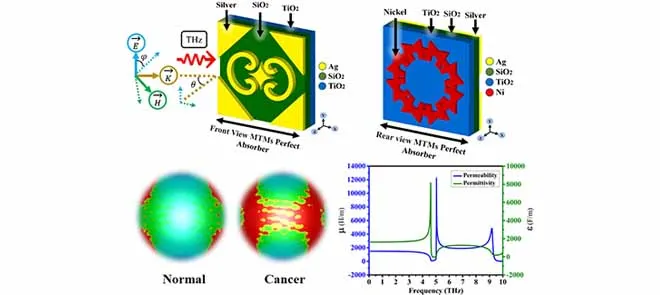
High-Performance THz Nanometamaterial Absorber With Negative Permittivity (0.1–10 THz) for Early Cancer Detection via Circulating Exosomes
Author: Mohammad Alibakhshikenari, Hamza Musa, Islam Md. Shabiul, Islam Mohammad Tariqul, Farmani Ali, Iffat Naqvi Syeda, Koziel Slawomir, Lavadiya Sunil, Miah MD. Sipon, Panda Abinash, Parand Peiman, Sanches Bruno, Virdee Bal S., Ud Din Iftikhar
Published in: IEEE Sensors Journal (Volume: 25, Issue: 18, September 2025)
Summary Contributed by: Anupama
Circulating exosomes are nanoscale vesicles secreted by cells that carry early cancer biomarkers in the blood. This paper introduces a high-performance terahertz (THz) nanometamaterial absorber with negative permittivity across 0.1-10 THz for ultrasensitive detection of cancerous circulating exosomes, distinguishing them from normal ones. The label-free approach demonstrates noninvasive, fast cancer detection with high sensitivity and precision, setting a new benchmark in biomedical sensing that could transform global oncology outcomes.
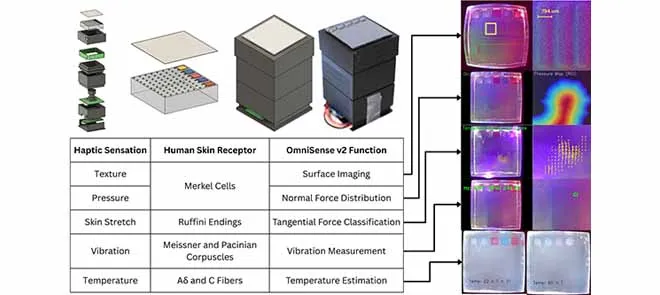
OmniSense v2: A Human-Skin-Inspired Visuotactile Sensor for Unified Tactile Imaging
Author: See Aaron Raymond, Tiong Thad Jacob T.
Published in: IEEE Sensors Journal (Volume: 25, Issue: 22, November 2025)
Summary Contributed by: Aaron Raymond See (Author)
Human skin can simultaneously sense various stimuli through specialized receptors. OmniSense v2 incorporates these sensory features into a compact, human-skin-inspired visuotactile sensor. It delivers multimodal tactile imaging without reconfiguration through an engineered sensing skin, controlled illumination, and vision-based processing. This technology demonstrates the ability to capture fine details, accurately sense tangential force, and detect temperature-state, showing potential to replicate the sensitivity of human touch in robotics and smart devices.
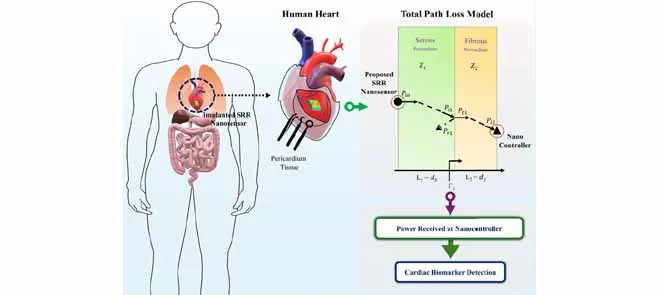
A Terahertz Split Ring Resonator Nanosensor for Cardiac Biomarker Detection
Author: R Manjula, Datta Dr. Raja, Elayan Hadeel, Ghosh Anirban, Jornet Josep, Sharan Bhagwati
Published in: IEEE Sensors Journal (Volume: 25, Issue: 18, September 2025)
Summary Contributed by: Hadeel Elayan (Author)
Can cardiac stress be sensed and detected wirelessly from within the heart? This study introduces a high-sensitivity terahertz split-ring resonator (SRR) for detecting a cardiac stress biomarker and establishes the first model of terahertz signal transmission across the pericardium. By combining nanoscale biosensing with intrabody propagation analysis, this research enables a comprehensive evaluation of wireless, implantable cardiac diagnostics, paving the way for early, efficient detection and improved cardiac care.
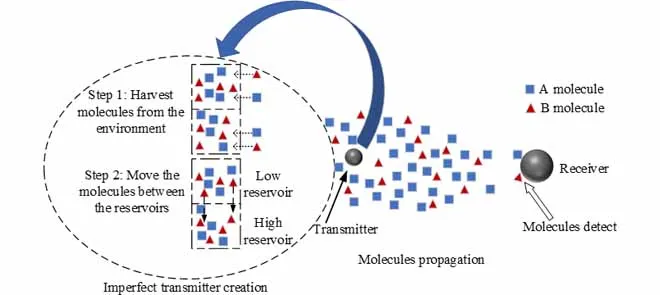
ISI Mitigation Using Neural Networks in Molecular Communication With an Imperfect Transmitter Between Bionanosensors
Author: Jing Dongliang, Chen Jiale, Eckford Andrew, Li Linjuan, Lin Lin, Zhao Jianchao
Published in: IEEE Sensors Journal (Volume: 25, Issue: 24, December 2025)
Summary Contributed by: Dongliang Jing (Author)
Molecular communication (MC) promises ultra-small communication systems inspired by cellular interactions. However, random motions and persistent interference can obscure molecular signals, leading to inter-symbol interference (ISI) that distorts the information. This work demonstrates how modern neural networks can significantly improve detection accuracy, even with imperfect transmitters. By analysing complex signal patterns between bionanosensors, the approach improves reliability and accuracy, paving the way for advanced medical technologies and nano-enabled healthcare systems.
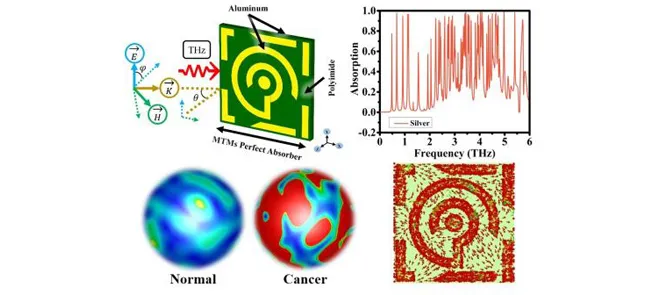
Development of a Terahertz Metamaterial Micro-Biosensor for Ultrasensitive Multispectral Detection of Early Stage Cervical Cancer
Author: Hamza Musa, Islam Md. Shabiul, Islam Mohammad Tariqul, Farmani Ali, Iffat Naqvi Syeda, Koziel Slawomir, Lavadiya Sunil, Sanches Bruno, Ud Din Iftikhar
Published in: IEEE Sensors Journal (Volume: 24, Issue: 20, October 2024)
Summary Contributed by: Saurabh Dubey
Early detection of cervical cancer is crucial for saving lives. This paper introduces a terahertz (THz) metamaterial (MTM) based multi-band biosensor for early detection of cancerous tissue via spectral fingerprinting. The aluminum-on-polyimide sensor delivers high sensitivity and 99.8% peak absorption, effectively distinguishing healthy cervical cells from cancerous cells. Its compact, flexible design enables disposable lab-on-chip screening, potentially establishing multispectral THz absorption as the gold standard for noninvasive cancer diagnostics.
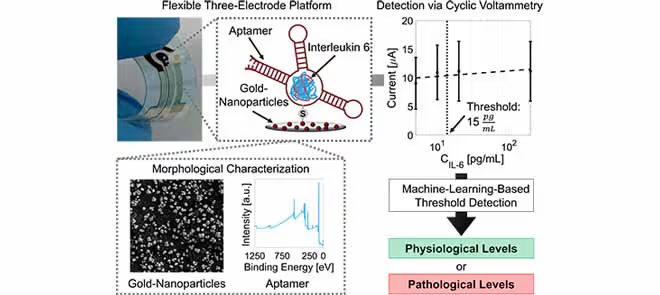
Machine Learning-Enhanced Flexible IL-6 Sensor for Rapid Threshold Detection
Author: Ploner Moritz, Antrack T., Bianchi Valentina, Boni Andrea, Canteri R., De Munari Ilaria, Lugli Paolo, Petti Luisa, Resnati D., Shkodra Bajramshahe, Stighezza M., Vanzetti L.
Published in: IEEE Sensors Journal (Volume: 25, Issue: 23, December 2025)
Summary Contributed by: Moritz Ploner (Author)
Early detection of elevated interleukin-6 (IL-6), an important biomarker of inflammation, is essential for effectively managing inflammatory diseases. Conventional blood test methods are invasive and unsuitable for continuous monitoring. This paper introduces a conformable sweat-based sensor that integrates electrochemical sensing with machine learning to detect IL-6, which alerts when IL-6 reaches abnormal levels. This innovative approach enables rapid, more reliable real-time point-of-care diagnostics and improves wearable health monitoring systems.
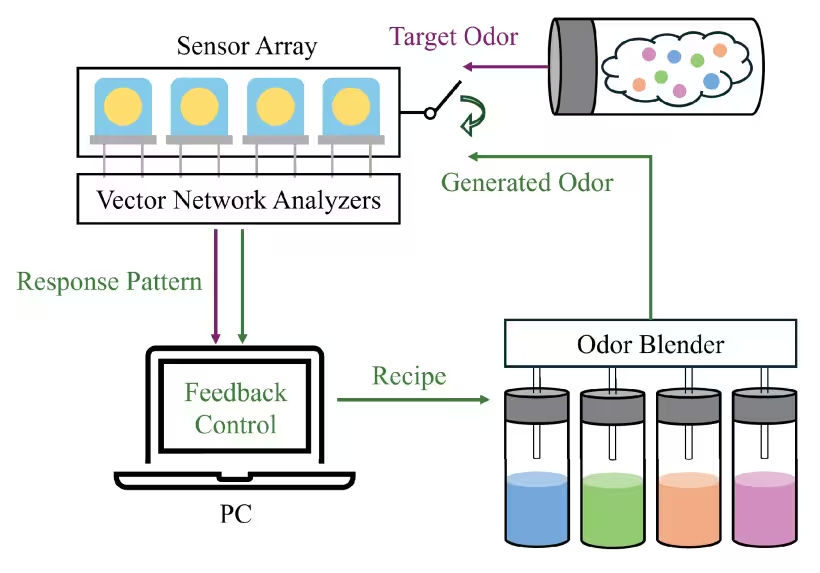
Quantifying odor mixtures is essential for recording and reproducing specific odors. However, it poses challenges due to the cross-sensitivity of gas sensors. This work measured frequency shifts and resistance changes of multiple harmonics in a Quartz Crystal Microbalance (QCM) sensor array. The approach significantly improved the selectivity of the sensors and accuracy in quantifying quaternary odor mixtures, opening prospects in environmental monitoring, healthcare diagnostics, food quality control, and artificial olfaction systems.
Published in: IEEE Sensors Journal (Volume: 25, Issue: 21, November 2025)
Summary Contributed by: Federica Villa (Author)
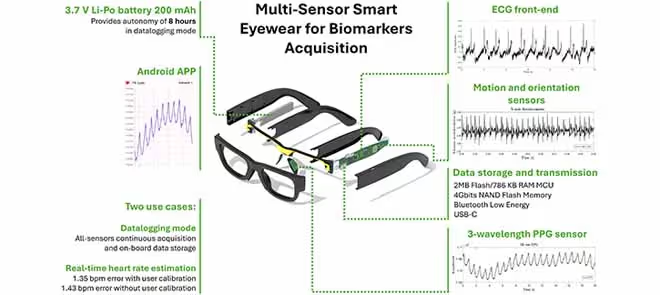
Smart eyewear, or smart glasses, is an innovative wearable tech for unobtrusive health monitoring. However, most available smart eyewear has limited sensor integration and processing capabilities. This paper presents a standalone multisensor platform fully embedded into a standard eyewear frame, capable of tracking cardiorespiratory and activity metrics for over eight hours. It paves the way for comfortable, non-invasive, wearable health technology for early diagnosis and personalized real-time healthcare monitoring.
Development of a High-Sensitivity Triple-Band Nano-Biosensor Utilizing Petahertz Metamaterials for Optimal Absorption in Early-Stage Leukemia Detection
Author: Hamza Musa, Islam Md. Shabiul, Islam Mohammad Tariqul, Farmani Ali, Iffat Naqvi Syeda, Koziel Slawomir, Lavadiya Sunil, Sanches Bruno, Ud Din Iftikhar
Published in: IEEE Sensors Journal (Volume: 25, Issue: 8, April 2025)
Summary Contributed by: Saurabh Dubey
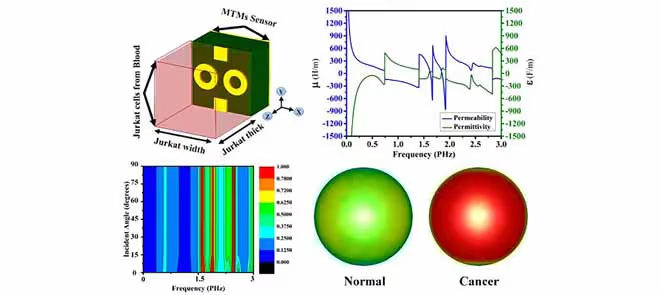
An early detection of Leukemia, a life-threatening blood cancer, is critical for improving patient outcomes. However, current diagnostic methods, such as bone marrow biopsies, are invasive and time-consuming. This study presents a triple-band petahertz nano-biosensor designed for label-free detection of leukemia-related changes in blood samples. The proposed platform enables sensitive, noninvasive analysis through distinct electromagnetic signatures. This technology supports rapid screening, lab-on-chip integration, and future AI-assisted diagnostics for blood cancer.
The recent COVID outbreaks highlighted the need for breathing rate monitoring and increased the demand for hospitalized patients. Monitoring breathing rate is vital for diagnosing diseases and observing patients with pulmonary conditions. The pros and cons of different techniques are studied and categorized under contact and remote modes of respiratory monitoring systems. Various Radar-based methods found to be more suitable for respiration monitoring are discussed.
Radar detection of smaller targets requires lowering the radar cross-section and velocity thresholds. With it, an abundance of target signatures gets generated, making it necessary to classify only relevant targets. Micro-motions of targets are significant characteristics. Micro-Doppler signatures have emerged as an effective method of classifying such targets. The study presents a systematic review of various micro-Doppler-based radar target signature analysis and classification techniques.
A non-profit organization, IEEE is the world's largest technical professional organization dedicated to advancing technology for the benefit of humanity.
Copyright 2023 IEEE – All rights reserved. Use of this website signifies your agreement to the IEEE Terms and Conditions
This site is also available on your smartphone.