




Silver Microneedle Array Printed via Aerosol Jet Enhance the Electrochemical Detection of Carboxylated Carbon Nanotubes for Chloramphenicol
Chloramphenicol (CAP) is a potent broad-spectrum antibiotic with a long history of use in veterinary medicine. The substance has attracted significant global attention due to its potential risks to human health, including causing aplastic anemia, bone marrow suppression, and cardiotoxicity. Consequently, the development of a high-performance CAP sensor for the detection of chloramphenicol residues in food products, including dairy and honey, is essential.
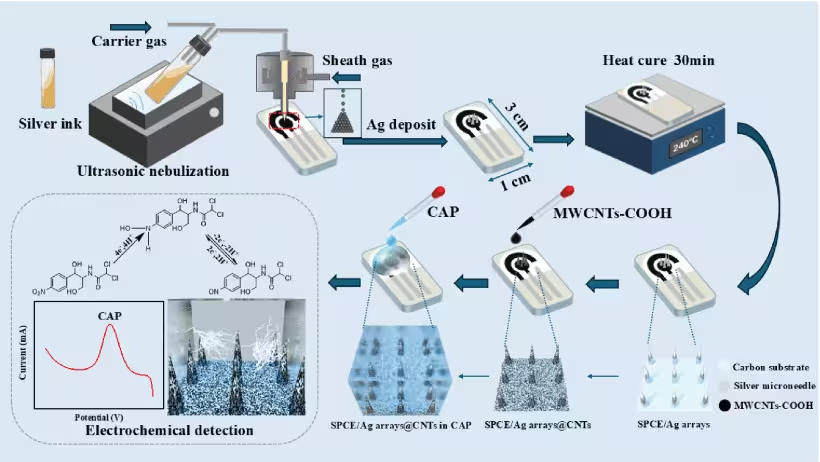
This study explores the potential application of screen-printed carbon electrodes (SPCEs) combined with 3D silver microneedle structures and carbon nanomaterials in developing CAP electrochemical sensors. To address the need for portable, low-concentration CAP detection, this research used aerosol jet printing (AJP) technology to fabricate three-dimensional silver microneedle arrays on SPCE. Subsequently, the structure was modified with carboxylated multi-walled carbon nanotubes (MWCNTs-COOH) to construct a micro-scale 3D CAP electrochemical sensing platform (SPCE/Ag₁₀×₁₀@CNTs), followed by corresponding characterization tests.
Scanning electron microscopy (SEM) analysis demonstrated that the silver microneedles had an average height of approximately 200 µm with a spacing of 250 µm. This configuration led to a substantial increase in electrochemically active surface area, thus establishing efficient electron transfer pathways for the sensor.
Subsequently, MWCNTs-COOH were applied via the ink-drop coating method to form a rough, porous nanocomposite layer. The process enhanced the electrode surface’s adsorption capacity for CAP molecules, exposing additional reactive site.
When applied to CAP detection, the SPCE/Ag₁₀×₁₀@CNTs sensor exhibits electrocatalytic activity for the irreversible reduction of p-nitrophenol. Linear sweep voltammetry (LSV) tests conducted in phosphate buffer (pH 7) revealed an extensive dynamic detection range (0.076–1030 μM), a detection limit (LOD) as low as 0.073 μM, and a sensitivity as high as 18.86 μA/(μM·cm²). These results demonstrate that the sensor performs better than most reported CAP sensors.
Furthermore, the sensor exhibits outstanding selectivity, with signal changes remaining below 10% even in the presence of high concentrations of glucose, urea, various ions (e.g., Na⁺, K⁺, Cu²⁺, Zn²⁺), and structurally similar metronidazole, demonstrating excellent interference resistance conducive to practical sample applications. The electrode displays exceptional stability, evidenced by a relative standard deviation (RSD) of 1.21% across 60 successive LSV scans, while concurrently demonstrating commendable preparation reproducibility, with an RSD of 3.08% for five independently prepared electrodes.
The sensor was used to detect CAP residues in spiked honey samples to evaluate its practical application potential. The recovery rate of CAP ranged from 95.69% to 111.61% across a broad concentration range of 5–500 μM, yielding satisfactory results.
The researchers successfully developed a stable, sensitive, and highly selective 3D electrochemical sensor by combining silver microneedle arrays fabricated via AJP with a MWCNTs-COOH-modified layer. This sensing platform demonstrates potential as a practical, rapid tool for CAP residue monitoring, contributing to enhanced food safety detection systems. Furthermore, this design strategy fully leverages the technical advantages of additive manufacturing by integrating customized 3D microstructures with functional nanomaterials, providing a reference for developing sensors targeting other analytes.