




HBV-Testing: HKUST-1-Modified Electrochemical Immunosensor for Point-of-Care Testing of Hepatitis B
Hepatitis B is a serious infectious disease that primarily attacks the liver and is caused by the hepatitis B virus (HBV). HBV infection remains a major global health challenge, affecting more than 250 million people worldwide and causing nearly one million deaths each year. The virus is transmitted through contact with infected bodily fluids. If left undetected or untreated, the infection can progress to acute or chronic stages, leading to severe complications such as liver fibrosis, cirrhosis, and hepatocellular carcinoma. Therefore, early detection and effective mapping of HBV infection are crucial for controlling its spread and reducing associated mortality.
The hepatitis B surface antigen (HBsAg) appears in the bloodstream during the early phase of infection, making it a reliable biomarker for early disease detection. Current diagnostic methods, such as polymerase chain reaction (PCR), enzyme-linked immunosorbent assay (ELISA), and electrochemiluminescence immunoassay (ECLIA), are highly accurate. However, they are often expensive, complex, and require skilled personnel, making them unsuitable for widespread use.
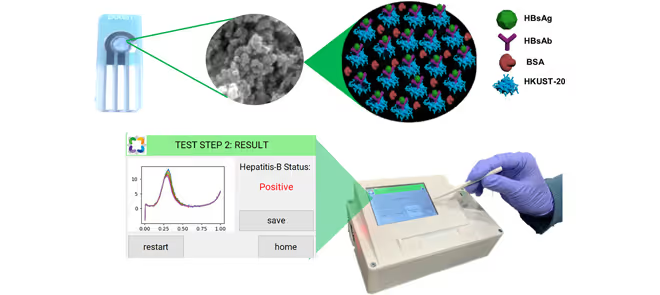
The researchers in this study have developed a novel HBV-Test — a portable electrochemical immunosensor for rapid, sensitive, and affordable detection of HBsAg. This device is based on point-of-care (POC) technology—meaning it can be used directly in the field or in small clinics without the need for large laboratory facilities.
At the core of the HBV-Test lies a sensor chip coated with a special material, HKUST-1, a copper-based metal-organic framework (MOF). This material possesses an exceptionally large surface area (approximately 485 m2 per gram), making it ideal for immobilizing antibodies that specifically recognize the hepatitis B surface antigen (HBsAg).
When the target antigen is present in a blood sample, it triggers a specific reaction that generates an electrical signal, which is then detected and processed by the HBV-Test device. The main advantages of this device are its speed and accuracy. The entire detection process takes only five minutes, with a detection limit as low as 0.87 picograms per milliliter—significantly more sensitive than many comparable systems.
When tested with 67 human serum samples (20 positive and 47 negative), the device achieved 90% accuracy and 84% sensitivity in distinguishing between positive and negative results. Beyond its high sensitivity, the device is stable for up to 30 days, user-friendly, and requires minimal training. Its interface is intuitive—users only have to press the “Start Hepatitis-B Test” button, wait five minutes, and view the results displayed as “positive” or “negative.”
The study demonstrates that combining advanced nanomaterials (HKUST-1) with miniaturized electrochemical technology can yield affordable, rapid, and reliable diagnostic tools. Its lightweight, portable design and low power needs make it ideal for decentralized testing, including in resource-limited settings, marking a significant advance in POC diagnostics. It offers a practical solution for rapid screening and epidemiological mapping of hepatitis B, particularly in regions where access to advanced laboratory facilities is limited. Its strong clinical performance further supports its potential for widespread use in public health screening and field diagnostics to advance global hepatitis B control efforts.