



Open-Set Fault Classification for Rotatory Machine by DNN’s Neuron Activation Similarity Score
Fault detection and classification in industrial rotating machinery typically depend on the vibration signals emitted by these machines. By extracting features from these vibration signals, intelligent diagnostic systems can identify faults before they lead to costly breakdowns. Recent advancements in deep learning (DL) have significantly improved the accuracy of automated fault detection and classification.
However, most existing DL models operate under a closed-set assumption, meaning they can only recognize K fault types used during model training. In real industrial environments, this assumption is often unrealistic. Machines may develop new faults due to wear and tear, changing operating conditions, maintenance actions, or unexpected failure mechanisms. When such unseen conditions arise, conventional DL models often categorize them into one of the K known fault classes, which may lead to incorrect maintenance decisions, unnecessary downtime, or missed early warnings of serious machine problems.
To address this challenge, this work presents a Neuron Activation Similarity (NAS)-based framework for open-set fault classification of rotating machinery. The objective of open-set fault classification is to classify known fault conditions into K classes and remaining unknown fault conditions that do not fall under any fault category used during training as a new (K+1) fault category.
The proposed approach is motivated by the nature of vibration signals themselves: known faults produce familiar activation patterns within the trained network, whereas unseen faults produce different activation patterns. First, a CNN-based model, such as ResNet18 or VGG11, is trained on only known fault classes. After training, the multiple convolutional layers are grouped into blocks. For each known fault class, the method computes a representative activation pattern, called a class anchor, from these blocks. During testing, the activation pattern of a new signal is compared with each class anchor for each block using cosine similarity.
If the new signal resembles one of the known class anchors, it is categorized as a closed-set sample and assigned to a known fault class (K). If its activation pattern deviates from all known class anchors beyond a specified threshold, it is identified as an open-set or unknown fault (K+1).
A significant advantage of this framework is its practicality. The method does not require samples from unknown fault classes during training, nor does it introduce additional open-set training procedures or require modifications to the underlying classifier. As a result, it can be implemented within existing diagnostic systems with minimal additional computational cost.
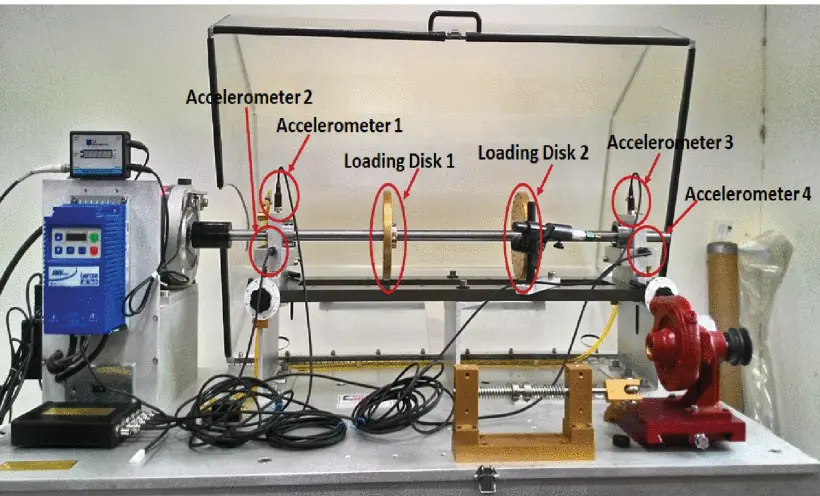
The proposed approach was tested on eight datasets, including public benchmarks, industrial datasets, and in-house datasets. It consistently improved open-set fault recognition compared to existing methods while preserving strong classification accuracy for known fault categories.
Overall, this work increases the reliability of intelligent machine condition monitoring for real-world industrial applications. By using the model’s internal activation patterns and comparing activation behavior rather than relying only on final prediction scores, the proposed framework improves the ability to distinguish known faults from previously unseen ones. This advancement can support safer maintenance decisions, reduce false confidence in automated systems, and improve the robustness of sensor-based fault diagnosis.